How Can Seeking Happiness Make You Less Happy?
TL;DR
Seeking happiness directly can lead to disappointment and increased dissatisfaction. Research shows that the more we desire happiness as a goal, the less likely we are to achieve it. Instead, happiness often arises as a byproduct of pursuing meaningful goals and engaging in activities without placing happiness at the forefront.
Transcript
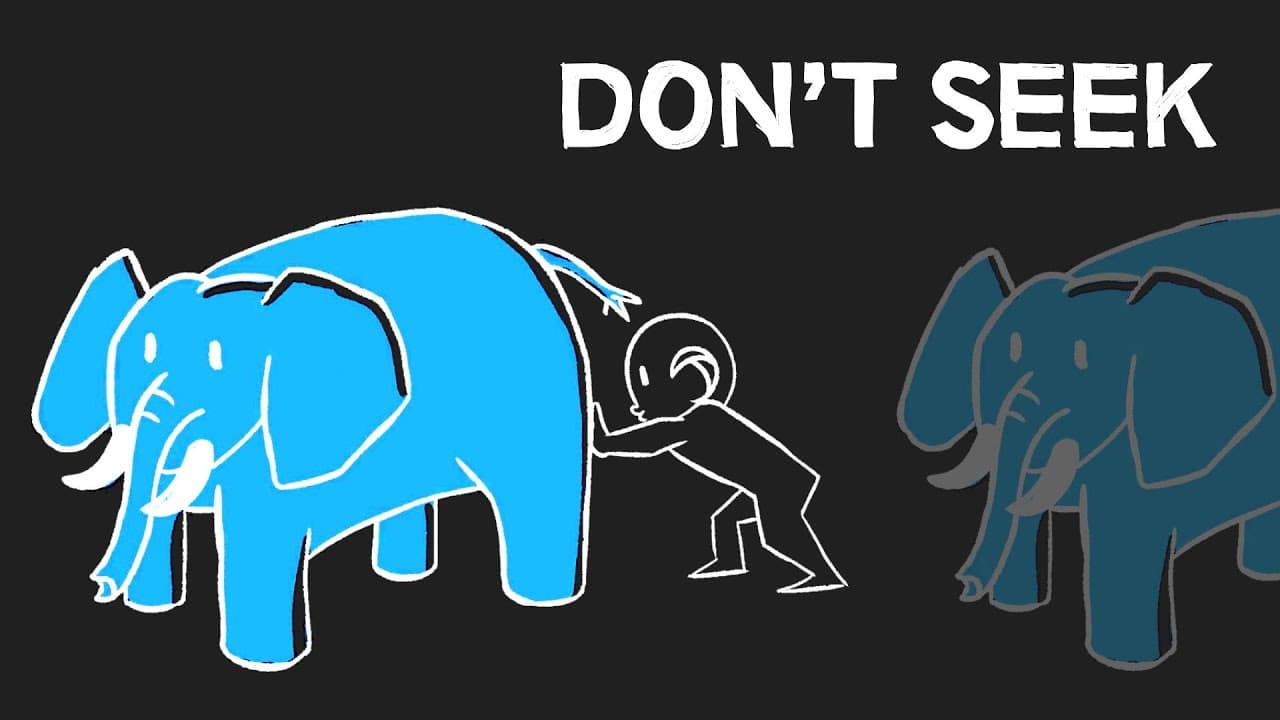
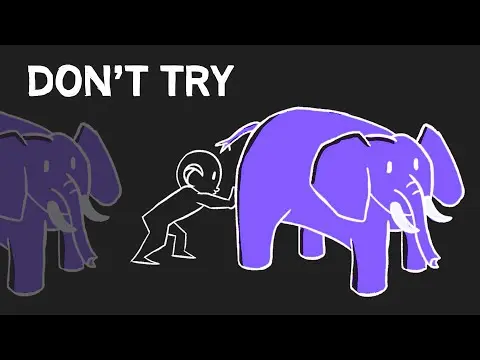
The less we try to think about a blue elephant, the more likely this creature persists in residing in our thoughts. Imagine the blue elephant represents our unhappiness – our dissatisfaction with life – hence the color blue. Obviously, no one likes feeling blue, and when we experience it, we’re likely to try getting rid of it. But the mor... Read More
Key Insights
- 💭 Trying to suppress negative emotions or thoughts can intensify them.
- ❓ Happiness is elusive and cannot be attained directly.
- 🥺 Focusing on meaningful goals or dedicating oneself to a cause greater than oneself can lead to the experience of happiness.
- 🥺 High expectations for happiness can hinder our ability to meet our goals and lead to disappointment.
- 📁 Happiness is more likely to arise as a byproduct of our actions rather than as a direct pursuit.
- 🥅 Monitoring and reflecting on happiness goals can negatively impact our current state of happiness.
- ❓ The pursuit of pleasure interferes with the actual experience of pleasure.
Install to Summarize YouTube Videos and Get Transcripts
Explore YouTube Video Summarizer or Get YouTube Transcript Extractor
Questions & Answers
Q: Why does trying to suppress negative mental states often make them worse?
Trying to suppress negative mental states like anxiety and sadness can paradoxically make them worse because by attempting to push them away, we invite them to stay and become more persistent.
Q: Can happiness be obtained directly?
No, happiness cannot be obtained directly. It is elusive and trying to seek it directly often leads to disappointment or a sense of unfulfillment. Instead, it is more likely to arise as a byproduct of pursuing meaningful goals or dedicating oneself to a cause greater than oneself.
Q: How does the paradox of hedonism explain the elusiveness of happiness?
The paradox of hedonism suggests that the conscious pursuit of pleasure interferes with the actual experience of it. The more we actively seek happiness, the less room we leave for the spontaneous experience of happiness.
Q: How can we find happiness without seeking it directly?
We can find happiness by doing things that might generate happiness, but without making happiness our main goal or expecting it as an outcome. By focusing on other goals or finding meaning in our actions, any happiness that arises becomes an unexpected bonus.
Key Insights:
- Trying to suppress negative emotions or thoughts can intensify them.
- Happiness is elusive and cannot be attained directly.
- Focusing on meaningful goals or dedicating oneself to a cause greater than oneself can lead to the experience of happiness.
- High expectations for happiness can hinder our ability to meet our goals and lead to disappointment.
- Happiness is more likely to arise as a byproduct of our actions rather than as a direct pursuit.
- Monitoring and reflecting on happiness goals can negatively impact our current state of happiness.
- The pursuit of pleasure interferes with the actual experience of pleasure.
- Setting lower expectations for happiness increases the likelihood of satisfaction.
Summary & Key Takeaways
-
Craving and actively pursuing happiness can reduce our chances of finding it.
-
The more we seek happiness, the less likely we are to experience it.
-
Happiness is a byproduct of pursuing meaning or other goals, rather than an end goal itself.
Read in Other Languages (beta)
Share This Summary 📚
Summarize YouTube Videos and Get Video Transcripts with 1-Click
Try YouTube Summary with ChatGPT & Claude or YouTube Transcript Generator
Explore More Summaries from Einzelgänger 📚



Summarize YouTube Videos and Get Video Transcripts with 1-Click
Try YouTube Summary with ChatGPT & Claude or YouTube Transcript Generator