What Happens to Your Brain When You Pull an All-Nighter?
TL;DR
Staying up all night disrupts your brain's natural circadian rhythms, affecting melatonin production and cognitive function. This leads to impaired decision-making and emotional processing, as well as long-term health risks like diabetes and chronic pain. For better academic performance, maintaining regular sleep patterns is crucial.
Transcript
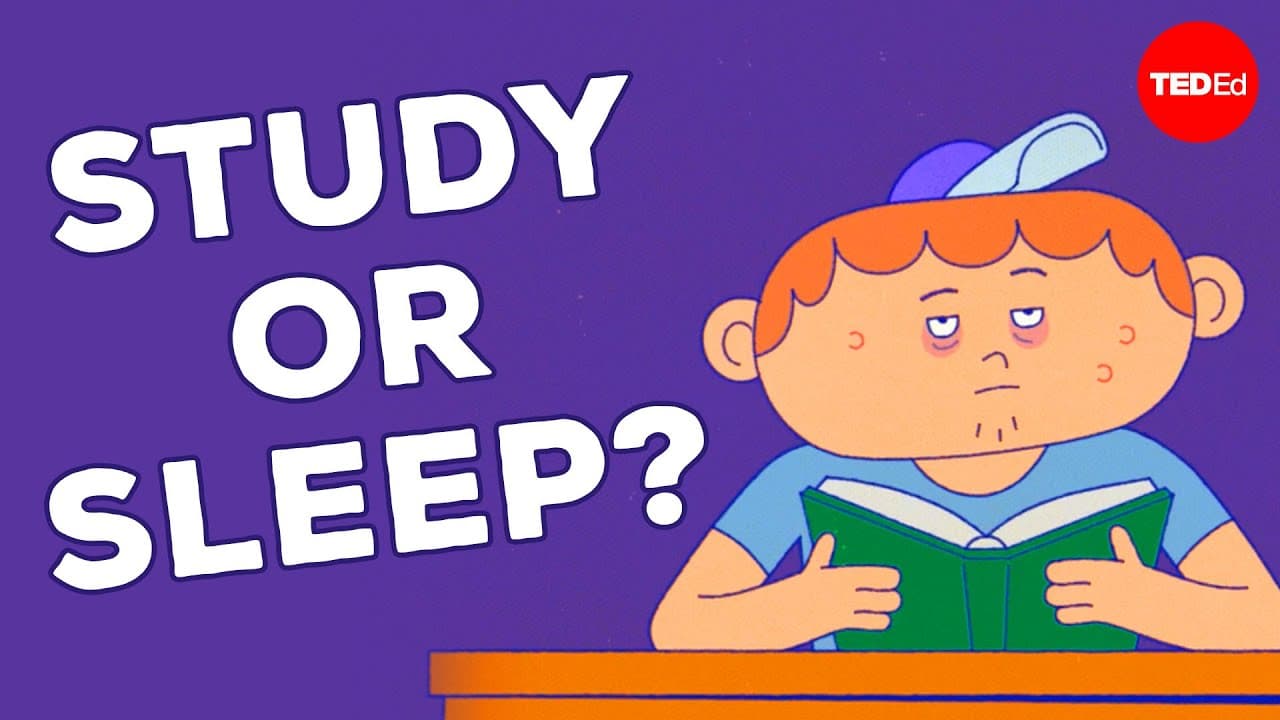
You’re just one Roman Empire history final away from a relaxing spring break. But you still have so much to study! So you decide to follow in the footsteps of many students before you and pull an all-nighter. When you stay up all night, you're fighting against your body's natural circadian rhythms. These are the cyclical changes that virtually all ... Read More
Key Insights
- 🙂 Sleep is fundamentally tied to our circadian rhythms, which regulate sleepiness and alertness based on light exposure.
- 😪 Melatonin is critical for preparing the body for sleep, but its production can be disrupted by late-night study sessions.
- 🧑⚕️ Chronic sleep deprivation is linked to serious health risks including diabetes, chronic pain, and increased vulnerability to mental health issues.
- 😪 Regular sleep patterns can positively influence academic performance, as students with consistent sleep schedules tend to achieve higher GPAs.
- 🥺 Caffeine consumption during study sessions can help but may lead to increased anxiety, affecting overall performance.
- 😪 The body and mind can recover quickly after one all-nighter, but chronic sleep deficiency can lead to long-term cognitive and health issues.
- 😪 Emotional processing is impaired by sleep deprivation due to decreased activity in the prefrontal cortex and overactivity in the amygdala.
Install to Summarize YouTube Videos and Get Transcripts
Explore YouTube Video Summarizer or Get YouTube Transcript Extractor
Questions & Answers
Q: What happens to the body when pulling an all-nighter?
During an all-nighter, the body fights against its circadian rhythms, which trigger melatonin release as bedtime approaches. This process leads to decreased alertness and cognitive function due to accumulated adenosine, a byproduct of daytime activity that increases feelings of tiredness.
Q: How does caffeine affect studying when sleep-deprived?
Caffeine blocks adenosine from binding to brain receptors, temporarily improving focus and energy. However, it can also increase anxiety and jitteriness, which may impair cognitive performance, making it a double-edged sword during late-night study sessions.
Q: What are microsleeps and why do they occur?
Microsleeps are brief episodes of sleep lasting only seconds, triggered by prolonged sleep deprivation. They can occur without awareness and can significantly impair cognitive and motor functions, posing risks while driving or engaging in tasks requiring attention.
Q: How does sleep deprivation affect mental functions during exams?
When sleep-deprived, students may struggle with tasks requiring complex thinking, like problem-solving or connecting concepts. While they can regurgitate facts, the ability to process ideas and draw connections is often hindered, leading to poor performance, particularly on essay questions.
Summary & Key Takeaways
-
Staying up all night disrupts natural circadian rhythms, affecting sleep preparation as melatonin production increases and body temperature drops, indicating the need for rest.
-
Caffeine can temporarily boost alertness by blocking adenosine, a sleep-inducing chemical, but might lead to jitteriness and anxiety, impacting overall study effectiveness.
-
Chronic sleep deprivation has severe health implications, including higher risks of chronic ailments and poorer academic performance, emphasizing the importance of regular sleep patterns for students.
Read in Other Languages (beta)
Share This Summary 📚
Summarize YouTube Videos and Get Video Transcripts with 1-Click
Try YouTube Summary with ChatGPT & Claude or YouTube Transcript Generator
Explore More Summaries from TED-Ed 📚



Summarize YouTube Videos and Get Video Transcripts with 1-Click
Try YouTube Summary with ChatGPT & Claude or YouTube Transcript Generator