How to Manage Startup Expenses Wisely for Success
TL;DR
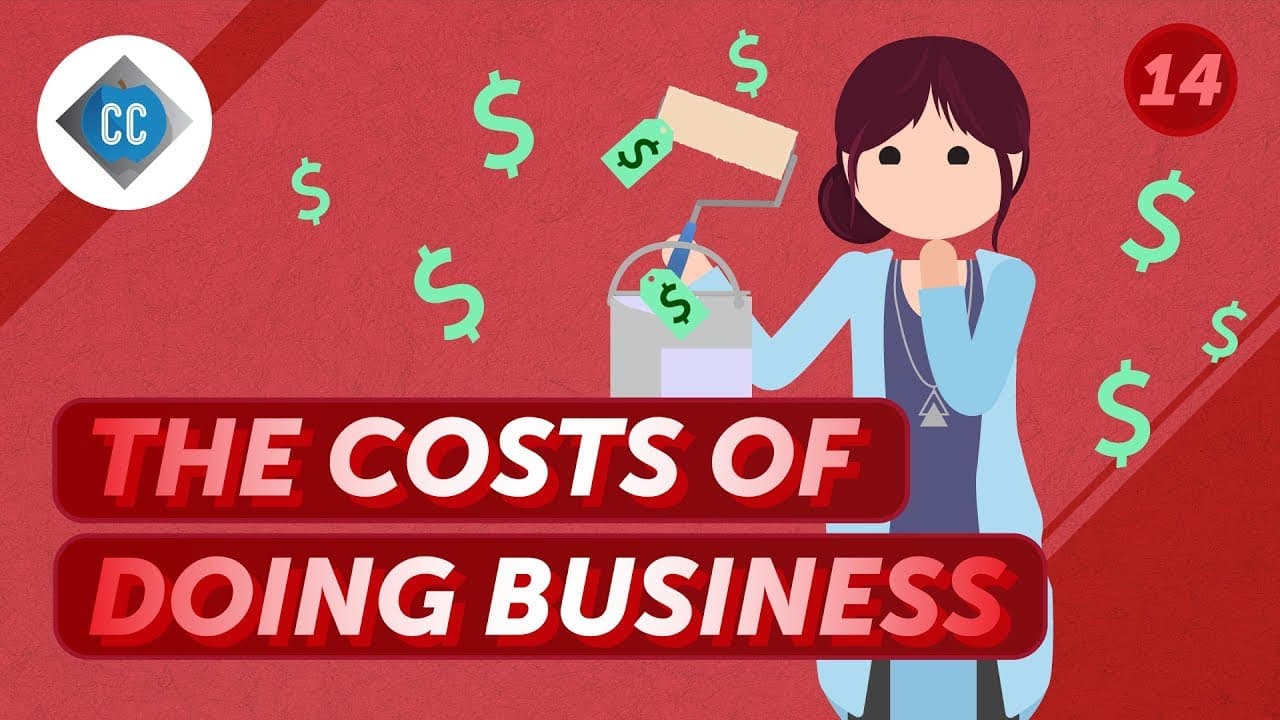
To manage startup expenses effectively, categorize costs into direct (cost of goods sold) and indirect (SG&A) expenses, identifying fixed and variable costs. This understanding allows entrepreneurs to develop strategies that optimize spending, ensuring they don't run out of money and can maintain profitability while delivering value to customers.
Transcript
One of the most common reasons startups fail is -- Because they didn’t talk to customers? There’s no market for their product and no one wants what they’re selling? They didn’t research the competition and someone’s already offering their service? Okay... so we’ve learned a lot of strategies to fight off failure. But we could be doing all this righ... Read More
Key Insights
- 🤑 Startups can fail if they run out of money, emphasizing the importance of managing expenses effectively.
- 👨💼 Expenses in business can be classified as direct costs (tied to production) and indirect costs (necessary for business operations).
- 🇨🇷 Classifying expenses as fixed costs (unchanging) or variable costs (fluctuating based on output) helps in financial planning.
- 🪛 Balance between cost-driven and value-driven approaches in business depends on the company's goals and target market.
- 👣 Social entrepreneurship focuses on creating a positive impact on society while carefully tracking expenses.
- 🚚 Understanding expenses and planning ahead is essential for maintaining profitability and delivering value to customers.
- 👻 Economy of scale and scope can create cost advantages for businesses, allowing them to maximize profits.
Install to Summarize YouTube Videos and Get Transcripts
Explore YouTube Video Summarizer or Get YouTube Transcript Extractor
Questions & Answers
Q: Why do startups fail if they run out of money?
Running out of money can hinder a business's ability to sustain operations, fulfill orders, and invest in growth opportunities. It is essential to manage expenses effectively to avoid financial instability.
Q: What are direct costs and indirect costs in business?
Direct costs refer to expenses directly tied to producing a product or service, such as raw materials or labor. Indirect costs include expenses like management salaries, rent, and marketing, which are necessary for business operations but not directly related to production.
Q: Can expenses in business be classified as fixed or variable?
Yes, fixed costs are expenses that remain constant regardless of output, like rent or equipment leasing. Variable costs, on the other hand, change based on the quantity of goods or services produced, such as raw materials or shipping costs.
Q: How can understanding expenses help in business decision-making?
Understanding expenses allows businesses to analyze where their money is being spent and make informed decisions to improve profitability. It helps in budgeting, identifying cost-saving opportunities, and prioritizing resources.
Summary & Key Takeaways
-
Startups can fail if they run out of money, regardless of other factors like customer research and competition analysis.
-
Expenses in business are categorized into cost of goods sold (direct costs) and selling, general, and administration costs (indirect costs).
-
Expenses can also be classified as fixed costs (unchanging) and variable costs (fluctuating based on output).
Read in Other Languages (beta)
Share This Summary 📚
Summarize YouTube Videos and Get Video Transcripts with 1-Click
Try YouTube Summary with ChatGPT & Claude or YouTube Transcript Generator
Explore More Summaries from CrashCourse 📚



Summarize YouTube Videos and Get Video Transcripts with 1-Click
Try YouTube Summary with ChatGPT & Claude or YouTube Transcript Generator