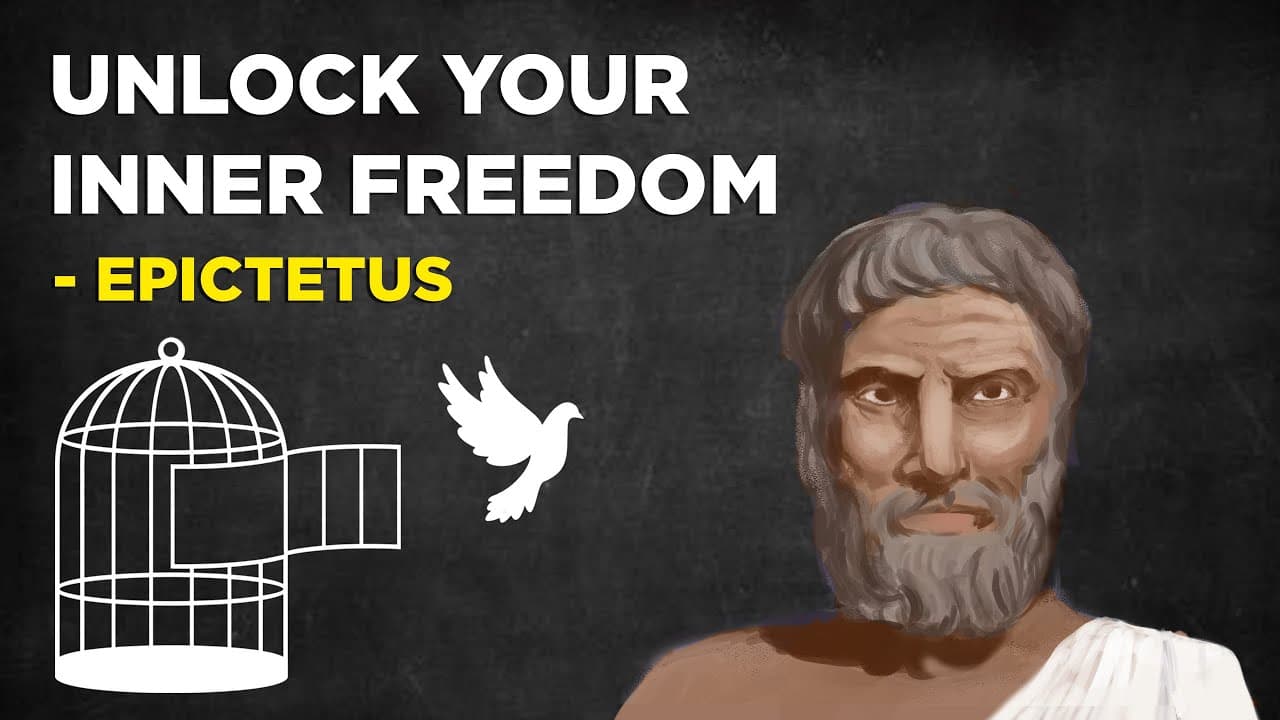
Unlock Your Inner Freedom - Epictetus (Stoicism)
TL;DR
- Epictetus' teachings focus on achieving true freedom through inner mastery, habits, desires, and acceptance of fate.
Transcript
Epictetus says "No man is free who is not a master of himself." Epictetus was a prominent Stoic philosopher whose life and teachings exemplified resilience, self-mastery, and the pursuit of inner freedom. Born into slavery Epictetus overcame his challenging circumstances to become a revered philosopher and teacher, leaving a lasting legacy through ... Read More
Key Insights
- 🤳 Epictetus' journey from slavery to philosophy exemplifies resilience, self-mastery, and the pursuit of inner freedom.
- 💭 True freedom, according to Epictetus, stems from controlling one's thoughts, habits, desires, and accepting fate with wisdom and rationality.
- 🍽️ Cultivating virtuous habits, simplifying desires, and embracing one's fate are essential steps in nurturing inner freedom and achieving true independence.
- 🤳 Stoicism teaches individuals to find happiness and contentment within themselves, living a balanced life focused on virtues and self-control.
Install to Summarize YouTube Videos and Get Transcripts
Explore YouTube Video Summarizer or Get YouTube Transcript Extractor
Questions & Answers
Q: How did Epictetus' background as a slave influence his philosophical teachings?
Epictetus' experience as a slave allowed him to understand the importance of mastering one's inner self, leading him to teach the significance of self-control, resilience, and inner freedom to his students.
Q: What does Epictetus believe is the key to true freedom according to his philosophy?
Epictetus believed that true freedom is achieved by controlling one's thoughts, habits, and desires, rather than relying on external circumstances or possessions for happiness and fulfillment.
Q: How can individuals apply Epictetus' teachings on habits to cultivate inner freedom?
Epictetus teaches that by developing virtuous habits and aligning actions with one's values, individuals can attain emotional self-control, make deliberate choices, and experience true independence from external influences.
Q: What is the significance of Epictetus' concept of "Amor Fati" in Stoic philosophy?
"Amor Fati," or the love of fate, is a central tenet in Stoicism that emphasizes accepting and embracing one's fate with wisdom and understanding, leading to inner peace, freedom, and happiness.
Summary & Key Takeaways
-
Epictetus, a Stoic philosopher born into slavery, emphasized the importance of self-mastery, resilience, and inner freedom.
-
He believed true freedom lies in controlling our thoughts, habits, desires, and accepting fate with wisdom and rationality.
-
Epictetus' teachings guide individuals to nurture inner freedom by focusing on what they can control, developing virtuous habits, simplifying desires, and embracing their fate.
Read in Other Languages (beta)
Share This Summary 📚
Summarize YouTube Videos and Get Video Transcripts with 1-Click
Try YouTube Summary with ChatGPT & Claude or YouTube Transcript Generator
Explore More Summaries from Philosophies for Life 📚

Summarize YouTube Videos and Get Video Transcripts with 1-Click
Try YouTube Summary with ChatGPT & Claude or YouTube Transcript Generator