How Does Dopamine Influence Addiction and Recovery?
TL;DR
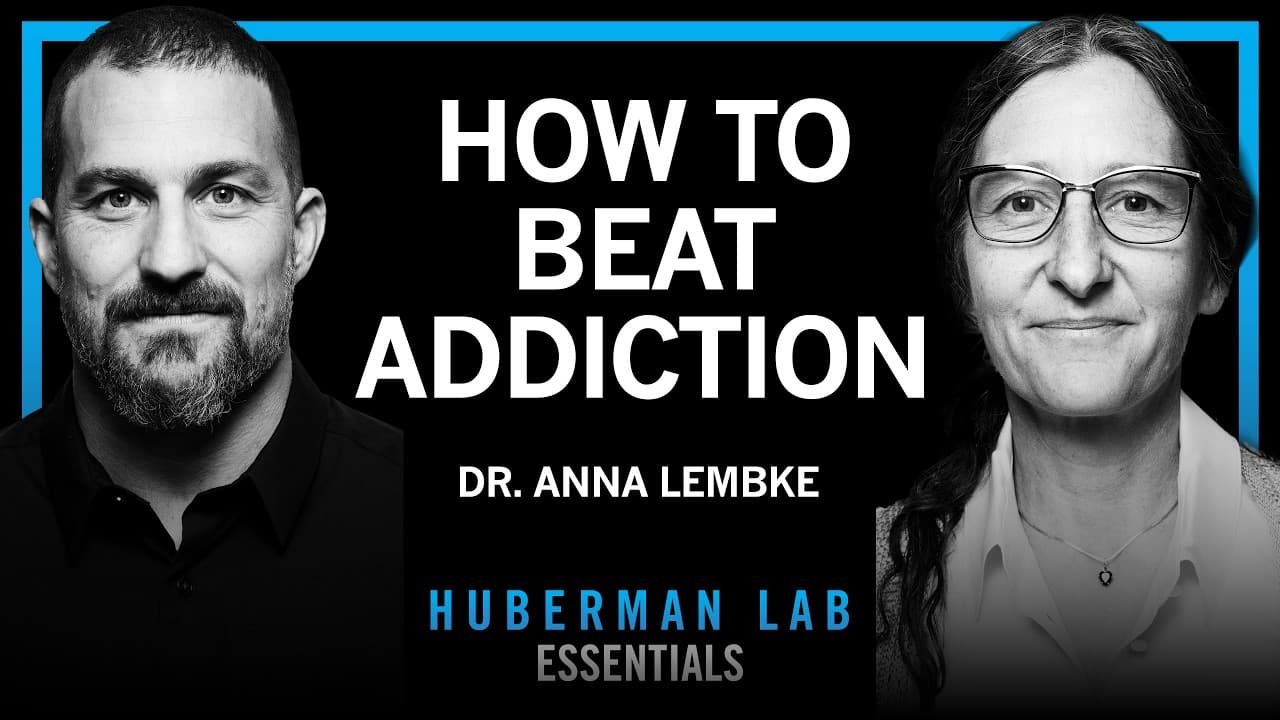
Dopamine significantly affects addiction by linking pleasure to movement and motivation. Understanding the balance between pleasure and pain is crucial for managing cravings and resetting dopamine levels through abstinence. Modern life's abundance can intensify addiction risks, making intentional behaviors essential in recovery.
Transcript
welcome to Huberman Lab Essentials where we revisit past episodes for the most potent and actionable science-based tools for mental health physical health and performance and now for my discussion with Dr anna LMK i and many listeners of this podcast are obsessed with dopamine what is dopamine and what are maybe some things about dopamine that most... Read More
Key Insights
- Dopamine plays a crucial role in the brain's reward system, impacting both pleasure and movement, which are interconnected in human behavior.
- Baseline dopamine levels can influence mood and mental health, with lower levels linked to depression. Chronic exposure to high dopamine activities can lower these baseline levels.
- Addiction vulnerability is linked to impulsivity and temperament. Traits seen as mental illness today may have been advantageous in different environments.
- Modern life may contribute to addiction due to lack of friction and boredom, as people no longer need to strive for basic survival needs.
- The pleasure-pain balance is a key concept in addiction, where the brain seeks homeostasis, leading to a cycle of pleasure followed by pain and craving.
- A 30-day abstinence period can help reset dopamine pathways, allowing individuals to find pleasure in everyday experiences again.
- Relapse can occur even during positive life events, as dopamine spikes from success can trigger cravings and relapse behaviors.
- Truth-telling and honesty in recovery may strengthen brain circuits, aiding in addiction recovery by reconnecting the prefrontal cortex with the reward system.
Install to Summarize YouTube Videos and Get Transcripts
Explore YouTube Video Summarizer or Get YouTube Transcript Extractor
Questions & Answers
Q: What is dopamine and its role in addiction?
Dopamine is a neurotransmitter that plays a key role in the brain's reward system. It is released during pleasurable activities and is associated with motivation and movement. In addiction, dopamine release becomes dysregulated, leading to a cycle of pleasure and craving, as the brain seeks to restore balance in the pleasure-pain system.
Q: How do baseline dopamine levels affect mental health?
Baseline dopamine levels are linked to mood and mental health, with lower levels associated with depression. Chronic exposure to high dopamine activities, such as drug use or excessive social media, can lower these baseline levels over time, making individuals more susceptible to addiction and mood disorders.
Q: What role does temperament play in addiction?
Temperament, including traits like impulsivity, can influence addiction vulnerability. People with impulsive temperaments may be more prone to addiction, as they act on thoughts without considering consequences. These traits, while seen as mental illness today, might have been advantageous in different environments, highlighting the complex nature of addiction.
Q: Why is modern life contributing to addiction?
Modern life contributes to addiction due to the lack of friction and challenges that previously drove human behavior. With basic survival needs easily met, individuals may experience boredom, leading them to seek out high-dopamine activities. This can create a cycle of addiction as people try to fill the void of meaning and engagement.
Q: What is the pleasure-pain balance in addiction?
The pleasure-pain balance is a concept where the brain seeks homeostasis between pleasure and pain. When pleasure is experienced, the brain compensates by tipping towards pain, leading to cravings and addiction. Understanding this balance is crucial for managing addiction, as it highlights the need for moderation and balance in dopamine-driven activities.
Q: How can a 30-day abstinence reset dopamine pathways?
A 30-day abstinence from high-dopamine activities allows the brain to reset its reward pathways, restoring baseline dopamine levels. This period helps individuals regain pleasure from everyday experiences and reduces cravings, providing a foundation for sustainable recovery from addiction.
Q: Why do people relapse during positive life events?
Relapse during positive life events can occur due to dopamine spikes associated with success, which can trigger cravings. The removal of hypervigilance needed to maintain sobriety can also lead to relapse. Understanding personal triggers and maintaining support systems are crucial for preventing relapse in these situations.
Q: What is the role of truth-telling in addiction recovery?
Truth-telling is vital in addiction recovery as it strengthens brain circuits, reconnecting the prefrontal cortex with the reward system. Being honest about all aspects of life, not just drug use, helps individuals engage their cognitive functions and anticipate future consequences, supporting long-term recovery and reducing the likelihood of relapse.
Summary & Key Takeaways
-
Dr. Anna Lembke discusses how dopamine is linked to reward, motivation, and addiction, emphasizing the importance of understanding the pleasure-pain balance in the brain. This balance is crucial for managing addiction and involves a cycle of pleasure, pain, and craving.
-
The conversation explores the impact of modern life on addiction, highlighting how today's lack of friction and abundance of rewards can lead to boredom and addiction. Dr. Lembke suggests that a 30-day abstinence can help reset dopamine pathways.
-
The discussion also covers the potential benefits and skepticism around psychedelic-assisted therapy for addiction, emphasizing the need for controlled settings and psychotherapy. Social media is identified as a drug-like influence, requiring intentional use to avoid addiction.
Read in Other Languages (beta)
Share This Summary 📚
Summarize YouTube Videos and Get Video Transcripts with 1-Click
Try YouTube Summary with ChatGPT & Claude or YouTube Transcript Generator
Explore More Summaries from Andrew Huberman 📚



Summarize YouTube Videos and Get Video Transcripts with 1-Click
Try YouTube Summary with ChatGPT & Claude or YouTube Transcript Generator