Can Big Tech and Politics Coexist Without Threatening Privacy?
TL;DR
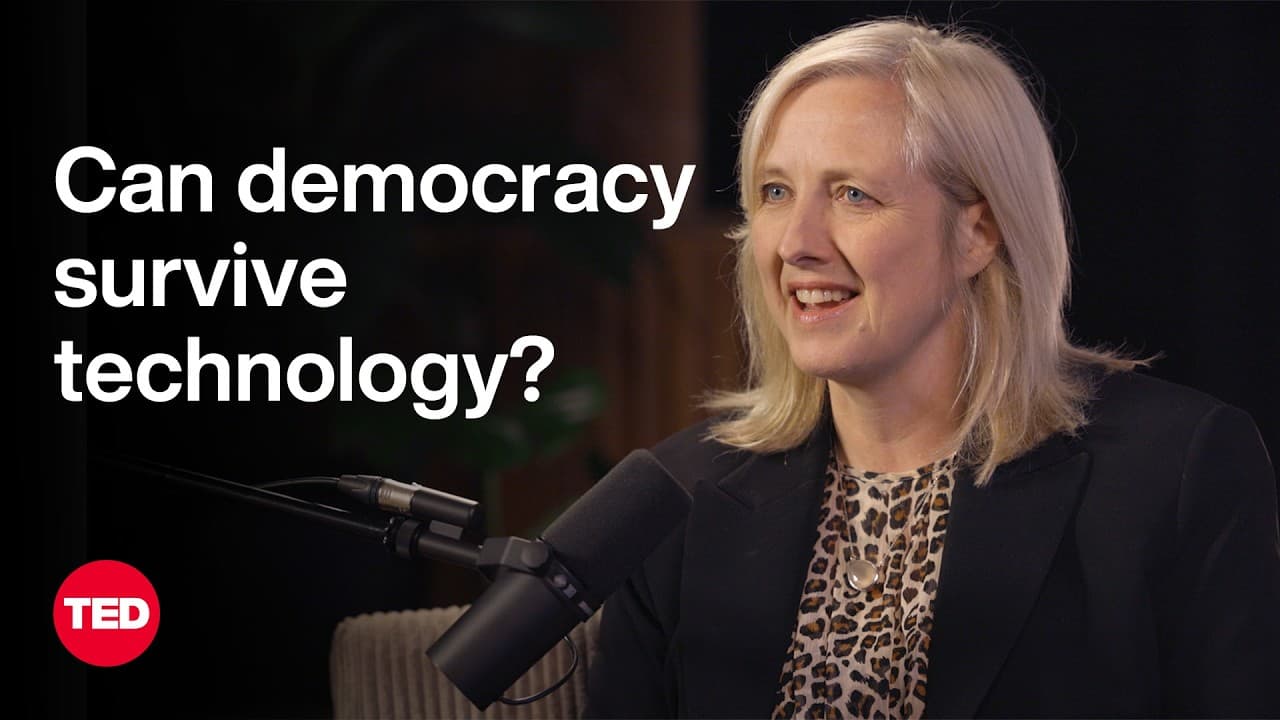
Big Tech and political powers can coexist, but this alignment poses a significant risk to democracy, potentially leading to autocracy in the U.S. Carol Cadwalladr argues that tech leaders are compelled to align with political power, raising concerns about data misuse and surveillance. The public must realize their strength and act to protect democratic values amidst these challenges.
Transcript
Carol Kadala, it's so nice to get to sit down with you. Um, a few days ago, you opened the TED conference with an absolute blockbuster of a talk, got a huge reaction from people. Um, in a one-s sentence summary, and I'd like you to expand on this, uh, what you argued was that we're in the middle of what looks like a digital coup. Um, that the combi... Read More
Key Insights
- 😃 The convergence of big tech and politics may threaten democracy, leading toward autocracy.
- 🧑🏭 Silicon Valley leaders may act in unison through a shared need for political favor, despite competitive tensions.
- 🧑💻 Data ownership and ethical standards in tech are essential, as data once captured can have irreversible consequences.
- ✊ The public must recognize their collective power to mobilize against authoritarianism and protect democratic values.
- 😀 Cadwala's personal experiences highlight the challenges journalists face in navigating a politically charged media environment.
- 😣 Surveillance and misuse of personal data can have severe implications for individual rights and privacy.
- 😮 The rise of AI presents both opportunities and ethical dilemmas concerning data usage and individual consent.
- 🎙️ More videos with Chris Anderson:
Install to Summarize YouTube Videos and Get Transcripts
Explore YouTube Video Summarizer or Get YouTube Transcript Extractor
Questions & Answers
Q: What is the main argument presented by Carol Cadwala in her TED talk?
Carol Cadwala contends that a digital coup is underway in America, driven by a coalition of major tech leaders and political figures like Trump. She explains how this alliance could lead to an autocratic regime, threatening democratic norms by consolidating power and control over information.
Q: How does Cadwala describe the relationship between Silicon Valley leaders and the Trump administration?
Cadwala describes Silicon Valley leaders as being metaphorically "held hostage" by the Trump administration, suggesting that political power dynamics compel tech leaders to align with Trump's agenda. Despite their competition, they share a reliance on governmental approval and face repercussions for dissent.
Q: What does the term "brolyarchy" refer to in this context?
"Brolyarchy" is a term coined by Cadwala to describe the alliance of powerful tech elites who, despite being competitors, act in a way that aligns with a political agenda. This term captures the tension between their rivalry and the necessity to gain approval from political leadership for corporate gain.
Q: What does Cadwala mean by the “crack cocaine of Silicon Valley” in relation to data?
By labeling data as the "crack cocaine of Silicon Valley," Cadwala underscores how essential data is for technological development, particularly for artificial intelligence. She warns about the dangers of possessing vast amounts of data, emphasizing that once it is captured, it can never be retrieved, leading to potential abuses of power.
Q: How does Cadwala relate her own experiences in journalism to the current state of media and technology?
Cadwala reflects on a personal legal battle that sheds light on broader themes of media manipulation and censorship. She highlights how the political landscape is increasingly hostile toward journalists, foreshadowing a troubling future for independent reporting amid rising authoritarianism.
Q: In what ways does Cadwala argue that the public can regain power in this situation?
Cadwala argues that despite feelings of powerlessness among the American public, they possess inherent strength through democratic values and collective action. She urges individuals to recognize their capacity for influence and mobilize against the encroaching threats to democracy and freedom of expression.
Q: What are the implications of data misuse according to Cadwala?
Cadwala points out that misuse of data can lead to significant risks, including surveillance and control over individual lives. She uses examples like period-tracking apps to illustrate how sensitive personal information could be weaponized against individuals, making a case for more ethical data practices.
Q: Why does Cadwala criticize the phrase "move fast and break things" in the tech industry?
Cadwala criticizes the phrase "move fast and break things" because it suggests a reckless disregard for laws and regulations. She argues that this mentality leads to a culture of impunity where companies feel free to act unlawfully, ultimately undermining democratic principles and ethical standards.
Summary & Key Takeaways
-
Carol Cadwala's TED talk highlights the dangerous intersection of powerful tech leaders and political regimes, suggesting this could lead to autocracy in the U.S.
-
She refers to the concept of "brolyarchy," illustrating how competitive tech giants may find common cause in aligning with political power despite their rivalry.
-
The discussion emphasizes the importance of data control and digital ethics, warning of the irreversible consequences of data misuse in politics and society.
Read in Other Languages (beta)
Share This Summary 📚
Summarize YouTube Videos and Get Video Transcripts with 1-Click
Try YouTube Summary with ChatGPT & Claude or YouTube Transcript Generator
Explore More Summaries from TED 📚




Summarize YouTube Videos and Get Video Transcripts with 1-Click
Try YouTube Summary with ChatGPT & Claude or YouTube Transcript Generator