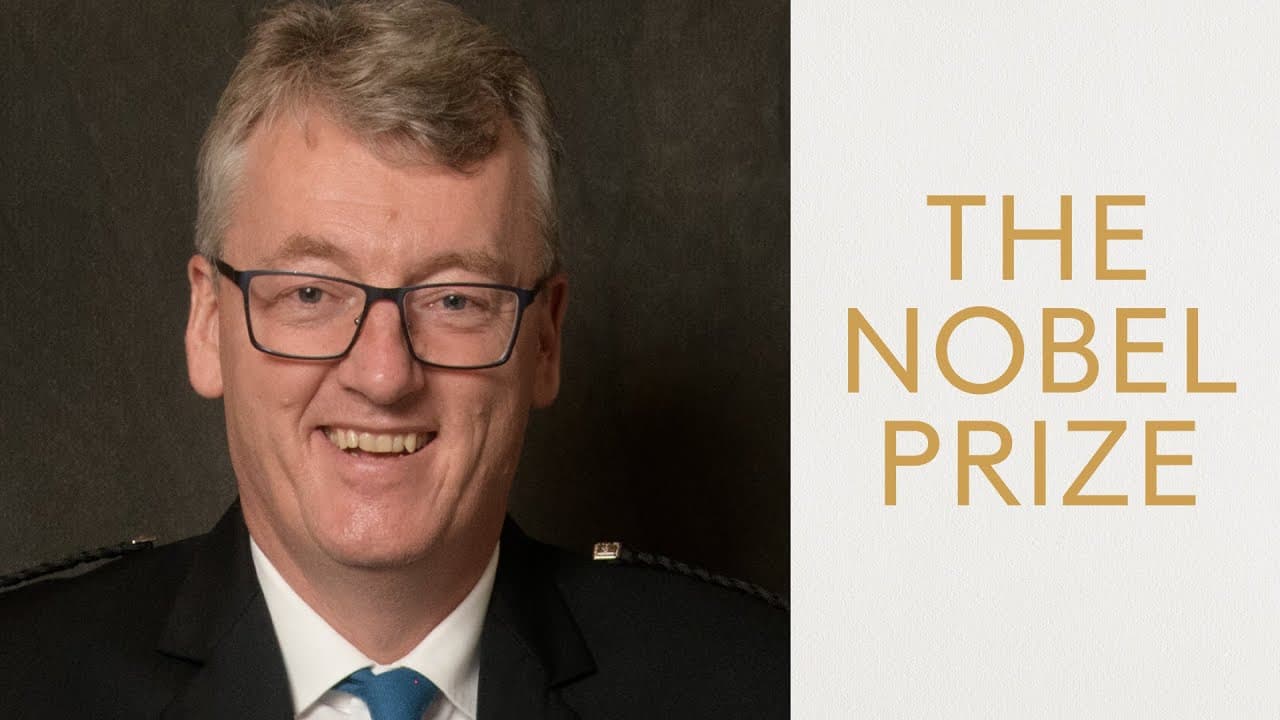
David W.C. MacMillan: Nobel Prize lecture in chemistry 2021
TL;DR
Asymmetric organocatalysis uses organic molecules as catalysts to produce one molecular mirror image preferentially, without relying on a metal catalyst. Catalysts lower reaction energy barriers, making reactions easier and faster, while asymmetric control is especially important for medicines because the human body may respond differently to two mirror-image forms of the same molecule.
Transcript
david macmillan was born in 1968 in bell's hill scotland he obtained his phd in 1996 from the university of california irvine he is currently the james mcdonald distinguished university professor at princeton university in the united states david mcmillan i now welcome you on to the stage we are very much looking forward to your lecture okay i'd li... Read More
Key Insights
- Catalysis lowers the energy barrier of a chemical reaction, making the reaction easier and faster. MacMillan illustrates this function by comparing a high-energy journey over a hill with a lower-energy route through a tunnel, which represents the alternative pathway provided by a catalyst.
- Catalysis supports the production of enough food for the global population through the catalytic conversion of nitrogen into ammonia. According to the lecture, ammonia is necessary for food production, and 50 percent of the nitrogen-containing building blocks in the human body trace back to this catalytic reaction.
- Catalysis is used in 90 percent of industrial-scale chemical reactions and underlies 35 percent of the world's GDP, according to the lecture. Its economic importance is expected to increase as chemical manufacturing moves toward processes designed to be more sustainable.
- Asymmetry occurs when two objects are mirror images but cannot be superimposed. Left and right hands demonstrate this property because a glove designed for one hand does not fit the other, even though the hands have closely related mirror-image shapes.
- Biological systems distinguish molecular mirror images because proteins, DNA, carbohydrates, hormones, and other building blocks of life are made from one mirror-image form rather than the other. This explains why even a young child can immediately distinguish certain mirror-image molecules by their different smells.
- Asymmetric catalysis selectively produces one molecular mirror image instead of the other. This selectivity is important in medicine because the body may recognize one mirror-image form beneficially, while the other form can be problematic, toxic, or dangerous.
- Biocatalysis and metal catalysis were the two major branches of asymmetric catalysis described for 1996. Biocatalysis uses enzymes from living systems, while metal catalysis is a human-designed approach that uses metals to favor the production of one molecular mirror image.
- Organocatalysis uses an organic molecule as the catalyst without requiring the metal component of a conventional metal catalyst. MacMillan considered this approach because metals can be expensive, toxic, difficult to handle, sensitive to the atmosphere, or unsustainable, while organic molecules are often safer and more practical.
Install to Summarize YouTube Videos and Get Transcripts
Explore YouTube Video Summarizer or Get YouTube Transcript Extractor
Questions & Answers
Q: What is asymmetric organocatalysis?
Asymmetric organocatalysis is the use of an organic molecule as a catalyst to make one molecular mirror image preferentially over the other. It combines three ideas: catalysis makes reactions easier and faster, asymmetric synthesis controls which mirror-image product forms, and the organic catalyst performs the catalytic role without requiring the metal component used in metal catalysis.
Q: How does a catalyst make a chemical reaction faster?
A catalyst makes a chemical reaction faster by lowering the energy barrier that the reaction must overcome. MacMillan compares an uncatalyzed reaction to walking over a hill every night and a catalyzed reaction to passing through a tunnel. The lower-barrier route requires less energy, makes the transformation easier, and can allow new chemical reactions to occur.
Q: Why is catalysis important for global food production?
Catalysis is important for global food production because a catalytic reaction converts nitrogen into ammonia, which is needed to make food. MacMillan states that supporting a global population of eight billion people would not have been possible without this reaction. He also says that 50 percent of the nitrogen-containing building blocks in the human body derive from it.
Q: What does asymmetric mean in chemistry?
In chemistry, asymmetric describes mirror-image forms that are similar but cannot be superimposed. The relationship resembles a person's left and right hands: they mirror each other, yet a left-hand glove does not properly fit the right hand. Organic molecules can have the same relationship, creating two distinct forms that may interact differently with biological systems.
Q: Why do molecular mirror images matter in medicine?
Molecular mirror images matter in medicine because the human body is built from biological components that use one mirror-image form rather than the other. As a result, the body can recognize two forms of a medicine differently. One form may provide the intended effect, while the other can be problematic, toxic, or dangerous, making selective production essential.
Q: How can humans distinguish mirror-image molecules?
Humans can distinguish some mirror-image molecules through smell, even though differentiating them in a laboratory may require expensive instruments and considerable time. MacMillan attributes this biological sensitivity to the mirror-image selectivity of proteins, DNA, carbohydrates, hormones, and other building blocks of life, which allows the body to interact differently with each molecular form.
Q: What is the difference between biocatalysis and metal catalysis?
Biocatalysis uses enzymes obtained from the body or other living systems to produce one molecular mirror image preferentially. Metal catalysis is a human-designed approach that uses metals to achieve comparable selectivity. MacMillan identifies these as the two major branches of asymmetric catalysis that were established when his part of the story began in 1996.
Q: Why did MacMillan consider catalysts without metals?
MacMillan considered metal-free catalysts after spending many hours working with metal catalysts inside a glove box that excluded air, oxygen, and moisture. He observed that metals can be expensive, toxic, difficult to handle, atmosphere-sensitive, or unsustainable. The organic portions of catalysts, by contrast, are often inexpensive, safe, sustainable, recyclable, and suitable for use independently.
Summary
In this video, David MacMillan, a Nobel Prize laureate in chemistry, discusses the concept of asymmetric organocatalysis. He explains the basics of catalysis and its importance in chemical reactions. MacMillan highlights the impact of catalysis on various aspects of our world, including population growth, food production, and industrial processes. He then delves into the meaning of asymmetric and how it relates to mirror images and biological implications. Finally, he introduces the term organocatalysis and describes its development and applications in different fields, such as fragrance production, plastic recycling, and pharmaceutical synthesis. MacMillan concludes by emphasizing the sustainability and future potential of organocatalysis, as well as expressing his gratitude to his colleagues and family.
Questions & Answers
Q: What is catalysis?
Catalysis is a process that accelerates chemical reactions by lowering the energy barrier required for those reactions to occur. It makes reactions easier, faster, and can lead to the development of new chemical reactions. For example, the conversion of nitrogen into ammonia, which is crucial for food production, is made possible through catalysis. Without catalysis, many chemical reactions would not happen at a practical rate.
Q: How does catalysis impact the world?
Catalysis has a significant impact on various aspects of our world. For instance, the conversion of nitrogen into ammonia allows us to produce enough food to sustain the growing global population. Catalysis also plays a crucial role in industrial-scale chemical reactions and contributes to around 35% of the world's GDP. It is used in the manufacturing of polymers, materials, medicines, and even solar cells. Catalysis improves efficiency, enables new reactions, and drives economic growth.
Q: What does asymmetric mean in the context of organic chemistry?
In organic chemistry, asymmetric refers to compounds or reactions that possess chirality, which means they have mirror images that are not superimposable on each other. Chirality is often referred to as handedness, similar to the way our hands are mirror images but cannot be perfectly overlapped. Many organic molecules exhibit chirality, and their mirror images can have different properties or behaviors in biological systems. Asymmetry is significant in various fields, such as medicine, where one mirror image of a molecule may be beneficial while the other could be toxic or ineffective.
Q: How does chirality relate to biological implications?
Chirality or asymmetry has essential biological implications because many building blocks of life, such as proteins, DNA, carbohydrates, and hormones, are made up of molecules that possess chirality. Biological systems typically recognize and utilize one chiral form of a molecule, while the other mirror image can often be ineffective or harmful. This phenomenon has significant implications for drug development and pharmaceutical synthesis. Selectively producing one mirror image using catalysis, known as asymmetric catalysis, is essential for creating safe and effective medications.
Q: What is organocatalysis?
Organocatalysis is a branch of catalysis that focuses on using organic compounds as catalysts to facilitate chemical reactions. Unlike traditional catalysis that often involves expensive or toxic metallic catalysts, organocatalysis utilizes organic molecules as catalysts, which are generally inexpensive, sustainable, and non-toxic. The concept of organocatalysis emerged as an alternative to metal-based catalysis. It offers unique advantages, such as easier handling, compatibility with air and moisture, recyclability, and a wide range of potential reactions. Organocatalysts can be designed and engineered to provide high selectivity and efficiency in promoting specific reactions.
Q: Why is the development of organocatalysis important?
Organocatalysis is crucial for expanding the scope and possibilities of catalysis in various fields. It offers a sustainable and cost-effective alternative to traditional metal-based catalysis. By utilizing organic compounds as catalysts, organocatalysis opens up new avenues for reaction development, drug synthesis, and material production. The field of organocatalysis strives to discover highly efficient and selective catalysts that can be used for a broad range of reactions, potentially revolutionizing the pharmaceutical, chemical, and material industries.
Q: What were the two major branches of asymmetric catalysis before the emergence of organocatalysis?
Before the introduction of organocatalysis, two major branches of asymmetric catalysis were biocatalysis and metal catalysis. Biocatalysis utilizes enzymes derived from living organisms to promote selective reactions, making it highly efficient and specific. Metal catalysis, on the other hand, involves the use of metallic catalysts to facilitate asymmetric reactions. Both branches have contributed significant advancements, but the development of organocatalysis brought a distinct approach with a focus on utilizing organic compounds as catalysts.
Q: How did David MacMillan contribute to the field of organocatalysis?
David MacMillan made significant contributions to the field of organocatalysis. During his studies, he focused on exploring the potential of organic compounds as catalysts and developed novel strategies to promote asymmetric reactions. He aimed to create organocatalysts that could work for multiple reactions and designed catalysts based on imidazolenones. MacMillan and his team achieved remarkable success in enabling high selectivity and efficiency in asymmetric catalysis, specifically in the Diels-Alder reaction. His research paved the way for further advancements and applications of organocatalysis.
Q: How did MacMillan's team advance organocatalysis?
MacMillan's team advanced organocatalysis by developing second-generation catalysts and exploring new reaction types. They performed molecular engineering on the initial catalysts, modifying their structures to improve selectivity and efficiency. This precision engineering approach allowed them to achieve high excesses of one mirror image over the other in reactions like the Diels-Alder reaction. Furthermore, MacMillan's team investigated the combination of organocatalysis with organic radicals, which led to the discovery of new types of chemical transformations. They also explored the use of visible light as an energy source for organocatalysis, contributing to the field of photoredox catalysis.
Q: What are some applications of organocatalysis?
Organocatalysis finds applications in various fields, including fragrance production, plastic recycling, and pharmaceutical synthesis. In fragrance production, organocatalysis plays a crucial role in creating compounds that form the basis of perfumes and colognes. It enables the synthesis of complex fragrance molecules efficiently and economically. In plastic recycling, organocatalysis helps break down polymers into their monomers, making it possible to recycle and reuse plastics sustainably. In pharmaceutical synthesis, organocatalysis enables the creation of chiral molecules, including medication components. These applications illustrate the broad impact and versatility of organocatalysis across multiple industries.
Q: How has organocatalysis democratized catalysis?
Organocatalysis has democratized catalysis by making it accessible and affordable to researchers and educators worldwide. The low cost and availability of organic catalysts allow individuals from different countries and backgrounds to learn about and conduct research in organocatalysis. This accessibility has fostered widespread knowledge and expertise in the field, empowering researchers globally to explore novel reactions and catalytic systems. The inclusivity and low entry barriers of organocatalysis contribute to a vibrant and diverse global scientific community focused on advancing catalysis research for the benefit of society.
Takeaways
In summary, David MacMillan's lecture sheds light on the concepts and significance of asymmetric organocatalysis. Catalysis, in general, plays a vital role in speeding up chemical reactions and impacting various aspects of our world, from population growth to industrial processes. Asymmetric refers to the mirror image properties of compounds, which have biological implications and relevance in medicine. Organocatalysis, the use of organic compounds as catalysts, has emerged as a sustainable and versatile field with applications in fragrance production, plastic recycling, and pharmaceutical synthesis. MacMillan's team has made remarkable contributions by expanding the scope of organocatalysis, developing efficient catalysts, exploring new reaction types, and integrating it with other fields such as photoredox catalysis and organic radicals. The affordability and accessibility of organocatalysis have also democratized catalysis, paving the way for global collaboration and advancements in the field. Emphasizing the importance of sustainability, MacMillan envisions a future where organocatalysis, along with other catalytic methods, will drive the development of sustainable technologies to meet the needs of our growing population.
Summary & Key Takeaways
-
Catalysis lowers the energy barrier that must be overcome during a chemical reaction. MacMillan compares this effect to replacing a difficult journey over a hill with a tunnel. By making reactions easier and faster, catalysts support food production, medicines, solar cells, diagnostics, polymers, materials, and many industrial chemical processes.
-
Asymmetry describes objects or molecules that are mirror images but cannot be superimposed, like left and right hands. Biology can distinguish such molecular forms because proteins, DNA, carbohydrates, hormones, and other biological building blocks use one mirror image rather than the other. This selectivity has particularly important consequences for medicines.
-
Organocatalysis developed from the idea that the organic component of a metal catalyst might function independently as the catalyst. MacMillan pursued this possibility after working extensively with metal catalysts in a glove box. Organic molecules offered potential advantages because they are often inexpensive, safe, sustainable, recyclable, and easier to handle.
Read in Other Languages (beta)
Share This Summary 📚
Summarize YouTube Videos and Get Video Transcripts with 1-Click
Try YouTube Summary with ChatGPT & Claude or YouTube Transcript Generator
Explore More Summaries from Nobel Prize 📚




Summarize YouTube Videos and Get Video Transcripts with 1-Click
Try YouTube Summary with ChatGPT & Claude or YouTube Transcript Generator