Amjad Masad on Why 1 Billion Developers Will Reshape the Economy
TL;DR
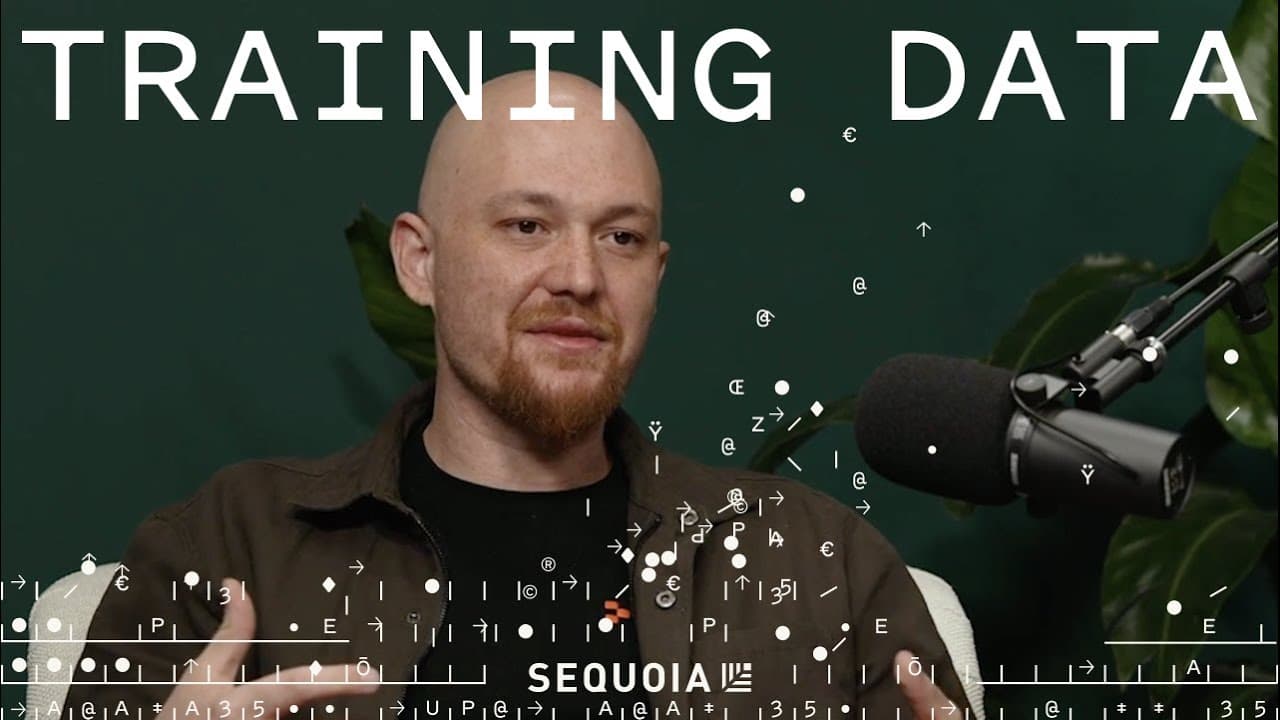
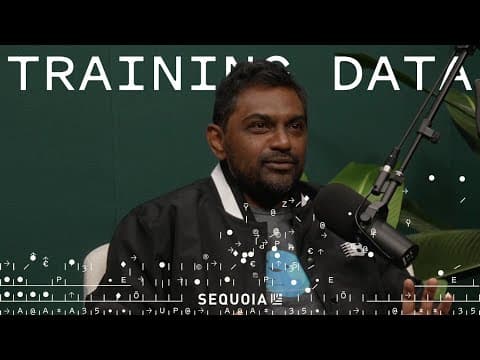
A world with a billion developers would change how companies, supply chains and society work, because anyone with an idea could build software or spin up an AI agent without handing work down a pipeline. Replit CEO Amjad Masad argues this is a more practical future than AGI utopias, while human creativity stays central.
Transcript
you know um what is special about humans and what's uh replicable in in the machines and at least in the in the near term um my view is that AI is going to get really good at um uh sort of two things that are highly represented in the data and things that you can construct a very good RL environment for So what what can you construct a great RL env... Read More
Key Insights
- The goal of a billion developers rests on the belief that making software should be natural on a computer, not the domain of experts. Masad says tools grew more complicated over time, even though he saw no intrinsic reason for it.
- Programming complexity grew partly because of open source's decentralized nature. Masad's answer is to build cathedrals from bazaars, mixing the best open source pieces into polished experiences instead of designing everything top down.
- Most companies still follow the factory pipeline from the industrial revolution. Work moves in silos from product manager to designer to engineer to release engineer to marketer, and Masad expects broad access to software creation to dissolve those silos.
- In a company of generalist problem solvers, a salesperson could spin up an SDR agent for one specific task without asking a boss to hire someone. Masad says these stories are real examples from Replit customers.
- A person on a customer call can use something like Replit Agent to prototype a requested feature in real time. Traditionally that request would go back to engineering and take far longer to answer.
- AI will get very good at things highly represented in data and at things where a strong reinforcement learning environment can be built. Examples include games, math with Lean, and code execution, plus material already on GitHub.
- Fundamentally new ideas and new knowledge are domains where it is unclear how AI will improve. Masad believes creativity, novel ideas and understanding the world in complicated, intractable ways will remain the domain of humans.
- Masad started programming at age 6 and, by seven, was making programs. His first program taught his younger brother math, and that brother now works at Replit. Programming also gave him the opportunities to get an O-1 visa and come to the US.
Install to Summarize YouTube Videos and Get Transcripts
Explore YouTube Video Summarizer or Get YouTube Transcript Extractor
Questions & Answers
Q: What does a world with a billion developers look like?
Masad says that if nearly anyone can program, the nature of a company changes. Instead of silos and a factory-style pipeline, companies become sets of generalist problem solvers. Knowledge workers use software and AI to solve problems directly, and the divide between developers and users of applications shrinks, which was the original vision for computing.
Q: Why did Amjad Masad start Replit's mission of democratizing programming?
Masad began programming at age 6 and felt that making software was the natural thing to do on a computer. He was surprised that it had become the domain of experts. He saw tools growing more complicated over time, with no intrinsic reason, and wanted to make programming something many more people could do.
Q: Why has programming become more complicated over time?
Masad points to social phenomena, including the decentralized nature of open source. Instead of product managers designing how programming should look, a bazaar of open source tools emerged. Setting up a JavaScript environment can take hours or days for newcomers, who must learn concepts such as webpack and transpilation. He believes experiences can be built on top of that ecosystem.
Q: What does 'building cathedrals from bazaars' mean?
In open source language, the cathedral is something designed top down, like Apple or Microsoft products, and the bazaar is a decentralized, complicated mess where open source lives. Masad calls this a false dichotomy. His idea is to take the best of the open source bazaar and combine it into polished, well-designed experiences, which has driven Replit's motivation.
Q: How could generalist problem solvers change how companies work?
Masad says companies today pass work along a pipeline: product manager, designer, engineer, release engineer, then marketers and UX researchers. If people can build with software and AI, a salesperson can create an SDR agent for a specific idea, or prototype a customer's requested feature during a call without returning to engineering. He says these examples come from Replit customers.
Q: What kinds of tasks will AI become very good at?
Masad expects AI to excel at things that are highly represented in data and things for which a strong reinforcement learning environment can be built. He cites games, which allow self-play algorithms as with AlphaZero, math expressed in Lean, code execution, and material already represented on GitHub. These domains let models train against clear, executable feedback.
Q: What will remain the domain of humans according to Masad?
Masad believes humans will keep the domain of fundamentally new ideas and knowledge. He says it is not clear how AI will improve there, since it is hard to build environments for it. Creativity, coming up with novel things, and understanding the world in complicated, intractable ways that could change how things work or change the world, he expects, stay human.
Q: How is the episode's vision different from the common AGI vision?
The host contrasts the common AGI vision, a utopia where people do not work and receive universal basic income, with another future. In it, people keep working as developers and radically change parts of the economy that seemed impossible to revolutionize, such as healthcare, education and industrials. The episode explores how a billion developers might reshape the economy, society and culture.
Summary & Key Takeaways
-
Amjad Masad explains that his vision of a billion developers comes from childhood experience. He began programming at six, found it natural to make software, and was surprised it belonged to experts. He saw tools becoming more complicated over time and wanted Replit to remove that complexity.
-
Masad describes how widespread software creation would change companies. Today's silos follow the industrial factory pipeline, with work passed from product to design to engineering to marketing. If knowledge workers can build, a salesperson can spin up an agent or prototype a feature during a customer call.
-
Masad also discusses where AI is strong and where humans keep an edge. AI excels where data is plentiful and reinforcement learning environments exist, such as math, games and code. For fundamentally new ideas and creativity, he expects humans to remain central to changing how things work.
Read in Other Languages (beta)
Share This Summary 📚
Summarize YouTube Videos and Get Video Transcripts with 1-Click
Try YouTube Summary with ChatGPT & Claude or YouTube Transcript Generator
Explore More Summaries from Sequoia Capital 📚
Summarize YouTube Videos and Get Video Transcripts with 1-Click
Try YouTube Summary with ChatGPT & Claude or YouTube Transcript Generator