How to Use Meditation for Better Brain Health
TL;DR
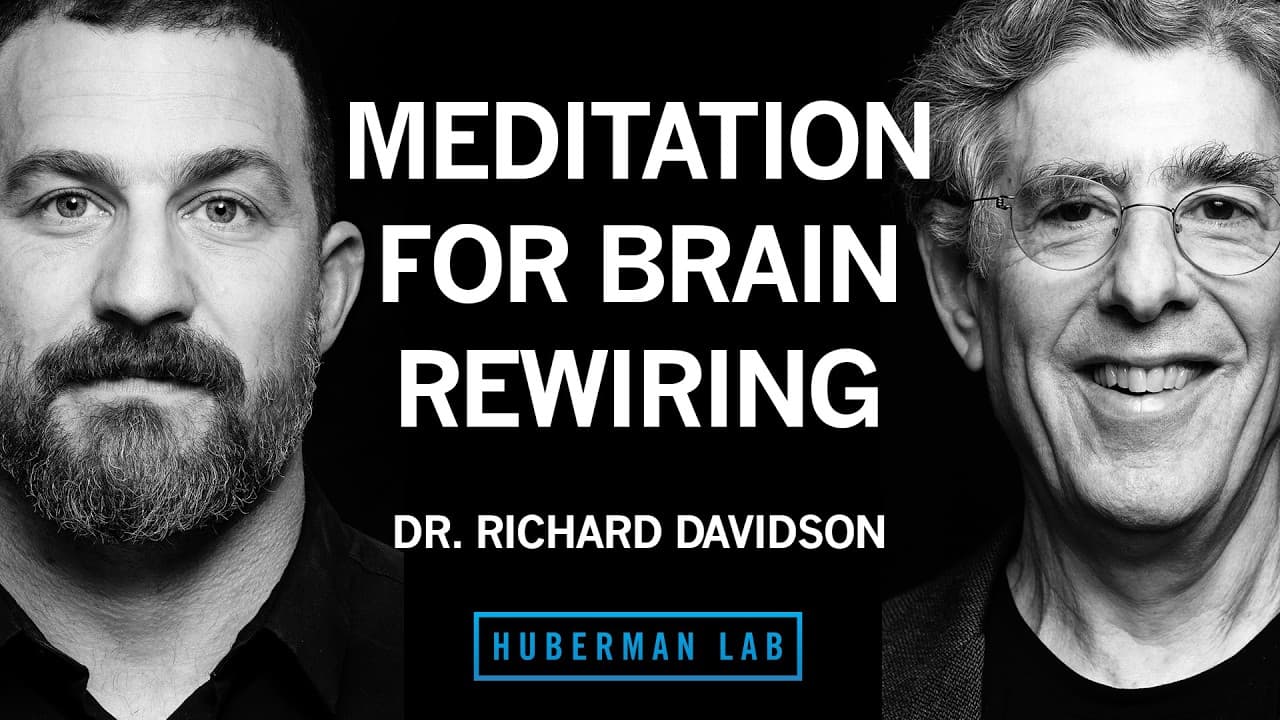
Meditation, even as brief as five minutes daily, can significantly improve mental clarity, focus, and stress resilience. Contrary to common belief, meditation is not about clearing the mind but observing thoughts and stress, which enhances resilience. Regular practice can lead to neuroplasticity, reducing anxiety, depression, and inflammation, while also increasing well-being.
Transcript
We actually have really good data on this that at least for beginning meditators, if you do it for 30 days and you do it just five minutes a day, you will see a significant reduction in symptoms of depression, symptoms of anxiety, and symptoms of stress. We've shown that repeatedly in randomized control trials. You'll see an increase on measures of... Read More
Key Insights
- Meditation for just five minutes daily can reduce symptoms of depression, anxiety, and stress.
- Regular meditation practice increases well-being and flourishing.
- Meditation is not about clearing the mind but observing thoughts and stress.
- Different types of meditation, such as open monitoring and focused attention, have unique effects on the brain.
- Meditation enhances neuroplasticity, leading to long-term changes in brain function.
- Meta-awareness, the ability to know what our minds are doing, is a trainable skill through meditation.
- Meditation can change the brain's electrical activity, influencing states of mind.
- Flourishing and well-being can be contagious, impacting those around us positively.
Install to Summarize YouTube Videos and Get Transcripts
Explore YouTube Video Summarizer or Get YouTube Transcript Extractor
Questions & Answers
Q: How does meditation reduce stress and anxiety?
Meditation reduces stress and anxiety by fostering a state of awareness where individuals observe their thoughts and stress without being overwhelmed by them. This practice enhances resilience to stress by training the mind to remain calm and focused, similar to how physical exercise builds muscle resilience.
Q: What are the benefits of meditating for five minutes a day?
Meditating for just five minutes a day can lead to significant reductions in symptoms of depression, anxiety, and stress. It also promotes an increase in well-being and flourishing, with measurable changes in brain function and reduced inflammation markers like IL6.
Q: What is the difference between open monitoring and focused attention meditation?
Open monitoring meditation involves broadening awareness to all thoughts and sensations without focusing on any specific one, fostering a state of being. Focused attention meditation narrows awareness to a single object or thought, enhancing concentration and awareness skills.
Q: How does meditation affect brain function?
Meditation affects brain function by inducing neuroplasticity, which leads to lasting changes in brain activity and connectivity. This can result in improved focus, emotional regulation, and resilience to stress, as well as changes in brain waves and connectivity between brain regions.
Q: Can meditation improve creativity?
Meditation, particularly open monitoring meditation, can enhance creativity by increasing awareness of associative thoughts and reducing self-monitoring. This allows for a freer flow of ideas and insights, although empirical data on this is still limited.
Q: What role does meta-awareness play in meditation?
Meta-awareness, or the ability to know what our minds are doing, is crucial for effective meditation. It involves recognizing distractions and maintaining focus, which is essential for mental transformation and improving focus and emotional regulation.
Q: How does meditation impact physical health?
Meditation impacts physical health by reducing inflammation markers like IL6, improving immune function, and enhancing sleep quality. These changes are linked to overall improvements in mental health and stress resilience, contributing to better physical well-being.
Q: What are some common myths about meditation?
Common myths about meditation include the idea that it requires clearing the mind or achieving inner peace during practice. In reality, meditation is about observing thoughts and stress, which helps build resilience and focus. It is also accessible to everyone, not just those seeking spiritual enlightenment.
Summary & Key Takeaways
-
Meditation, even as brief as five minutes a day, can significantly reduce symptoms of depression, anxiety, and stress while increasing overall well-being. It works by observing thoughts and stress, rather than clearing the mind, leading to enhanced resilience.
-
Different meditation types, such as open monitoring and focused attention, offer unique benefits and can induce neuroplasticity, which changes brain function over time. This can increase mental clarity, focus, and stress resilience.
-
Meta-awareness, the ability to recognize what our minds are doing, is a crucial skill that can be developed through meditation. This practice can lead to significant improvements in mental health and overall life satisfaction.
Read in Other Languages (beta)
Share This Summary 📚
Summarize YouTube Videos and Get Video Transcripts with 1-Click
Try YouTube Summary with ChatGPT & Claude or YouTube Transcript Generator
Explore More Summaries from Andrew Huberman 📚




Summarize YouTube Videos and Get Video Transcripts with 1-Click
Try YouTube Summary with ChatGPT & Claude or YouTube Transcript Generator