2500 W Induction Melting Device
TL;DR
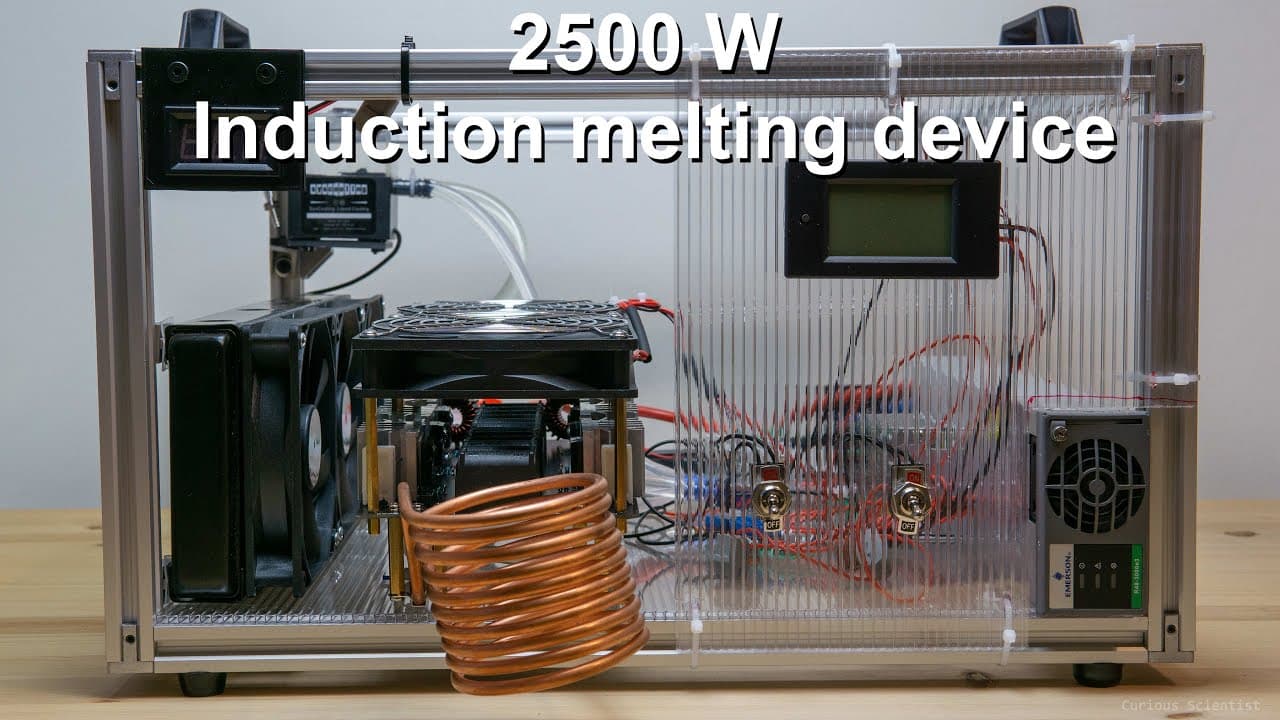
The video introduces a DIY induction melting setup, showcasing its components and operation.
Transcript
welcome everyone in this video i'm going to show you my new project and this will be a little bit more exciting project as my other projects because this will involve a lot of high power stuff and possibly some spectacular things as well and this will be the first video in this kind of series because i'm planning to create more and more videos with... Read More
Key Insights
- 🫠 The project represents a thorough understanding of induction heating and the practical application in metal melting.
- 🥳 The integration of 3D-printed parts highlights a modern approach to DIY projects, allowing customization to meet specific needs.
- 😎 Emphasizing safety, the device incorporates cooling measures and temperature monitoring to ensure a reliable operation.
- ✊ Effective power management is vital, and the proper specifications of the power supply directly influence the melting capacity.
- 😒 The creator plans to use experimental design to improve performance, indicative of an innovative problem-solving approach.
- 🫷 Future experiments are expected to delve into unique phenomena such as magnetic levitation, indicating a push for experimental science.
- 🤗 The project aligns with trends in DIY engineering that emphasize hands-on learning and prototyping of complex systems.
Install to Summarize YouTube Videos and Get Transcripts
Explore YouTube Video Summarizer or Get YouTube Transcript Extractor
Questions & Answers
Q: What is the primary purpose of the induction melting equipment demonstrated in the video?
The primary purpose of the induction melting equipment is to melt small amounts of various metals using induction heating. The creator aims to explore how well different metals can be melted while testing the capabilities of the equipment currently being assembled.
Q: What unique features are highlighted about the cooling system of the device?
The cooling system features a water pump that circulates coolant through the device, including a water cooling block and radiator. The configuration allows for effective temperature management, reducing the risk of overheating in critical components like the solid-state relay and induction coil during melting experiments.
Q: How does the thermocouple integrated into the system function?
The thermocouple measures the temperature of the water in the cooling reservoir to ensure effective thermal management. By monitoring this temperature, the operator can prevent overheating, ensuring the safety and reliability of the induction melting process.
Q: What challenges did the creator face during the initial melting experiments?
During the initial melting experiments, the creator faced challenges related to the diameter of the metal being melted. The poor coupling between the induction coil and the thinner metal resulted in inadequate heating, indicating the need for proper matching between the coil diameter and the size of the material to achieve optimal melting.
Q: Can you explain the power supply setup and its importance?
The power supply setup consists of a high-performance DC supply rated for approximately 3,000 watts, which powers the ZVS driver. This arrangement is crucial as it ensures that the system receives enough power to operate effectively, allowing for efficient induction heating and proper functioning of cooling mechanisms during melting experiments.
Q: What additional experiments are planned for the future videos?
The creator plans to conduct additional experiments focusing on the innovative coil designed for metal levitation and more effective melting techniques. Future videos will build upon the current setup, exploring different materials, designs, and configurations to enhance the project's overall capabilities.
Summary & Key Takeaways
-
The video presents a new project focused on creating an induction melting device using mainly off-the-shelf components along with custom 3D-printed parts for improved functionality.
-
Key equipment features are detailed, including a powerful ZVS driver, a cooling system with a water pump, and a thermocouple to monitor temperatures, crucial for ensuring safe operation.
-
The narrator discusses the experimental phase, explaining challenges faced in achieving effective metal melting and hints at future experiments involving innovative coil designs.
Read in Other Languages (beta)
Share This Summary 📚
Summarize YouTube Videos and Get Video Transcripts with 1-Click
Try YouTube Summary with ChatGPT & Claude or YouTube Transcript Generator
Explore More Summaries from Curious Scientist 📚


![Building a coil winder [Part 6] - A few improvements thumbnail](/_next/image?url=https%3A%2F%2Fi.ytimg.com%2Fvi%2F3eyxG_g2iUA%2Fhqdefault.jpg&w=750&q=75)

Summarize YouTube Videos and Get Video Transcripts with 1-Click
Try YouTube Summary with ChatGPT & Claude or YouTube Transcript Generator