What Happens When You Touch a Giant Isopod?
TL;DR
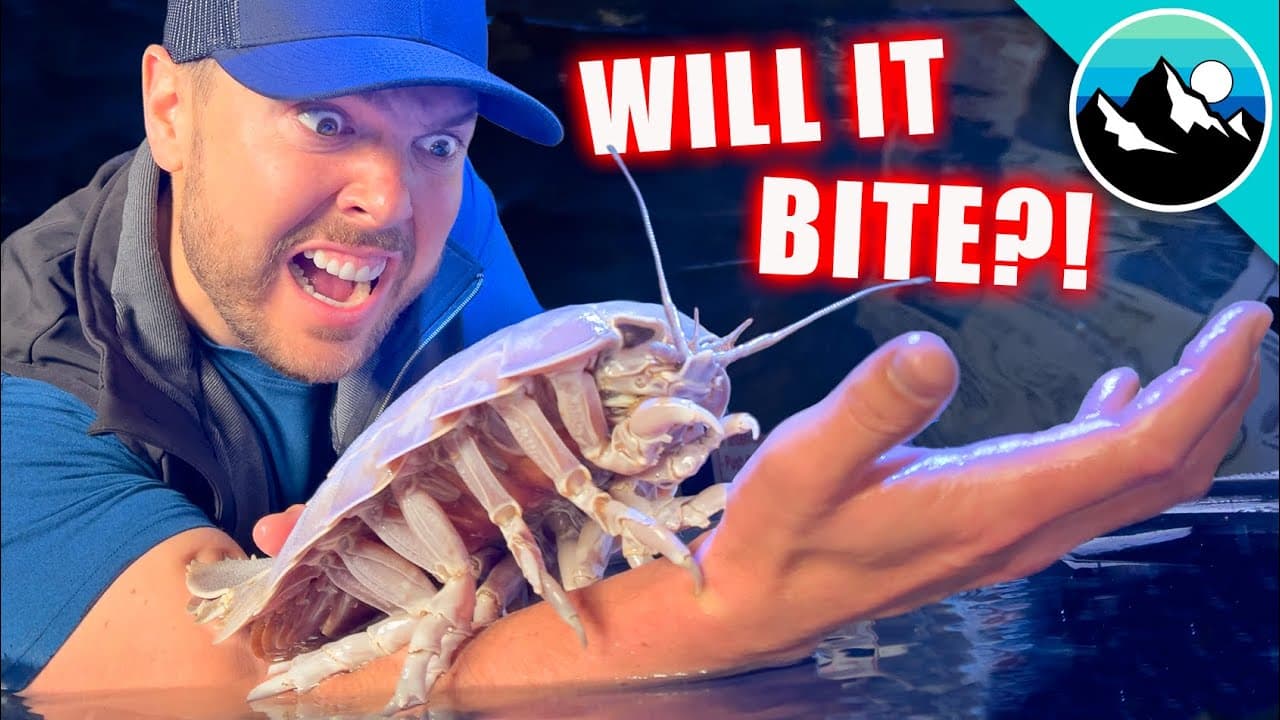
When touching a giant isopod, you'll find they're surprisingly gentle and do not bite humans. These deep-sea creatures can grow up to two feet and are known for their unique adaptations, including a rigid exoskeleton and specialized swimming appendages. Although they have sharp jaws, they primarily feed on deceased marine life and are safe to handle in controlled environments.
Transcript
- They will eat just about anything that they can get their mouths on. Those four sets of jaws are extraordinarily sharp. Does the isopod have a taste for human flesh? Let's give it a quick try. I can feel it poking around. Ah, its claws or digging in. (water splashing) (intense music) (sigh) Today is a big day for the Brave Wilderness channel beca... Read More
Key Insights
- 🥳 Giant isopods are found in very deep parts of the ocean, with some species reaching sizes of up to two feet.
- 🐛 They are related to crabs and lobsters, not insects or bugs.
- 🏊 Giant isopods have a rigid exoskeleton and softer underside, along with pleopods for swimming and breathing.
- 😃 They have adaptations for living in complete darkness, including specially developed eyes and antennae.
- 🎮 Giant isopods are docile creatures and can be touched in controlled environments.
- ❓ The diet of giant isopods includes various deceased marine animals.
- 🤢 They are part of the deep-sea ecosystem and contribute to the natural decomposition process.
Install to Summarize YouTube Videos and Get Transcripts
Explore YouTube Video Summarizer or Get YouTube Transcript Extractor
Questions & Answers
Q: Are giant isopods dangerous to humans?
While giant isopods have sharp jaws, they are gentle giants and would never bite a human being in normal circumstances.
Q: What is the diet of giant isopods?
Giant isopods are carnivorous and will eat almost anything, including deceased fish, whales, and even alligators.
Q: Why are giant isopods so large?
The theory of deep sea gigantism suggests that deep-sea creatures, including giant isopods, grow larger due to the unique conditions of their environment.
Q: How do giant isopods navigate in the dark?
Giant isopods have poor eyesight and rely on their four antennae to navigate and understand their dark environment, with the smaller ones used for chemical sensing and the longer ones for feeling their surroundings.
Summary & Key Takeaways
-
The video takes place at Aquarium Encounters in Florida, where the Brave Wilderness crew films a close encounter with giant isopods, unique deep sea creatures.
-
Giant isopods are found in the Atlantic, Pacific, and Indian Oceans, living at depths of 700 to 7,000 feet.
-
The isopods are larger than their terrestrial relatives and have a rigid exoskeleton, soft underside, and swim using pleopods.
Read in Other Languages (beta)
Share This Summary 📚
Summarize YouTube Videos and Get Video Transcripts with 1-Click
Try YouTube Summary with ChatGPT & Claude or YouTube Transcript Generator
Explore More Summaries from Brave Wilderness 📚



Summarize YouTube Videos and Get Video Transcripts with 1-Click
Try YouTube Summary with ChatGPT & Claude or YouTube Transcript Generator