How Did Joseph Smith Build the Mormon Church?
TL;DR
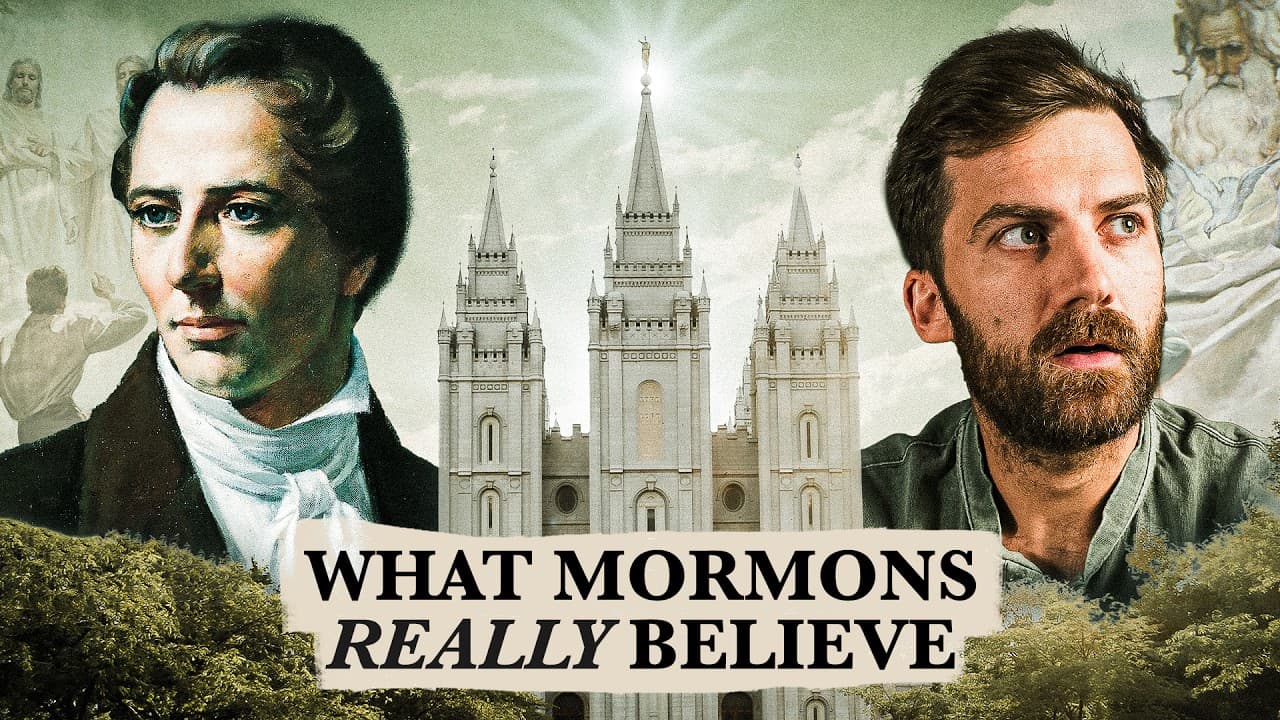
Joseph Smith built the Mormon Church by presenting himself as a prophet called to restore Christ’s true church and prepare for Jesus Christ’s return. Shaped by early 1800s upstate New York, he drew on revivalist religion, millennial expectations, and folk-magic practices before dictating the 588-page Book of Mormon during a productive 90-day period. Read on to understand how his visions, translation methods, and sacred text established his authority.
Transcript
(light organ music) - [Johnny] Joseph Smith, he's someone I know well. He's the author of a worldview that I held for most of my life. I taught it to hundreds of people when I was a missionary. It's a religion and a gospel that I deeply believed it. One full of hope and meaning and community and unique stories. Stories about where we came from and ... Read More
Key Insights
- Joseph Smith’s religious movement emerged from an environment where revivalist preaching, new denominations, millennial expectations, folk magic, and treasure hunting overlapped. These conditions made personal visions and supernatural claims more culturally familiar than they might appear to a modern audience.
- Church attendance was limited in the period described, with only 10% of white Americans regularly attending church. Charismatic preachers responded by taking revival campaigns into the countryside, helping create an explosion of emotional, expressive, and highly personal religious experimentation in places such as upstate New York.
- The Millennium was understood by many believers as an approaching thousand-year period connected to Jesus Christ’s return. New religious groups claimed special responsibility for preparing the earth, presenting themselves as God’s chosen administrators during what they considered the final days before judgment and glory.
- Joseph Smith’s early reputation was connected to treasure hunting rather than organized religion. He reportedly used seer stones, dreams, crystals, rods, and other mystical practices associated with searches for buried riches, although the account says researchers found no document showing that he successfully located treasure.
- The First Vision is the LDS Church’s central founding story. Smith said that, at age 14 in 1820, he prayed about which church was true and saw God the Father and Jesus Christ, who told him that existing churches were wrong and assigned him a restorative mission.
- The angel Moroni’s reported visit connected Smith’s prophetic calling to a physical sacred record. Smith said Moroni told him about golden plates buried near his home, describing Jews who left Jerusalem in 600 BC and traveled to the Americas, along with instruments for translating their record.
- The Book of Mormon was dictated through methods continuous with Smith’s earlier folk-magic practices. He reportedly used stones to interpret engravings and sometimes placed his personal seer stone inside a hat, looked into it, and dictated illuminated words to scribes without consulting the plates directly.
- The Book of Mormon established Smith’s credibility among early believers because a barely educated young man had produced a lengthy Bible-like narrative quickly. The account describes biblical borrowing alongside religious teachings, complex histories, and references suggesting familiarity with Hebrew language and culture.
Install to Summarize YouTube Videos and Get Transcripts
Explore YouTube Video Summarizer or Get YouTube Transcript Extractor
Questions & Answers
Q: How did Joseph Smith build the Mormon Church?
Joseph Smith presented himself as a prophet called to restore the true church and prepare the world for Jesus Christ’s return. His reported visions established that mission, while his rapid dictation of the Book of Mormon supplied a sacred text that validated his authority for early believers.
Q: What religious environment shaped Joseph Smith?
Joseph Smith grew up amid intense religious experimentation in early 1800s upstate New York, when only 10% of white Americans regularly attended church. Charismatic preachers promoted emotional, personal forms of Christianity, and new churches claimed roles in preparing the world for Jesus Christ’s return.
Q: How did treasure hunting influence Joseph Smith?
Treasure hunting introduced Smith to seer stones, crystals, rods, dreams, and other mystical methods used to search for buried valuables. He gained a reputation as a skilled treasure hunter, although the account says researchers found no document showing that he actually located treasure. Similar practices later appeared in accounts of his religious translation.
Q: What did Joseph Smith claim happened in the First Vision?
Smith said that in spring 1820, at age 14, he prayed in a grove to discover which church was true. After an encounter with the devil, he reportedly saw God the Father and Jesus Christ in a pillar of light. Jesus told him that the existing churches were untrue and called him to help restore the true church.
Q: What did the angel Moroni reportedly tell Joseph Smith?
Smith said Moroni appeared to him in 1823 and told him about golden plates buried near his home. The plates reportedly recorded the history of Jews who left Jerusalem in 600 BC and traveled to the Americas. Moroni also described instruments buried with the plates that could be used to translate the record.
Q: How did Joseph Smith translate the Book of Mormon?
Smith dictated the text to scribes while reportedly using stones as translation instruments. Some accounts describe him looking through stones at engravings on the plates; at other times, he placed his chocolate-colored, egg-shaped seer stone inside a hat and dictated illuminated words without consulting the plates directly.
Q: How quickly did Joseph Smith produce the Book of Mormon?
The account says Smith dictated 588 pages during a productive 90-day period while working with several scribes, including his wife and other supporters. After completing the manuscript, he said he returned the golden plates to Moroni and delivered the text to a printer.
Q: Why did the Book of Mormon strengthen Joseph Smith’s authority?
Early followers saw the lengthy, Bible-like book as remarkable because Smith was barely educated and could only somewhat read and write. Its religious teachings, complex histories, and references to Hebrew language and culture helped validate his claim to be a prophet, even though the account also identifies extensive borrowing from the Bible.
Summary & Key Takeaways
-
Joseph Smith grew up in early 1800s upstate New York, where religious experimentation, millennial preaching, folk magic, and treasure hunting were widespread. Although barely educated and initially not religious, he gained a local reputation for using mystical methods to search for buried valuables before redirecting those practices toward religious translation and prophecy.
-
Smith said that God the Father and Jesus Christ appeared to him in 1820 and rejected every existing church as untrue. He later reported that the angel Moroni revealed the location of golden plates containing an ancient record. These experiences became the foundation for his claim that he would restore Christ’s true church.
-
Smith dictated the Book of Mormon to scribes using interpreters and, at times, a seer stone placed inside a hat. He completed 588 pages during a productive 90-day period, according to the account presented. The resulting Bible-like book validated his prophetic role for early followers and remains foundational to Latter-day Saint belief.
Read in Other Languages (beta)
Share This Summary 📚
Summarize YouTube Videos and Get Video Transcripts with 1-Click
Try YouTube Summary with ChatGPT & Claude or YouTube Transcript Generator
Explore More Summaries from Johnny Harris 📚






Summarize YouTube Videos and Get Video Transcripts with 1-Click
Try YouTube Summary with ChatGPT & Claude or YouTube Transcript Generator