How to Market a Mobile App Before You Build It
TL;DR
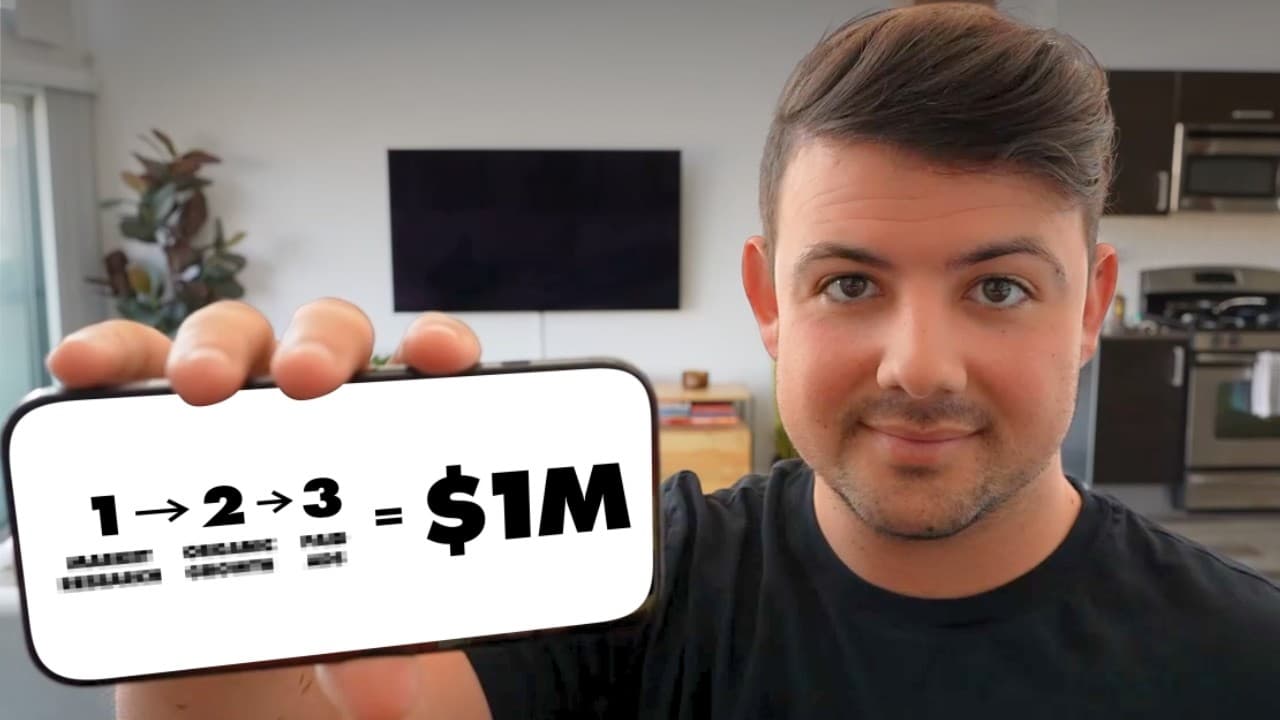
Start with marketing research before building a mobile app: find highly liked TikTok videos in the target niche, document their hooks, storylines, and calls to action, then recreate the underlying formats with original content. Publish organically at high volume, identify the posts that attract attention, and use those proven winners as the basis for paid advertising.
Transcript
What if I told you that success has nothing to do with coding? Well, what I'm going to share with you today is the difference between apps that make millions and apps that die with zero downloads. Don't believe me? Well, here's proof. Meet Steven, a founder who took his mobile app from 0 to $40,000 MR and then sold it for a life-changing amount. St... Read More
Key Insights
- Marketing is the starting point for every mobile app because product quality alone cannot generate revenue when potential users never discover the product. Steven's three-phase framework consists of market research, high-volume organic publishing, and scaling proven content through paid advertising.
- A promising app idea solves a painful problem affecting many people. Steven connected his own experience with vaping addiction to a subject that was controversial and already attracting substantial attention on TikTok, giving Puff Count both a defined problem and a visible audience.
- TikTok search can validate audience interest by revealing which niche videos have earned the most likes. Steven recommends searching relevant keywords, filtering for the most-liked videos of all time, and examining recurring concepts that resonate with the intended users.
- A research spreadsheet creates a structured record of successful content. Each row can include a video's URL, opening hook, storyline, call to action, filming details, audience pain points, and other elements that may explain why viewers continued watching and responded.
- Every viral video can be examined through three core elements: the hook, the storyline, and the call to action. Steven also records seemingly small production choices, including camera movement, physical actions, props, sounds, and the sequence in which information appears.
- Original marketing content can borrow validated concepts without claiming to invent them. Puff Count adapted the existing visual idea of dropping a vape into water because earlier TikTok posts had already demonstrated that the concept resonated with people interested in quitting vaping.
- Seven days of manual content analysis preceded Puff Count's first TikTok post. Steven recommends personally watching, saving, and documenting niche videos because the exercise develops an understanding of audience problems and successful formats that automated summaries may not provide.
- The organic content framework is hook, problem, and solution or call to action. The hook must capture attention within the first three seconds, and it can combine visual movement with sound, such as shaking a glass bowl filled with empty vapes.
Install to Summarize YouTube Videos and Get Transcripts
Explore YouTube Video Summarizer or Get YouTube Transcript Extractor
Questions & Answers
Q: How do you validate a mobile app idea with TikTok?
Search TikTok for keywords directly related to the proposed app's niche, open the video filters, and examine the most-liked videos of all time. Strong engagement shows that people are already paying attention to the subject and reveals the problems, stories, and visual concepts that resonate. Record the best examples and analyze why each attracted viewers before committing to content production.
Q: What is the three-phase mobile app marketing framework?
The framework begins with market research to understand what is already going viral within the app's niche. The second phase is publishing a high volume of organic content based on the formats uncovered during that research. The third phase is using paid advertising to scale the organic winners, which means advertising concepts that have already demonstrated an ability to attract attention.
Q: What should a mobile app content research spreadsheet include?
A content research spreadsheet should include the URL of each successful niche video and a breakdown of its hook, storyline, and call to action. It should also capture production details such as camera movement, opening actions, props, sounds, setting, and the order of events. Pain points, proposed solutions, and subtle promotional techniques should be recorded when they appear.
Q: How do you analyze why a TikTok video went viral?
Break the video into its hook, storyline, and call to action, then examine how each part is presented. Note what happens visually and verbally in the opening, how the creator develops the audience's problem, and how the solution is introduced. Small choices such as walking with the camera, setting it down, using multiple props, or adding sound may contribute to attention.
Q: How should a mobile app TikTok hook be structured?
A TikTok hook should capture attention during the first three seconds and immediately establish a reason to continue watching. It can combine spoken language, visible action, movement, props, and distinctive sound. One Puff Count example opened by shaking a glass bowl filled with empty vapes, creating a sound hook before moving directly into the video's main concept.
Q: How can organic TikTok content generate mobile app installs?
Organic content can introduce an app to its intended audience by addressing a familiar problem through formats that have already attracted attention in the niche. Using this approach, the Puff Count account reportedly grew to 120,000 followers, exceeded 50 million views, and produced hundreds of thousands of App Store installs without advertising costs. These results reflect Steven's reported experience, not a guaranteed outcome.
Q: Why should founders research content before building an app?
Content research tests whether a problem attracts attention and whether the proposed product can be marketed to a visible audience. Steven argues that an excellent product cannot become a successful business if nobody knows it exists. Researching viral niche content first helps founders understand audience pain points, identify repeatable formats, and evaluate marketability before investing heavily in product development.
Q: When should paid ads be used for a mobile app?
Paid ads should follow organic testing rather than precede it within Steven's framework. First, publish content organically and observe which concepts perform successfully with the target audience. Then use those winners as the foundation for paid campaigns. This approach treats organic performance as evidence that a hook, storyline, or format can attract attention before advertising money is used to scale it.
Summary & Key Takeaways
-
Steven presents a marketing-first approach based on his experience building, scaling, and exiting mobile apps. His quit-vaping app, Puff Count, reached $44,000 in monthly recurring revenue before its sale. He argues that even an excellent product cannot become a successful business when its intended users never discover it.
-
The first phase combines product validation with content research. Founders search TikTok using niche keywords, filter for the most-liked videos, and record promising examples in a spreadsheet. Each example is analyzed for its hook, storyline, call to action, filming style, movement, setting, and presentation of audience pain points.
-
The second phase turns research into organic content using a hook, problem, and solution or call-to-action structure. Puff Count's account reportedly reached 120,000 followers, more than 50 million views, and hundreds of thousands of App Store installs without advertising costs. Successful organic posts can then inform paid advertising decisions.
Read in Other Languages (beta)
Share This Summary 📚
Summarize YouTube Videos and Get Video Transcripts with 1-Click
Try YouTube Summary with ChatGPT & Claude or YouTube Transcript Generator
Explore More Summaries from Starter Story 📚


Summarize YouTube Videos and Get Video Transcripts with 1-Click
Try YouTube Summary with ChatGPT & Claude or YouTube Transcript Generator