What Motivates Garry Kasparov in Chess?
TL;DR
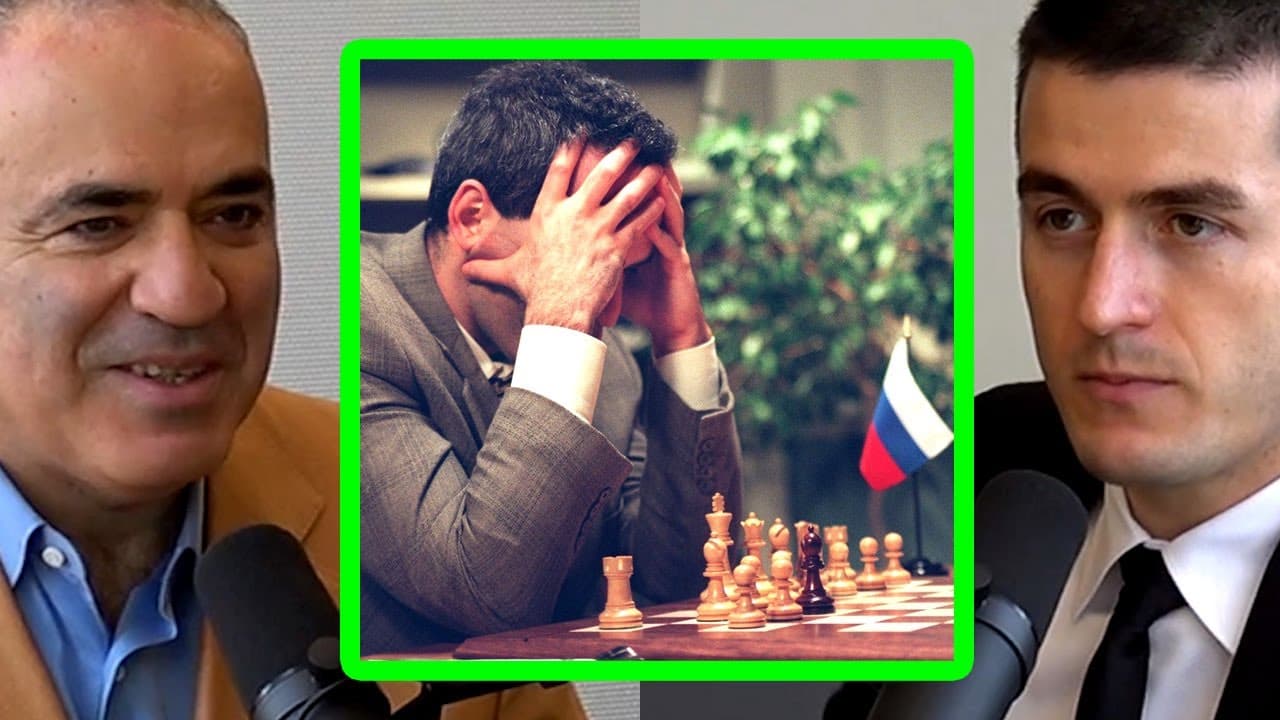
Garry Kasparov's primary motivator in chess is his passion for innovation rather than just the fear of losing. He believes that making decisions in uncertain situations distinguishes top players. His drive extends beyond chess as he seeks to create impactful change in various fields, showcasing the importance of continuous improvement.
Transcript
as perhaps the greatest chess player of all time when you look introspectively your psychology throughout your career what was the bigger motivator the love of winning or the hatred of losing tough question I have to confess I never heard it before each is again congratulations it's quite an accomplishment losing was always painful for me it was al... Read More
Key Insights
- 😚 Losing in chess was physically painful for Garry Kasparov, serving as a strong motivator to constantly improve his skills.
- ✋ The ability to make decisions without predictable consequences is crucial for success in chess at the highest level.
- 👶 Kasparov's passion for creating something new and making a difference extends beyond chess into political activism and advocacy efforts.
- 🥺 Fear of making mistakes can lead to actual mistakes, compromising a player's performance.
- 🍽️ Top chess players possess the confidence to make decisions without complete knowledge, relying on intuition and inner strength.
- 👶 Kasparov highlights the importance of constantly seeking improvement and finding new ideas in chess.
- ♟️ Making a difference and influencing others can still be achieved outside of chess, even if not in the same dominating manner.
- 🎙️ More videos with Garry Kasparov:
Install to Summarize YouTube Videos and Get Transcripts
Explore YouTube Video Summarizer or Get YouTube Transcript Extractor
Questions & Answers
Q: What motivated Garry Kasparov more throughout his chess career, the love of winning or the hatred of losing?
Both motivations played a significant role for Kasparov. While losing was painful and drove him to improve, his ultimate passion was the love for creating something new and making a difference.
Q: How does the fear of making a mistake impact chess players?
The fear of making a mistake often leads to actual mistakes. Kasparov highlights that top players can make decisions without predictable consequences, relying on their intuition and the ability to navigate uncertain situations.
Q: What distinguishes top chess players from very top players?
The key difference lies in the ability to make decisions without predictable consequences. Very top players often hesitate and struggle with uncertain outcomes, while top players have the confidence to make decisions without complete knowledge.
Q: How did Kasparov's passion for creating something new and making a difference extend beyond chess?
Kasparov used his ability to make a difference and influence people by joining the democratic movement in Russia and engaging in discussions about human-machine relations. Although he may not have been the number one in these areas, he found fulfillment in making a positive impact.
Key Insights:
- Losing in chess was physically painful for Garry Kasparov, serving as a strong motivator to constantly improve his skills.
- The ability to make decisions without predictable consequences is crucial for success in chess at the highest level.
- Kasparov's passion for creating something new and making a difference extends beyond chess into political activism and advocacy efforts.
- Fear of making mistakes can lead to actual mistakes, compromising a player's performance.
- Top chess players possess the confidence to make decisions without complete knowledge, relying on intuition and inner strength.
- Kasparov highlights the importance of constantly seeking improvement and finding new ideas in chess.
- Making a difference and influencing others can still be achieved outside of chess, even if not in the same dominating manner.
- Kasparov's drive to create something new and make a difference pushes him to remain active and productive beyond his chess career.
Summary & Key Takeaways
-
Garry Kasparov found losing in chess to be physically painful, motivating him to constantly improve and strive for victory.
-
The ability to make decisions without predictable consequences sets top chess players apart, relying on intuition and inner strength.
-
Beyond chess, Kasparov's passion for creating something new and making a difference fuels his involvement in politics and advocacy.
Read in Other Languages (beta)
Share This Summary 📚
Summarize YouTube Videos and Get Video Transcripts with 1-Click
Try YouTube Summary with ChatGPT & Claude or YouTube Transcript Generator
Explore More Summaries from Lex Fridman 📚



Summarize YouTube Videos and Get Video Transcripts with 1-Click
Try YouTube Summary with ChatGPT & Claude or YouTube Transcript Generator