Why Did Alaska's Snow Crab Population Collapse?
TL;DR
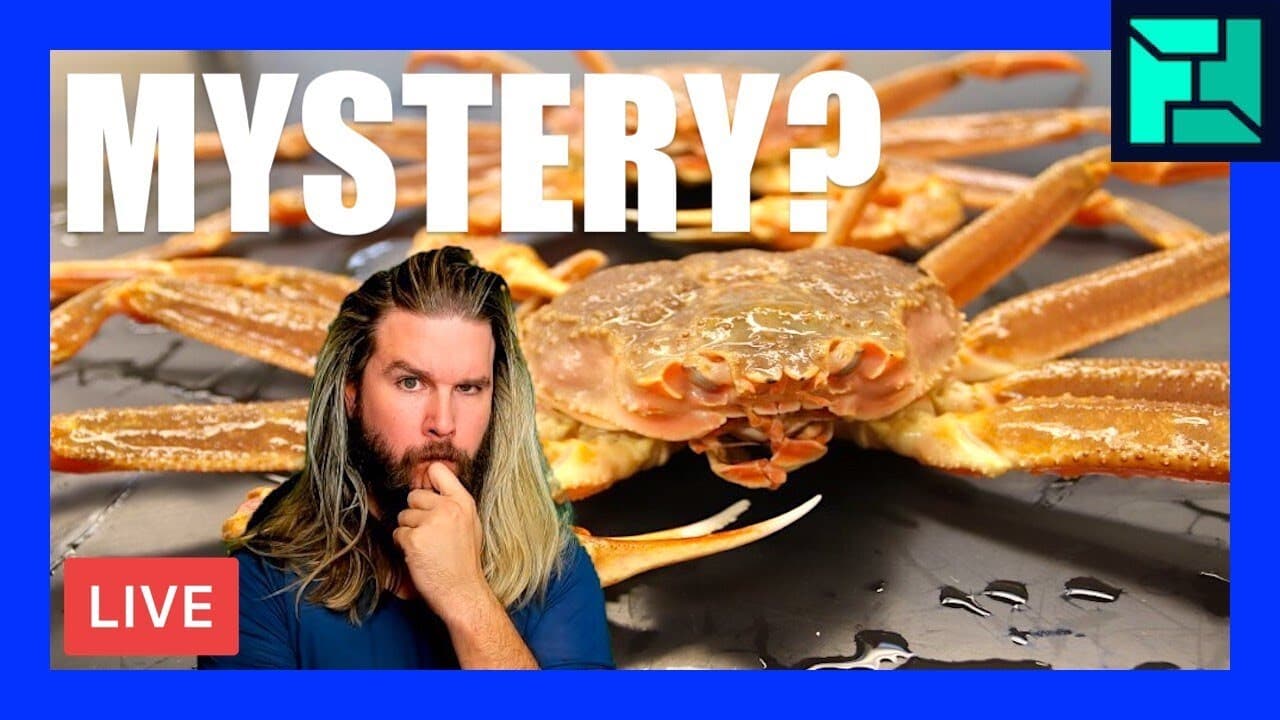
Alaska's crabs did not simply vanish without explanation: survey data showed that crab populations had already been falling, with mature female snow crabs dropping from about 5 billion to less than 0.6 billion by 2021. The discussion connects the decline to snow crabs' dependence on cold bottom-water pockets, while emphasizing that the widely repeated claim of one billion missing crabs oversimplifies the available evidence.
Transcript
foreign foreign foreign foreign foreign foreign minimizing Charisma maximizing intelligence shooting someone in the crotch with a cannonball rust propulsion it's sciency why you always gotta be blowing my spot off like that there are my runes there they are I'm not mad science needs art and art needs science they both need each other to function pr... Read More
Key Insights
- The claim that one billion Alaskan crabs disappeared is presented as a media narrative, not a literal count of individually tracked animals. The episode argues that population data and environmental conditions provide more context than the dramatic language of unexplained disappearance.
- The Alaskan crab fishing season was canceled after the reported loss of crabs from the Bering Sea. The episode connects this decision with falling crab populations, while questioning reports that imply researchers possess no meaningful evidence about what happened.
- Crab populations had been declining for years before the reported disappearance. Figures covering 1980 through 2021 show both red king crab and snow crab populations falling overall, despite temporary spikes and seasonal recoveries during that period.
- Mature female snow crab numbers fell from about 5 billion to less than 0.6 billion by 2021. This specific population series is used to demonstrate that the crisis was measurable as a steep decline rather than merely an unexplained absence.
- Snow crabs benefit from cold-water pockets on the ocean floor during part of their reproductive cycle. Their reliance on these bottom-water conditions creates a direct connection between the physical behavior of seawater and the health of their populations.
- Cold water sinks because it is denser than warmer water. This basic physical process helps create the cold conditions on the ocean floor that the episode identifies as beneficial to the reproductive cycle of snow crabs.
- Sea ice floats because water expands when it freezes, increasing volume while retaining the same mass and therefore decreasing density. The episode uses this unusual property of water to introduce how ice formation affects the ocean's vertical distribution of water.
- Carcinization is the evolutionary process through which already crab-like organisms become more crab-like over time. The episode cites king crabs as organisms that developed from hermit-crab-like ancestors and notes that the reverse tendency, decarcinization, can also occur.
Install to Summarize YouTube Videos and Get Transcripts
Explore YouTube Video Summarizer or Get YouTube Transcript Extractor
Questions & Answers
Q: Did one billion crabs literally disappear in Alaska?
The episode treats the statement that one billion crabs disappeared as an oversimplified description of a measured population decline, not as a literal count of tracked animals that suddenly vanished. Kyle Hill jokes that nobody counted every absent crab and argues that researchers know more than the common narrative suggests. The important evidence is the long-term fall in surveyed crab populations.
Q: Why was Alaska's crab fishing season canceled?
The fishing season was canceled after crab populations in Alaska's Bering Sea fell dramatically and reports described roughly one billion crabs as missing. The episode does not present a detailed administrative explanation for the cancellation, but it directly connects the decision to the population crisis. It also argues that describing the cause as entirely unknown fails to respect the available scientific evidence.
Q: What happened to Alaska's snow crab population by 2021?
Population figures presented in the episode show a major long-term decline through 2021. The most striking example is the number of mature female snow crabs, which fell from about 5 billion to less than 0.6 billion. Although crab populations experienced some seasonal spikes and partial recoveries between 1980 and 2021, the overall pattern shown was sharply downward.
Q: How does cold bottom water help snow crabs?
Pockets of cold water on the ocean floor benefit snow crabs during part of their reproductive cycle. The episode introduces this biological requirement to show why the population story must include ocean physics rather than treating the crabs as inexplicably missing. Because cold water is denser and sinks, physical changes involving seawater and ice can influence the bottom habitat used by these crabs.
Q: Why does cold water sink in the ocean?
Cold water sinks because it is denser than warmer water. The episode compares this process with hot air rising and uses it to explain how cold-water pockets can form near the ocean floor. Those pockets matter because snow crabs benefit from them during part of their reproductive cycle, creating a link between water density and crab population conditions in the Bering Sea.
Q: Why does sea ice float instead of sinking?
Sea ice floats because water expands when it freezes. The same mass then occupies a larger volume, which lowers its density and allows the frozen water to remain at the surface. The episode describes water as one of the unusual materials that becomes larger upon freezing and uses this property to frame the relationship among sea ice, seawater, and cold ocean conditions.
Q: What is carcinization in crab evolution?
Carcinization is the process through which an already crab-like organism becomes more crab-like over evolutionary time. The episode says that king crabs underwent carcinization from hermit-crab-like ancestors. It emphasizes that this does not mean every kind of organism is evolving into a crab. The pattern occurs within crab-like groups responding to similar environmental pressures through beneficial random mutations.
Q: Does evolution always make animals more crab-like?
No. The episode rejects the humorous claim that everything eventually becomes a crab. Carcinization occurs in organisms that are already crab-like, and the reverse process, called decarcinization, can make crab-like organisms less crab-like over time. The broader explanation is convergent evolution, in which similar environmental pressures can favor similar solutions in separate evolutionary lines.
Summary & Key Takeaways
-
Reports described one billion crabs as missing from Alaska's Bering Sea and linked the apparent disappearance to the cancellation of the fishing season. Kyle Hill challenges the suggestion that scientists have no explanation, arguing that the situation should be interpreted through population evidence and the environmental requirements of snow crabs rather than disappearance language alone.
-
Long-term population figures presented for red king crabs and snow crabs show substantial declines between 1980 and 2021, although populations also experienced seasonal recoveries and spikes. One highlighted series shows mature female snow crabs falling from roughly 5 billion to below 0.6 billion, demonstrating that the reported crisis followed an observable downward trend.
-
Snow crabs benefit from pockets of cold water on the ocean floor during part of their reproductive cycle. Cold water sinks because it is denser, while sea ice floats because freezing water expands, increasing its volume without increasing its mass. These physical processes help explain why ice and water conditions matter to crab populations.
Read in Other Languages (beta)
Share This Summary 📚
Summarize YouTube Videos and Get Video Transcripts with 1-Click
Try YouTube Summary with ChatGPT & Claude or YouTube Transcript Generator
Explore More Summaries from Kyle Hill 📚

![🔴 Viral "Hanger Reflex" Explained! | [OFFICE HOURS] Podcast 090 thumbnail](/_next/image?url=https%3A%2F%2Fi.ytimg.com%2Fvi%2F-GQPNu0erKc%2Fhqdefault.jpg&w=750&q=75)

![What Made MEGALODON So Huge? | [OFFICE HOURS] Podcast #025 thumbnail](/_next/image?url=https%3A%2F%2Fi.ytimg.com%2Fvi%2F2F_zCTfPt-I%2Fhqdefault.jpg&w=750&q=75)

Summarize YouTube Videos and Get Video Transcripts with 1-Click
Try YouTube Summary with ChatGPT & Claude or YouTube Transcript Generator