How to Recover From Debt by Building Mobile Apps
TL;DR
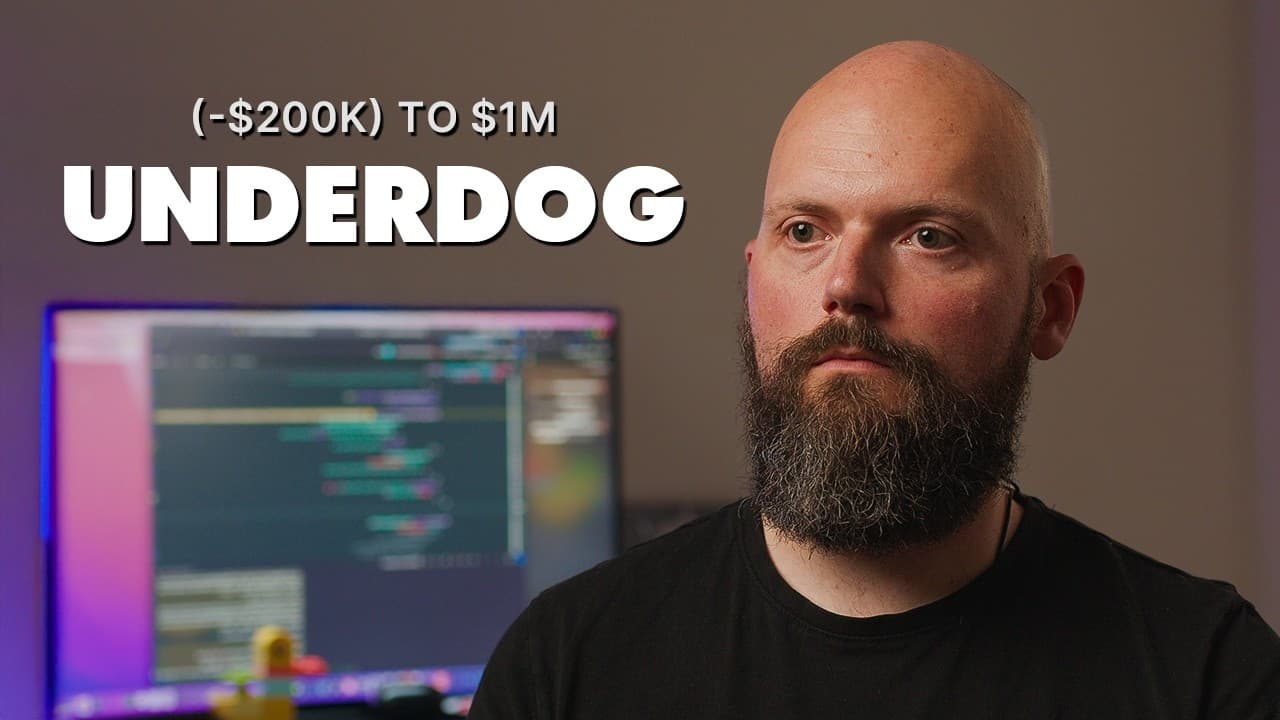
Launching small mobile apps quickly helped Adam Lyttle recover after his web agency collapsed and left him with $200,000 in debt. He rebuilt confidence by mowing lawns, then challenged himself to create one app every month, validate ideas faster, and sell successful products, including an app acquired for $224,000 after generating about $11,000 per month.
Transcript
yep start the story all that I had to my name was a debt of $200,000 my business had failed my possessions were gone my relationships had broken down my whole identity as a person disappeared this is Adam lidel and at first he thought he was a Founder genius the business was growing every year it seemed to just grow and grow I thought I was balling... Read More
Key Insights
- • Adam Lyttle’s software ambitions began in childhood, when he imagined operating a software company and enjoyed understanding computers. In high school, he released shareware online and earned some money until piracy reduced the revenue generated by his applications.
- • Adam’s website agency generated about $300,000 in annual profit at its peak. Its early success came before services such as Wix and Squarespace made it possible for businesses to create websites without paying an agency as much as $10,000.
- • Debt became a way for Adam to fund a lavish lifestyle while expecting future business income to cover repayment. Credit debt and car loans eventually totaled $200,000, leaving him highly exposed when the agency’s market and revenue deteriorated.
- • The agency collapsed after low-cost website services weakened its pricing model. Adam lowered his prices and increased his hours, but the additional workload produced severe burnout and prevented him from doing the higher-level thinking needed to change direction.
- • Lawn mowing became Adam’s first practical step toward recovery because it paid him to remain active outside the house. Accepting small jobs through AirTasker gradually restored his confidence, motivation, and willingness to pursue larger goals after the agency failed.
- • The lawn-mowing app idea came from a problem Adam experienced while scheduling clients and planning efficient routes. Other lawn-care workers tracked alternating weeks on paper, and one worker confirmed that no suitable app existed and suggested that somebody should build one.
- • Adam’s first lawn-mowing app failed despite having a defined use case and taking six months to build. The experience pushed him to adopt a faster learning system based on creating one app every month, releasing products, and validating ideas through actual market response.
- • An early app from Adam’s monthly challenge generated about $11,000 per month and attracted an acquisition offer based on two times annual revenue. The $224,000 sale helped him repay an urgent client refund, keep debt collectors at bay, and avoid bankruptcy.
Install to Summarize YouTube Videos and Get Transcripts
Explore YouTube Video Summarizer or Get YouTube Transcript Extractor
Questions & Answers
Q: How did Adam Lyttle get into $200,000 of debt?
Adam accumulated $200,000 through credit debt and car loans while his website agency was profitable. He treated borrowing as a tool for buying things and maintaining a lavish lifestyle, expecting to repay the balances later. Because his family and spending depended on the agency’s income, the debt became unmanageable when low-cost website builders weakened the business and its ability to charge high prices.
Q: Why did Adam Lyttle’s website agency collapse?
Adam’s agency lost its pricing advantage when services such as Wix and Squarespace allowed customers to create websites for about $10 per month instead of paying him as much as $10,000. He responded by lowering prices and working additional hours. That strategy increased his workload, caused total burnout, and left him unable to perform the higher-level thinking required to adapt the business.
Q: How did mowing lawns help Adam recover after failure?
Mowing lawns gave Adam a simple way to earn money while spending time outside, which mattered because he could no longer sit comfortably at a computer after burning out. He advertised through AirTasker and accepted jobs paying amounts such as $20 or $30. Completing more jobs gradually restored his confidence, motivation, and interest in doing something larger with his skills.
Q: Where did Adam get the idea for a lawn-mowing app?
Adam encountered a scheduling and routing problem while driving between lawn-mowing customers. He needed to identify where clients lived, place their locations on Google Maps, and determine an efficient order for completing the work. Other lawn-care workers told him they recorded alternating weeks on opposite sides of paper. When someone said no app existed, Adam decided he could build one.
Q: Why did Adam start building one app every month?
Adam spent six months creating a lawn-mowing app with a clear intended use, but the product did not perform well after release. He did not understand why it had failed, so he adopted the learning method he trusted most: building things directly. The one-app-per-month challenge let him launch faster, observe real responses, validate ideas, and improve through repeated practice.
Q: How did Adam balance lawn mowing with app development?
Adam mowed lawns from 6:00 a.m. until 6:00 p.m., then sat down afterward to build applications. He approached the work as both a learning process and a way to contribute more than he felt he had previously taken. This demanding schedule kept immediate income coming in while allowing him to develop the products that could support a longer-term recovery.
Q: How did an app sale help Adam avoid bankruptcy?
One of the first products from Adam’s monthly app challenge began generating about $11,000 per month. A buyer offered two times its annual revenue, producing a sale price of $224,000. Adam used the money to pay an amount demanded by a former agency client before the court matter produced a judgment, which kept debt collectors at bay and allowed him to continue independently developing apps.
Q: What business lesson did Adam learn from selling his app?
The sale showed Adam that a small app could provide both monthly income and a larger payment based on future revenue. He had initially viewed monthly app creation as a creative outlet and a practical learning exercise. After receiving $224,000 for an app earning about $11,000 per month, he began viewing each successful sale as financial runway for continued building.
Summary & Key Takeaways
-
Adam Lyttle’s early interest in computers led him to sell shareware in high school and later establish a website agency. The agency eventually generated about $300,000 in annual profit, but his confidence encouraged lavish spending, heavy borrowing, and an excessive focus on clients and deadlines at the expense of his family relationships.
-
Low-cost website builders undermined the agency’s ability to charge $10,000 for a website. Adam responded by lowering prices and working longer hours, which led to burnout rather than recovery. The business collapsed, his property and accounts were taken, his relationships deteriorated, and he remained responsible for $200,000 in unsecured debt.
-
Mowing lawns gave Adam income, confidence, and direct exposure to an operational problem that could be addressed with software. Although his first lawn-mowing app performed poorly, he continued learning through a one-app-per-month challenge. An early app earned about $11,000 monthly and sold for $224,000, allowing him to avoid bankruptcy and continue building.
Read in Other Languages (beta)
Share This Summary 📚
Summarize YouTube Videos and Get Video Transcripts with 1-Click
Try YouTube Summary with ChatGPT & Claude or YouTube Transcript Generator
Explore More Summaries from Starter Story 📚



Summarize YouTube Videos and Get Video Transcripts with 1-Click
Try YouTube Summary with ChatGPT & Claude or YouTube Transcript Generator