How to read founders with social radar in YC?
TL;DR
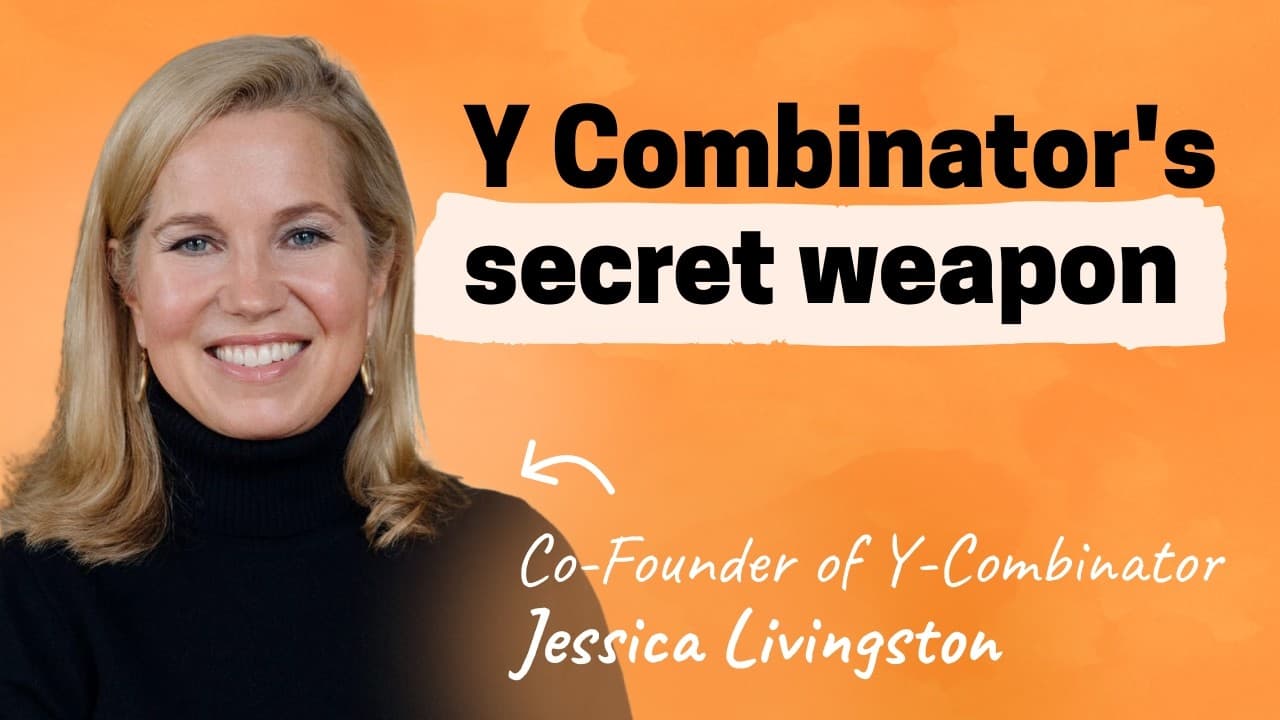
Jessica Livingston is known for a rare skill called the social radar, used to read people during YC founder interviews and spot red flags. She describes how she observed dynamics, noted defensiveness, and evaluated commitment, which helped shape early YC decisions. Her insights extend to hiring, investing, and building a productive founder culture.
Transcript
I want to start with a quote by someone you may know, Paul Graham, "Much of what's novel about YC is due to Jessica Livingston. If you don't know her, you don't understand YC." My three co-founders were deeply technical, but I would look at other things about founders. All these little social cues. Your nickname was the Social Radar. Every i... Read More
Key Insights
- Jessica Livingston earned the nickname Social Radar for her ability to read people during YC founder interviews.
- She observed non technical cues, founder dynamics, and commitment levels to help decide which startups to fund.
- Early YC interviews were run by four co-founders, with Jessica mostly observing and timing the interviews.
- Defensiveness in a founder is highlighted as a potential red flag during assessments.
- Airbnb story and other early YC stories are part of the discussion to illustrate evaluation methods.
- The interview process relied on social cues and founder psychology as much as technical details.
- Jessica hosts The Social Radars podcast and is the author of Founders at Work, showcasing her broader engagement with startup storytelling.
- A quiz named Reading the Mind in the Eyes is mentioned as a tool to gauge how well someone reads others.
Install to Summarize YouTube Videos and Get Transcripts
Explore YouTube Video Summarizer or Get YouTube Transcript Extractor
Questions & Answers
Q: How is Jessica Livingston described in relation to YC in the interview?
Jessica Livingston is described as the co founder of Y Combinator who earned the nickname Social Radar for her ability to read people during founder interviews. Her role involved observing social dynamics, evaluating commitment, and identifying red flags that could influence funding decisions. This description highlights her influence on early YC practices and founder selection.
Q: What specific interviewer role did she have in the early YC days?
In the early YC days Jessica was in charge of ushering candidates into interviews, keeping time with a stopwatch, and ensuring the process ran smoothly. She observed founder interactions and dynamics while the technical founders asked questions, then provided input on whether to fund the team. Her administrative tasks complemented her observational role.
Q: What kind of red flags did she look for in founders?
She looked for red flags such as whether founders get along, if they are really committed, if they know their product, and if they will quit their jobs to pursue the venture. She also noted defensive behavior during conversations as a negative signal, which could influence the funding decision.
Q: How did the Airbnb story relate to YC evaluation mentioned in the interview?
The Airbnb story is cited as part of early YC experiences and examples of how founders behaved under interview pressure and how the team dynamics were assessed. These stories illustrate the practical application of social radar in understanding founder grit, collaboration, and potential for persistence.
Q: What is the broader impact of Jessica's social radar beyond YC interviews?
Beyond YC interviews, Jessica’s social radar skills influence how she reads people in various aspects of life, including her podcasting work and authorial projects. The discussion suggests these abilities contribute to evaluating people, building teams, and understanding startup cultures more deeply.
Q: What does the host suggest about credit and recognition for Jessica?
The host suggests that Jessica often experiences erasure in public narratives about YC, with some sources omitting her contributions. This underscores a broader issue where founders and early team roles can be underrepresented in conventional storytelling about startup success.
Q: What additional resources are connected to the topic of reading people?
The discussion mentions a quiz named Reading the Mind in the Eyes, which is presented as a way to gauge how well someone can read others. This resource is presented as a practical tool to understand a person’s empathetic and perceptual skills.
Q: How does Jessica describe the difficulty of articulating her skill?
She explains that describing the social radar is hard because it is not always easy to put into words what makes her good at reading people. She emphasizes a natural affinity for people and founder psychology, and acknowledges the challenge in conveying these subtle social cues clearly.
Summary & Key Takeaways
-
Jessica Livingston is described as the Social Radar at Y Combinator, a skill used to read people during founder interviews and detect early red flags. The conversation explains how this talent influenced funding decisions and founder assessments. It also covers the broader impact on YC culture and the importance of founder dynamics.
-
The discussion highlights the tension of credit and recognition for Jessica within YC and the Silicon Valley community, noting how public narratives sometimes erase her contributions. It also mentions her work outside YC, including a podcast and a best selling book on startups.
-
The interview emphasizes practical takeaways for developing social awareness in selection processes, including observing how founders interact, whether they defend themselves, and how committed they seem, along with references to resources like a mind reading quiz.
Read in Other Languages (beta)
Share This Summary 📚
Summarize YouTube Videos and Get Video Transcripts with 1-Click
Try YouTube Summary with ChatGPT & Claude or YouTube Transcript Generator
Explore More Summaries from Lenny's Podcast 📚


Summarize YouTube Videos and Get Video Transcripts with 1-Click
Try YouTube Summary with ChatGPT & Claude or YouTube Transcript Generator