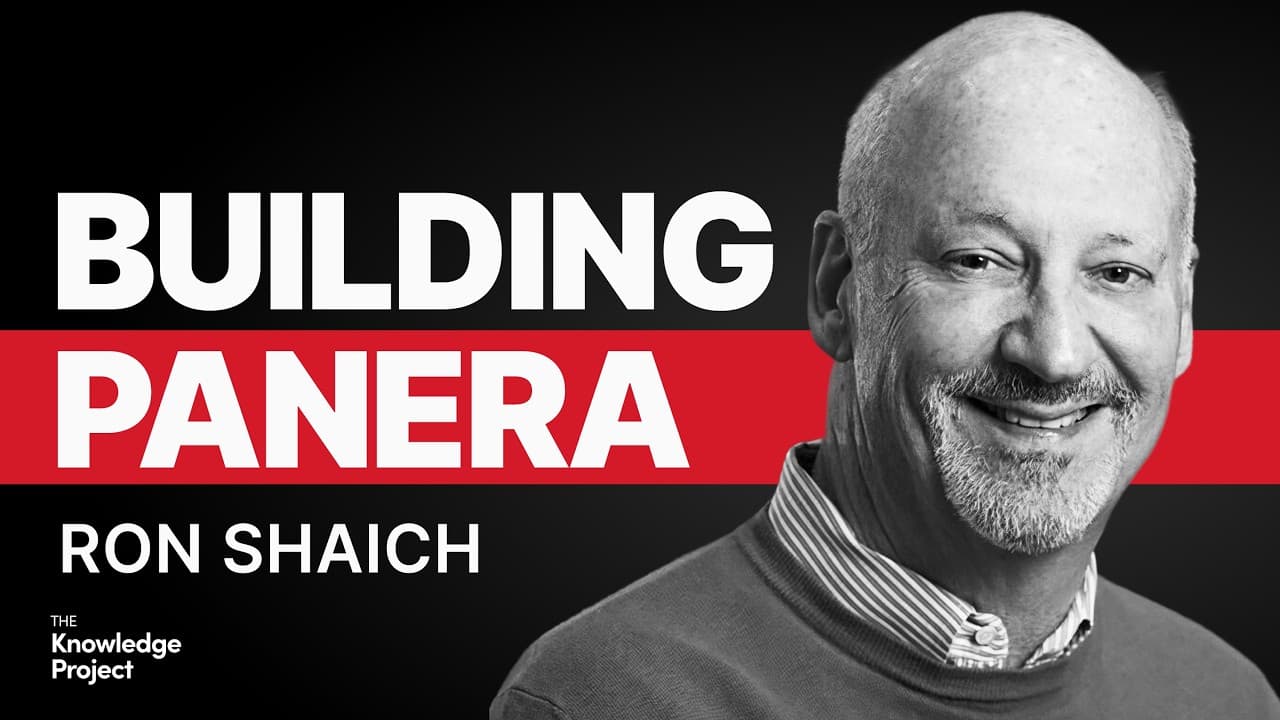
Ron Shaich on Building Panera and Long-Term Thinking
TL;DR
Long-term greedy, not short-term stupid captures the mindset behind a half-century of building bakery cafes like Au Bon Pain and Panera. The most powerful business skill is empathy for what customers actually want, paired with the discipline to define what you'll respect in five and ten years and codify it into quarterly-reviewed projects across work, family, body, and spirituality.
Transcript
I've done this now over half a century. I was part of building bakery cafes in America between old bone pen, Panera. These were the dominant brands. How do you develop the long-term thinking that you've brought to all these different concepts? I have an expression. I'm long-term greedy, not short-term stupid. Now, it seems so obvious, but how did y... Read More
Key Insights
- Long-term greedy, not short-term stupid is the core operating philosophy Ron Shaich applies across every concept he built, prioritizing durable value creation over decisions that look smart in the short run but destroy long-term outcomes.
- The most powerful skill an entrepreneur can acquire, according to Shaich, is the empathy to understand what customers actually want, which he calls the discovery that separates thriving businesses from dying ones.
- Powerful commitment carries a real personal price: 'Commitment owns you. You don't own it.' Shaich acknowledges the family and social costs, noting he has been married twice and is not proud of it.
- Defining what you'll respect in the future is Shaich's annual practice, examining relationships with work, family and friends, his body, and his own spirituality, then codifying those intentions into concrete projects.
- Quarterly self-reviews focus on outcomes, not time: Shaich sits down every quarter and asks whether he actually accomplished the things he committed to that create the condition he wants to attain in three, five, and ten years.
- A judgment day of self-assessment comes at end of life, and Shaich chose to face it early (the third, fifth, or seventh inning) rather than the ninth with two outs, after watching one parent die at peace and the other second-guessing life decisions.
- Panera was among the first to introduce antibiotic-free chicken in America as a challenger brand, which opened the market, lowered prices, and drew in players from McDonald's to Chick-fil-A.
- Fast casual as a category emerged in the early 90s after Shaich spent a year or two on the road listening to the one in three or four consumers who held their noses at fast food and wanted real food, engaging environments, and caring service.
Install to Summarize YouTube Videos and Get Transcripts
Explore YouTube Video Summarizer or Get YouTube Transcript Extractor
Questions & Answers
Q: What does 'long-term greedy, not short-term stupid' mean?
It is Ron Shaich's core business philosophy, developed across more than half a century building brands like Au Bon Pain and Panera. It means prioritizing durable, long-term value creation over decisions that appear smart in the short run but ultimately destroy long-term outcomes. Shaich calls long-term thinking the discipline behind every concept he built, treating it as so obvious yet powerful that he challenges entrepreneurs to internalize the same orientation toward the future rather than immediate gains.
Q: What does Ron Shaich say is the most powerful skill for an entrepreneur?
Shaich says the most powerful skill he has as a business person, and what he would challenge entrepreneurs to acquire, is the empathy to understand what customers actually want. This ability to see what others cannot and to discover genuine customer needs underpins every transformation in his career. He frames it as the difference between businesses that keep discovering and those that die, and it drove his year or two on the road listening to consumers before creating fast casual.
Q: How does Ron Shaich approach long-term personal goals and reviews?
On an annual basis Shaich sits down and defines what he wants to respect in five and ten years across his relationships with work, family and friends, his body, and his own spirituality. He codifies these intentions into concrete projects, then reviews them once a quarter, asking whether he is actually accomplishing what he signed up to do or is full of baloney. The focus is on outcomes achieved, not merely how time was spent, because time is a means, not an end.
Q: Why is Ron Shaich obsessed with his health at 71?
At 71, Shaich looks at his kids, his relationships, and how much there is to live for and see as the world unfolds, so he wants every opportunity to stay healthy. Watching his parents die about 30 years ago, one at peace and one second-guessing life decisions, convinced him to face his own judgment day early. He works out seriously every day, eats well, takes medication and supplements, and treats caring for his body as his personal responsibility.
Q: How does Ron Shaich structure his exercise routine?
Shaich exercises every day, which he finds easier than five days a week, and treats it as one of the key projects he is driving. He sets an 8am appointment every day and either works out with a trainer or by himself, getting it done before the day begins. He used to start at 5:30am with a former Ukrainian Olympic track and field coach for 12 years, but has become kinder to himself while still finishing before the day starts.
Q: How did Panera help change the food industry in America?
Panera was one of the two first brands to introduce antibiotic-free chicken in America as a challenger brand, which opened the market, lowered prices, and drew in competitors from McDonald's to Chick-fil-A. It was among the first to remove trans fats and, around 2010 to 2012, supported posting caloric information when the industry fought it. Panera became one of the first large organizations to remove artificial colors, flavors, sweeteners, and preservatives, pushing what is now called clean food by removing ultra-processing.
Q: How did the fast casual restaurant category get started?
In the early 90s, around 1992 to 1993, Shaich and his team noticed that one out of three or four consumers held their noses when they went into fast food. They spent a year or two on the road listening to people and heard that consumers wanted real food, environments that engaged them, and service by people who cared. Customers sought an experience that elevated their sense of self rather than depleted it, which is what they felt in fast food, and this ideology became fast casual.
Q: What personal costs does Ron Shaich say come with deep business commitment?
Shaich is candid that powerful commitment carries a very real personal price, including family and social costs. He states plainly that 'Commitment owns you. You don't own it,' meaning intense dedication to a business takes control of your life rather than the reverse. He shares that he has been married twice, something he says he is not proud of, illustrating that the demands of building something requiring powerful commitment exact a genuine toll beyond the business itself.
Summary & Key Takeaways
-
Ron Shaich spent over half a century building dominant bakery cafe brands including Au Bon Pain and Panera. His guiding philosophy, 'long-term greedy, not short-term stupid,' reflects a commitment to durable value over short-term wins, and he identifies empathy for what customers actually want as the most powerful skill an entrepreneur can develop.
-
Now 71 and obsessed with his health, Shaich runs an annual process of defining what he wants to respect in five and ten years across work, family, body, and spirituality. He codifies these into projects and reviews them quarterly, exercising every day at an 8am appointment rather than resting on off days.
-
Shaich sees business as one of the most creative levers for positive change. Panera pioneered antibiotic-free chicken, removed trans fats, backed calorie posting, and pushed clean food, while the fast casual category he helped define in the early 90s served consumers seeking real food and elevating experiences.
Read in Other Languages (beta)
Share This Summary 📚
Summarize YouTube Videos and Get Video Transcripts with 1-Click
Try YouTube Summary with ChatGPT & Claude or YouTube Transcript Generator
Explore More Summaries from The Knowledge Project Podcast 📚

Summarize YouTube Videos and Get Video Transcripts with 1-Click
Try YouTube Summary with ChatGPT & Claude or YouTube Transcript Generator