Are Russia and China True Allies?
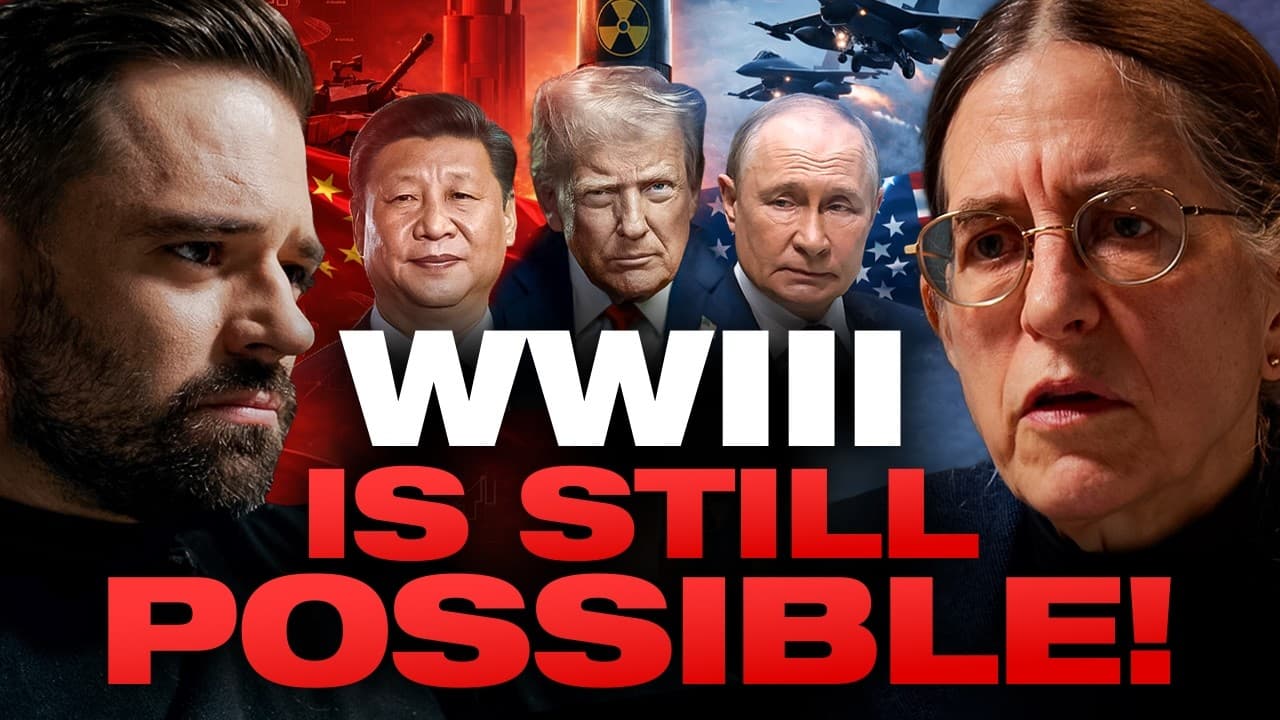
TL;DR
Russia and China are not natural allies due to historical rivalries and differing imperial models. While Russia relies on resource extraction, China has a strong commercial tradition. A collapse of China could lead to prolonged chaos rather than democracy, as stability is prioritized over liberty. The conversation also explores the implications of territorial control and the role of nationalism in modern geopolitics.
Transcript
A world war could happen. History has not ended. We live in an age of nationalism. No one's going to cooperate. I mean, look at Putin and Ukraine. Look at the United States. So, we try to dominate Afghanistan and that didn't work out. So, we think we're going to dominate all of Latin America. It is so wealthing. Russia and China are eternal neighbo... Read More
Key Insights
- Russia and China have a history of rivalry, not alliance, due to differing imperial models.
- China's imperial model is commercially driven, unlike Russia's resource extraction approach.
- A collapse of China could lead to chaos, not democracy, due to historical fears of instability.
- China prioritizes stability over liberty to avoid historical chaos and civil wars.
- Russia's territorial control is marked by physical domination, while China uses bilateral relations.
- China's long-term planning is questioned due to historical internal conflicts.
- Taiwan represents a potential trap for China due to its nationalistic and strategic importance.
- Maritime powers like Japan succeeded through modernization, unlike continental Qing China.
Install to Summarize YouTube Videos and Get Transcripts
Explore YouTube Video Summarizer or Get YouTube Transcript Extractor
Questions & Answers
Q: Why aren't Russia and China true allies?
Russia and China are not true allies due to their historical rivalries and fundamentally different imperial models. Russia's approach is based on resource extraction and physical domination, while China emphasizes a strong commercial tradition and bilateral relations. These differences create a natural tension between the two nations, preventing a genuine alliance.
Q: How do Russia and China's imperial models differ?
Russia's imperial model relies heavily on resource extraction, aiming to control territories to funnel resources back to its centers of power. In contrast, China's model is commercially driven, with a focus on trade and manufacturing, maintaining influence through economic means rather than territorial domination. This distinction shapes their respective geopolitical strategies.
Q: What could a collapse of China look like?
A collapse of China could lead to prolonged chaos rather than a shift to democracy. Historical precedents of civil wars and instability highlight the Chinese government's fear of chaos, leading to an emphasis on maintaining stability over liberty. This approach aims to prevent the fragmentation and disorder seen in China's past.
Q: Why is stability prioritized over liberty in China?
Stability is prioritized over liberty in China due to historical fears of chaos and civil wars. The Chinese government views stability as crucial to preventing the disorder that marked the 19th and early 20th centuries. This prioritization reflects a strategic choice to maintain control and prevent the destabilizing effects of rapid political change.
Q: How does China's approach to territorial control differ from Russia's?
China's approach to territorial control differs from Russia's in that it emphasizes bilateral relations and economic influence rather than physical domination. While Russia often seeks to control territories directly, China prefers to exert influence through economic means, leveraging its commercial power to achieve geopolitical goals.
Q: Is China's long-term planning effective?
China's long-term planning is often questioned due to its history of internal conflicts and strategic missteps. While the Chinese government aims to maintain a monopoly on power, historical events like the Great Leap Forward highlight the challenges and failures of such planning. The emphasis on stability reflects a cautious approach to avoid past mistakes.
Q: Why is Taiwan considered a strategic trap for China?
Taiwan is considered a strategic trap for China because it represents both a nationalistic aspiration and a potential geopolitical quagmire. While China desires to integrate Taiwan, the island's independence and strategic importance make it a challenging target. Attempting to control Taiwan could provoke international conflict and entangle China in a complex territorial dispute.
Q: How did maritime powers like Japan succeed where Qing China failed?
Maritime powers like Japan succeeded where Qing China failed by embracing modernization and westernization. Japan's strategic adaptation included adopting Western military and civil institutions, allowing it to become a great power. In contrast, Qing China's attempts at self-strengthening failed due to internal conflicts and resistance to comprehensive reform.
Summary & Key Takeaways
-
Russia and China are not natural allies; their historical rivalry and differing imperial models prevent a true alliance. Russia focuses on resource extraction, while China has a long-standing commercial tradition. This fundamental difference shapes their geopolitical strategies.
-
A potential collapse of China would likely result in chaos rather than democracy. Historical fears of instability drive China's emphasis on stability over liberty, highlighting the importance of maintaining control to prevent internal conflicts.
-
The conversation also delves into the implications of territorial control, with Russia favoring physical domination and China leveraging bilateral relations. Nationalism and strategic miscalculations are pivotal in understanding modern geopolitical dynamics.
Read in Other Languages (beta)
Share This Summary 📚
Summarize YouTube Videos and Get Video Transcripts with 1-Click
Try YouTube Summary with ChatGPT & Claude or YouTube Transcript Generator
Explore More Summaries from This Is The World 📚
![Sarah Paine: the Risk of Nuclear War, WW3 and NATO [INTERVIEW] thumbnail](/_next/image?url=https%3A%2F%2Fi.ytimg.com%2Fvi%2FyErY3J2hgKs%2Fhqdefault.jpg&w=750&q=75)

Summarize YouTube Videos and Get Video Transcripts with 1-Click
Try YouTube Summary with ChatGPT & Claude or YouTube Transcript Generator