Reverse-engineering and testing an x-ray filament supply
TL;DR
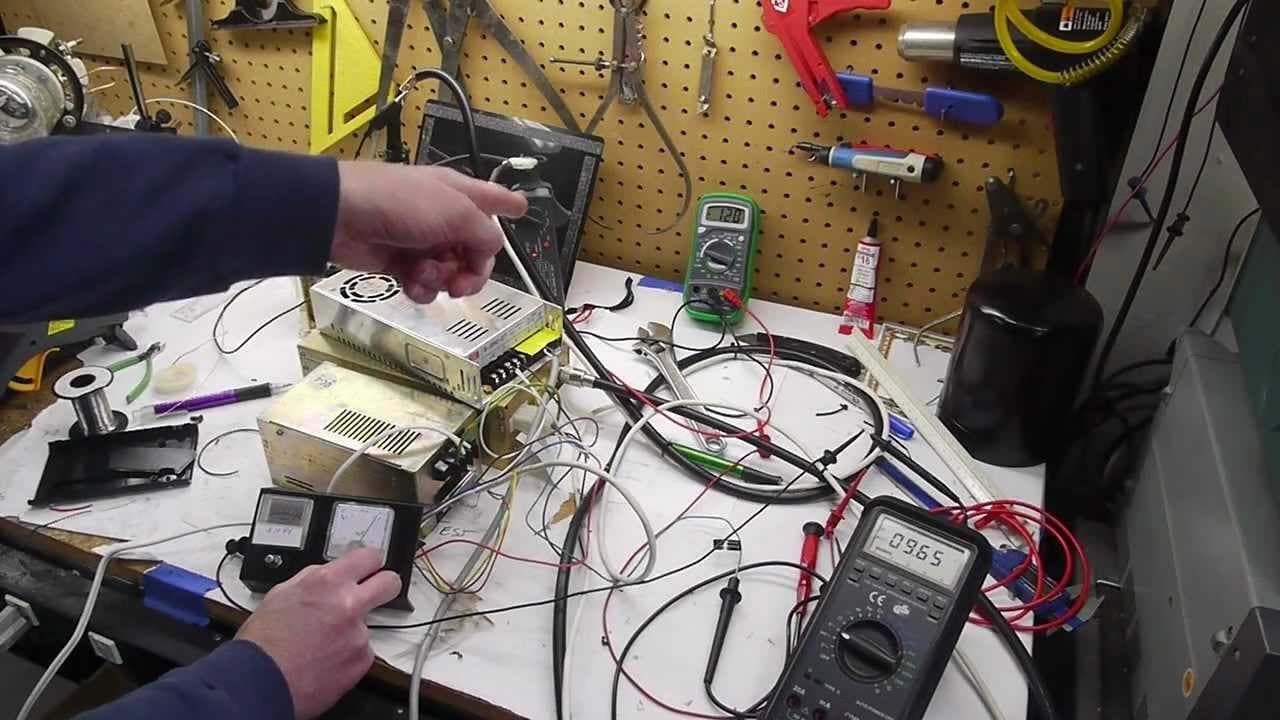
This content demonstrates the process of setting up and testing a filament supply circuit for an X-Ray tube using a control box and measuring current sense resistors.
Transcript
hey everyone I bought another x-ray tube set off eBay and today I finally got the filament supply working so I think this thing is almost ready to fire up but first on to show you how an x-ray tube typically works you've got an anode here and a filament here and you put a large DC voltage across these two and then you heat up the filament with a ty... Read More
Key Insights
- ✊ An X-Ray tube requires careful regulation of the filament temperature to control the emission current and power consumption.
- 👻 The filament being floated allows for precise current sensing and temperature control.
- 🍾 The control box circuit, with op amps and an integrator, measures and adjusts the filament and emission current efficiently.
- 🧪 The integrator prevents uncontrolled fluctuations in the output by providing feedback from the tube itself.
- 🍱 The control box's setpoint voltage determines the desired emission current, providing flexibility in adjusting the system.
- 😚 The circuit's closed-loop design ensures a responsive and accurate control mechanism.
- 😒 The use of current sense resistors and opto isolators enhances the accuracy and safety of the control box circuit.
Install to Summarize YouTube Videos and Get Transcripts
Explore YouTube Video Summarizer or Get YouTube Transcript Extractor
Questions & Answers
Q: How does an X-Ray tube typically work?
An X-Ray tube consists of an anode and a filament, where a large DC voltage is applied across them. The emission current, regulated by filament temperature, determines power consumption.
Q: Why was the floating filament surprising?
The filament was expected to be grounded, but its floating nature allows for the insertion of a current sense resistor to measure voltage and control the filament temperature accurately.
Q: What is the purpose of the control box circuit?
The control box circuit measures the emission current flowing through the tube, adjusts the filament current, and maintains a specific emission level using a closed-loop system with op amps and an integrator.
Q: How does the integrator function in the control box circuit?
The integrator, acting as a pure integrator due to its feedback path, ensures quick reactions and prevents a runaway condition. Feedback from the tube itself regulates the filament and emission current.
Summary & Key Takeaways
-
The content showcases the setup process of an X-Ray tube filament supply circuit, explaining the role of anode, filament, and DC voltage in the tube's operation.
-
The author explores the surprising discovery of a floating filament, which is used for current sensing and regulating the filament temperature.
-
The control box and its circuitry, including op amps and an integrator, are analyzed to highlight their role in measuring and adjusting the filament and emission current.
Read in Other Languages (beta)
Share This Summary 📚
Summarize YouTube Videos and Get Video Transcripts with 1-Click
Try YouTube Summary with ChatGPT & Claude or YouTube Transcript Generator
Explore More Summaries from Applied Science 📚



Summarize YouTube Videos and Get Video Transcripts with 1-Click
Try YouTube Summary with ChatGPT & Claude or YouTube Transcript Generator