What Are the Key Benefits of a Good Night's Sleep?
TL;DR
A good night's sleep is essential for overall brain and body health, aiding in processes like memory consolidation, emotional regulation, and metabolic function. Insufficient sleep can lead to adverse effects such as cognitive deficits and increased risk for chronic diseases. Caffeine disrupts sleep by blocking adenosine receptors, but when it wears off, accumulated adenosine can cause a crash in energy.
Transcript
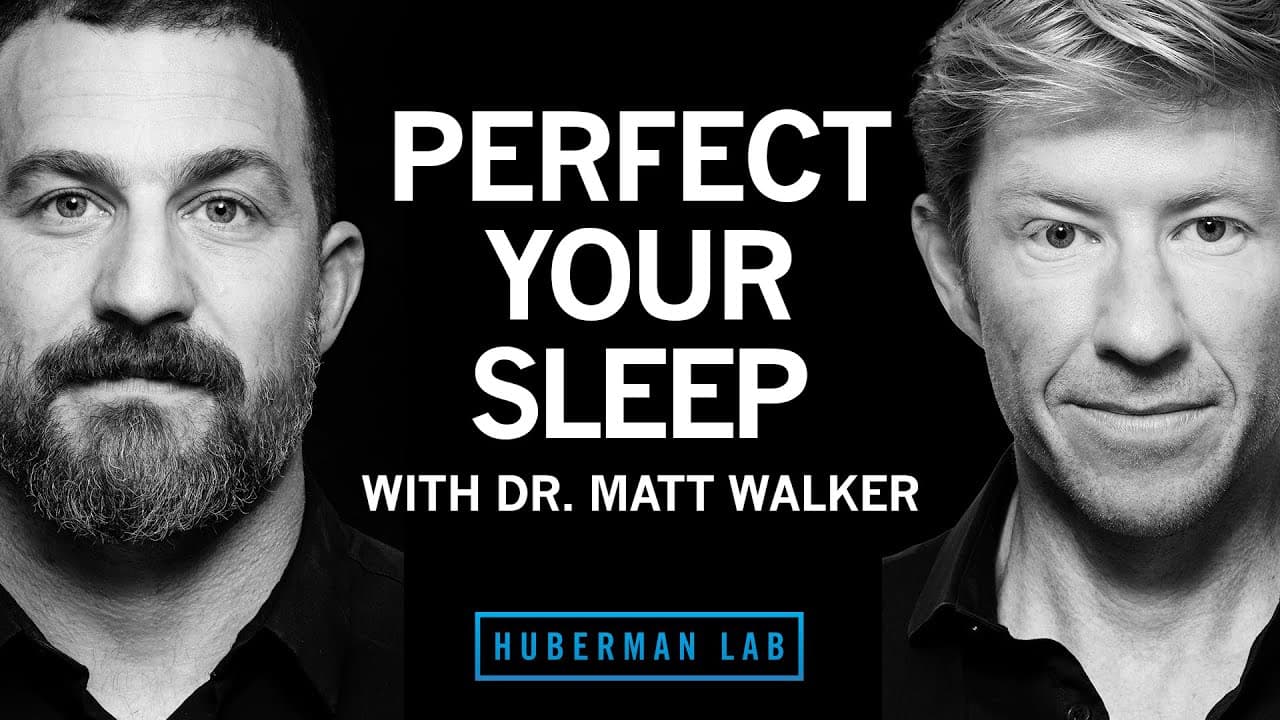
- Welcome to the Huberman Lab Podcast, where we discuss science and science based tools for everyday life. I'm Andrew Huberman, and I'm a professor of neurobiology and ophthalmology at Stanford School of Medicine. Today I have the pleasure of introducing Dr. Matthew Walker as our guest on the Huberman Lab podcast. Dr. Walker is a professor of neuro... Read More
Key Insights
- 🧠 Caffeine blocks adenosine receptors in the brain, temporarily preventing sleepiness signals.
- 🥺 After the effects of caffeine wear off, accumulated adenosine leads to a crash in energy and sleepiness.
- 🙂 Timing caffeine consumption and light exposure can help optimize wakefulness and sleep.
- 🎙️ More videos with Matthew Walker:
Install to Summarize YouTube Videos and Get Transcripts
Explore YouTube Video Summarizer or Get YouTube Transcript Extractor
Questions & Answers
Q: How does caffeine make us feel more alert?
Caffeine blocks adenosine receptors in the brain, preventing adenosine from signaling sleepiness. It temporarily boosts dopamine levels and inhibits the sleep-promoting effects of adenosine.
Q: What happens when the effects of caffeine wear off?
Once the effects of caffeine wear off, the accumulated adenosine in the brain leads to a crash in energy and sleepiness, commonly known as the caffeine crash.
Q: Does the timing of caffeine consumption matter?
Yes, the timing of caffeine consumption can affect its effectiveness. Consuming caffeine early in the day, around 90 minutes to two hours after waking, can help align with natural circadian rhythms and optimize wakefulness.
Q: How does natural light exposure affect our sleep?
Exposure to natural light, especially in the morning, helps regulate our circadian rhythm and promotes alertness. Avoiding light exposure in the evening helps signal to our brain that it's time to wind down and prepare for sleep.
Key Insights:
- Caffeine blocks adenosine receptors in the brain, temporarily preventing sleepiness signals.
- After the effects of caffeine wear off, accumulated adenosine leads to a crash in energy and sleepiness.
- Timing caffeine consumption and light exposure can help optimize wakefulness and sleep.
- Sleep is vital for brain and body health, and poor quality or insufficient sleep can lead to negative consequences.
Summary & Key Takeaways
-
Sleep is a complex physiological process that involves different stages, including non-REM and REM sleep.
-
Dr. Matthew Walker explains that sleep is essential for brain and body health, and the effects of insufficient or poor quality sleep can have adverse consequences.
-
Caffeine blocks adenosine receptors in the brain, preventing adenosine from signaling sleepiness. However, once the effects wear off, the accumulated adenosine in the brain leads to a crash in energy and sleepiness.
-
Natural light exposure in the morning helps regulate our circadian rhythm and promotes alertness, while avoiding light exposure in the evening helps signal to our brain that it's time to wind down and prepare for sleep.
Read in Other Languages (beta)
Share This Summary 📚
Summarize YouTube Videos and Get Video Transcripts with 1-Click
Try YouTube Summary with ChatGPT & Claude or YouTube Transcript Generator
Explore More Summaries from Andrew Huberman 📚



Summarize YouTube Videos and Get Video Transcripts with 1-Click
Try YouTube Summary with ChatGPT & Claude or YouTube Transcript Generator