How Technology Is Reshaping Jobs and Workers
TL;DR
Technology is making work more mobile and globally accessible, but it is also weakening job security, employment protections, and worker bargaining power. Digital nomadism, coworking, online freelance tasks, and workplace monitoring show that the central challenge is not simply preserving jobs, but ensuring that flexibility and productivity do not come at the expense of fair pay, privacy, and basic rights.
Transcript
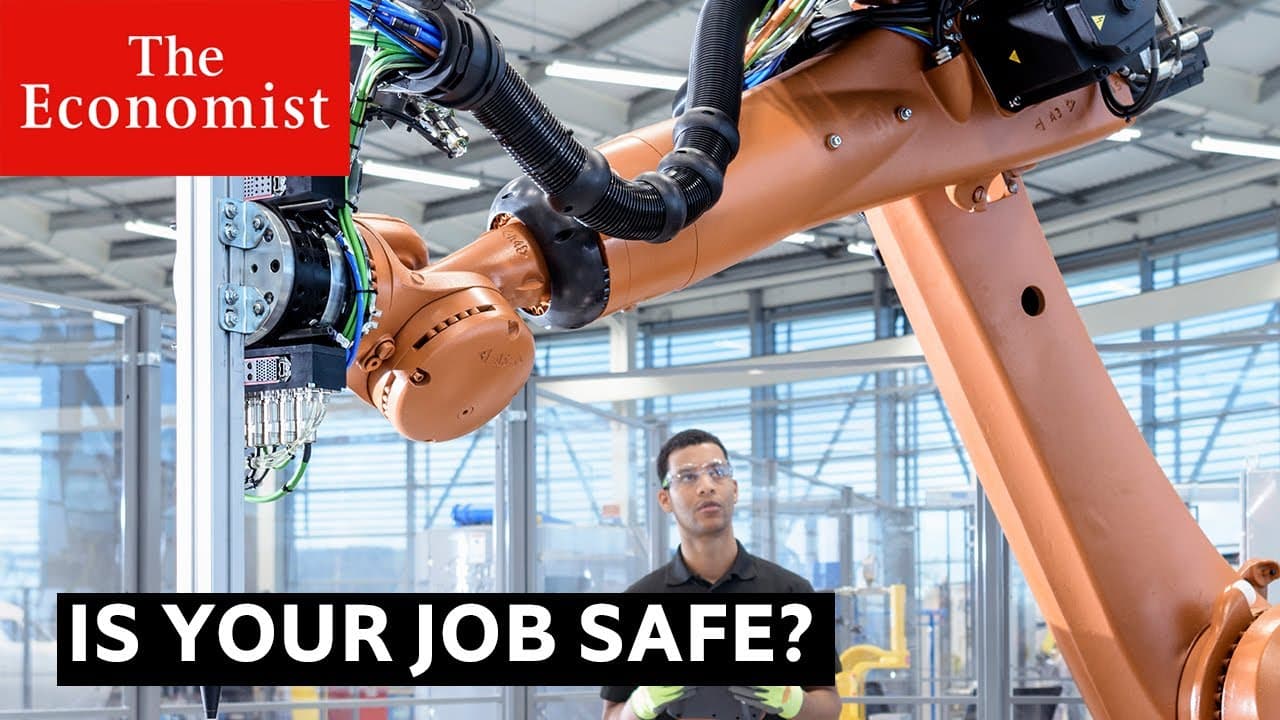
- [Narrator] This is the workforce of the future. Technology is transforming the world of work beyond all recognition, creating groundbreaking opportunities. - It's an amazing thing to be living in this digital age. - But it's also eroding the rights of workers. - It creates a kind of dog eat dog world. - [Narrator] Some even fear a dystopian joble... Read More
Key Insights
- Digital technology is separating work from fixed locations, allowing employees and business owners to remain productive while moving between countries. Samantha and Justin illustrate this model by maintaining their careers while living and working in more than 20 countries over two years.
- Digital nomadism is constrained by immigration rules because location-independent workers often travel on tourist visas that limit stays to a few months. Estonia planned a special visa permitting a one-year stay, while other countries were expected to introduce similar arrangements.
- Coworking and communal living spaces are designed to combine professional facilities, social contact, and a sense of community. The cited Harvard Business Review findings reported that nearly nine out of ten coworkers felt happier, while more than 80% felt more engaged and motivated.
- The Human Cloud is a fast-growing part of the gig economy in which white-collar work is divided into individual tasks and advertised online. Remote workers around the world complete services such as data entry and image tagging for internationally based clients.
- Digital task work can expand economic opportunity in places where conventional employment is scarce. Joseph Kamau moved from street food selling to completing up to ten part-time data-entry jobs weekly, enabling his family to leave Kibera and supporting his plan to study computer science.
- Gig economy competition is intensified when platforms allow unlimited numbers of freelancers to clock on. An oversupply of available workers can reduce individual earnings, create uncertainty about daily job volume, and encourage what courier Max Dewherst describes as a dog-eat-dog labor market.
- Gig workers are often denied protections associated with conventional employment, including sick pay, job security, price-setting power, and direct negotiation with clients. Worker advocates argue that desired flexibility should not require surrendering protections developed through generations of labor campaigning.
- Workplace surveillance technology is capable of combining badge sensors with email and calendar information. Humanyze badges track speaking, movement, general office location, proximity, posture, activity, and conversational dominance, with the stated goal of improving productivity and the working environment.
Install to Summarize YouTube Videos and Get Transcripts
Explore YouTube Video Summarizer or Get YouTube Transcript Extractor
Questions & Answers
Q: How is technology changing where people work?
Technology allows many people to perform their jobs wherever reliable digital connectivity is available. Samantha works for a California-based startup, while Justin runs a digital creative agency, and both maintained their careers while living in more than 20 countries over two years. Coworking and communal living spaces also support remote professionals by providing offices, meeting rooms, social areas, and communities outside traditional corporate workplaces.
Q: What challenges do digital nomads face?
Digital nomads often work while traveling on tourist visas, which commonly restrict them to stays of only a few months in each country. Samantha and Justin sometimes need to leave a country to avoid violating visa rules, making them more mobile than they might prefer. They must also establish productive routines in each location, although they describe renting apartments and setting up offices rather than treating travel as a vacation.
Q: Why are countries creating visas for digital nomads?
Some countries are attempting to attract location-independent workers who can bring their remote jobs and spending with them. The transcript says Estonia was preparing to launch a special visa allowing digital nomads to stay for one year, with other countries expected to follow. Such policies address the mismatch between long-term remote work and tourist visas that generally permit stays lasting only a few months.
Q: What are the benefits of coworking spaces?
Coworking spaces can provide professional infrastructure, personal connections, and a stronger sense of community for people working outside conventional offices. The communal space featured in San Francisco includes meeting rooms, relaxation areas, and a cocktail bar. The cited Harvard Business Review findings reported that nearly nine out of ten coworkers felt happier than before, while more than 80% felt more engaged and motivated.
Q: What is the Human Cloud gig economy?
The Human Cloud is a segment of the gig economy in which work previously handled by white-collar employees is divided into individual digital tasks. These tasks are advertised online and completed by remote freelancers located around the world. Examples in the transcript include data entry and image tagging for artificial intelligence projects. The industry is described as being worth an estimated $50 billion annually.
Q: How can online gig work reduce poverty?
Online gig platforms can connect people in areas with scarce local employment to paying clients elsewhere in the world. Joseph Kamau, who grew up in Kibera and previously sold food as a street hawker, began completing up to ten part-time data-entry jobs each week. His Human Cloud income helped his family move out of the slum and supported his plan to attend university and study computer science.
Q: Why do some workers consider the gig economy a threat?
Some gig workers face uncertain demand, falling earnings, and little control over working conditions. Platforms may allow unlimited freelancers to clock on, flooding the market and increasing competition for available tasks. Courier Max Dewherst says workers cannot predict whether they will receive 18 jobs or 30, and slow days may not provide enough income to live. Many also lack sick pay and job protection.
Q: How does workplace surveillance monitor employees?
The Humanyze sociometric badge uses microphones, Bluetooth, motion sensors, and proximity tracking to measure employee behavior. It records whether a person is speaking, moving, sitting, walking, interacting with colleagues, or occupying a general office location. Information from emails and calendars is integrated with badge data, allowing analysis of team interactions, posture, activity levels, speaking time, listening time, and conversational dominance.
Summary & Key Takeaways
-
Digital technology allows millions of remote workers to perform jobs while traveling, contributing to the growth of digital nomadism, coworking spaces, and location-independent careers. These arrangements can provide freedom, community, and greater engagement, but workers must still manage practical restrictions such as tourist visa limits and frequent international moves.
-
Online labor platforms connect clients in wealthy countries with remote freelancers worldwide. In Kenya, Human Cloud tasks such as data entry and image tagging can create opportunities for workers facing poverty and scarce local employment. However, global competition for digitally distributed tasks may also place downward pressure on wages across countries.
-
The gig economy can provide flexibility, but couriers and other freelancers may face unstable demand, intense competition, limited control over prices, and few employment protections. At the same time, workplace surveillance tools measure conversations, movement, location, posture, and interactions, raising questions about how far employers should go to improve productivity.
Read in Other Languages (beta)
Share This Summary 📚
Summarize YouTube Videos and Get Video Transcripts with 1-Click
Try YouTube Summary with ChatGPT & Claude or YouTube Transcript Generator
Explore More Summaries from The Economist 📚




Summarize YouTube Videos and Get Video Transcripts with 1-Click
Try YouTube Summary with ChatGPT & Claude or YouTube Transcript Generator