Why the Iran War Could Trigger a Global Crisis
TL;DR
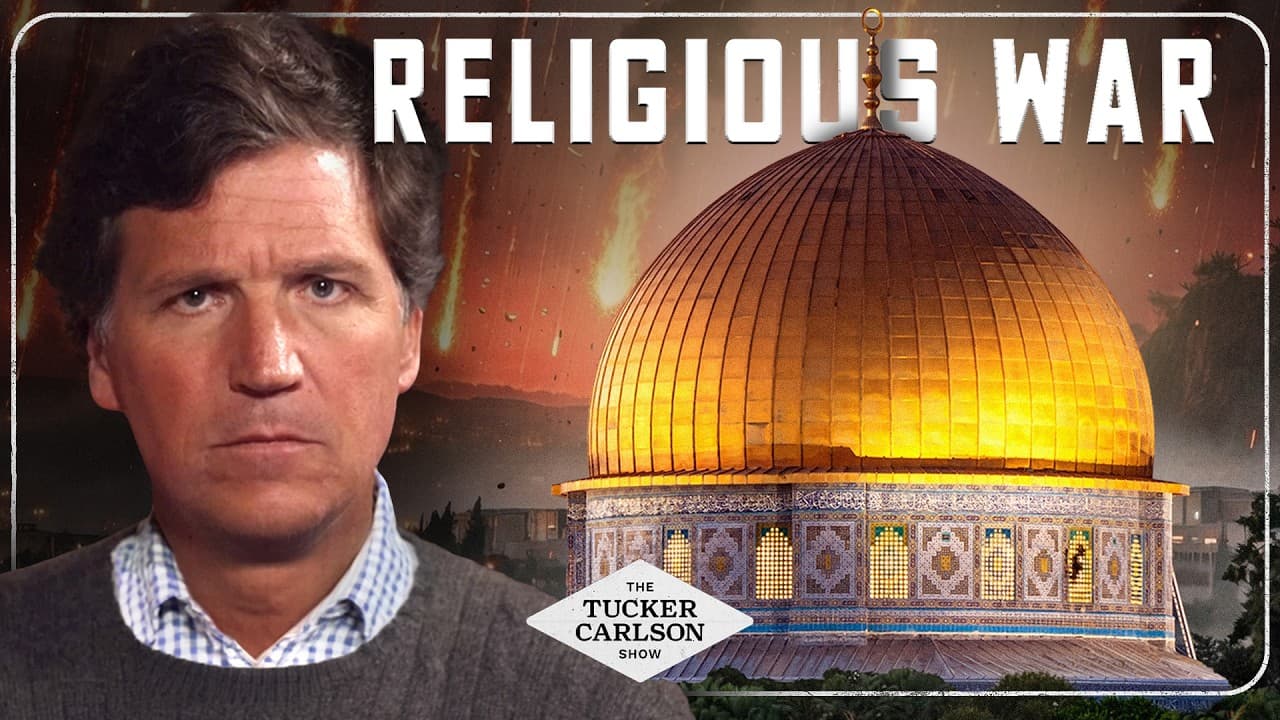
The conflict in Iran and the Gulf may continue because it is tied to unresolved struggles over global power and religious authority, not merely Iran’s nuclear capabilities. The commentary argues that rivalry among the United States, China, and their aligned states, combined with competing beliefs about Jerusalem’s Foundation Stone, makes negotiation harder and escalation more consequential.
Transcript
It's a safe bet that almost no one involved in the war now ongoing in Iran and the Gulf would like to see it continue much longer. If you were to poll, well, the Iranians or the Americans, basically anybody, "How long do you want this to go?" Very few people would say, "I want it to go a long time." But that doesn't mean it won't go a long time. Un... Read More
Key Insights
- The conflict is portrayed as likely to continue even though most Iranians, Americans, and other involved parties would probably prefer a short war. The reason offered is that warfare may become the mechanism for resolving disputes that political leaders have failed to settle through negotiation.
- The primary geopolitical dispute is described as a contest over who sets the rules for commerce, diplomacy, and international affairs. The commentary argues that the United States dominated the Western world after 1945 and a broader unipolar order after the Soviet Union collapsed in August 1991.
- China is presented as a peer competitor to the United States based on its population, technological capacity, industrial output, military potential, and real economy. The commentary links the emergence of this multipolar order partly to China’s admission into the World Trade Organization in 2001.
- Washington policymakers are characterized as unwilling to accept constraints imposed by China’s growing strength. The commentary uses Taiwan as an example, asserting that China regards it as Chinese territory and arguing that American leaders continue behaving as though the United States can make major international decisions unilaterally.
- Negotiation is described as preferable while a country remains strong because warfare can leave it diminished and weaken its eventual bargaining position. The commentary attributes the failure to establish a power-sharing arrangement with China partly to hubris and a lack of wisdom or foresight among American leaders.
- Iran is framed as a proxy battleground for competition among major powers because nuclear-armed powers seek to avoid direct war and possible mutual destruction. The commentary compares this dynamic with earlier conflicts in Vietnam, Afghanistan, and Korea, where larger geopolitical rivalries played out through third countries.
- Russia and China are portrayed as supporting Iran even though they are not described as openly fighting alongside Iranian forces. The commentary argues that both powers have substantial interests in the war’s outcome, making the conflict broader and more difficult to settle than a dispute focused only on nuclear weapons.
- Jerusalem’s Foundation Stone is presented as central to the conflict’s religious dimension because the commentary associates it with Jewish beliefs about creation and Abraham, Muslim beliefs about Muhammad’s ascent, and nearby Christian beliefs about Jesus. It also connects the site to Solomon’s temple and prescribed Jewish public worship.
Install to Summarize YouTube Videos and Get Transcripts
Explore YouTube Video Summarizer or Get YouTube Transcript Extractor
Questions & Answers
Q: Why could the Iran and Gulf war continue for a long time?
The conflict could continue because, according to the commentary, it is connected to unresolved geopolitical and religious questions that extend beyond the immediate combatants. Even if Iranians, Americans, and others prefer a quick conclusion, the outcome may affect who sets international rules and how sacred sites in Jerusalem are understood. Those larger stakes make a rapid settlement less likely.
Q: How does competition between the United States and China affect the conflict?
The commentary presents the United States and China as two competing centers of global power. It argues that China has become a peer in population, technology, industrial output, economic scale, and potentially military power. Because no formal or informal power-sharing arrangement has established how they will divide influence, conflicts such as the war in Iran can become arenas for testing their relative strength.
Q: Why does the commentary describe the world as multipolar?
The world is described as multipolar because the United States is no longer portrayed as the single unchallenged center of global authority. The commentary says American dominance followed 1945 and expanded after the Soviet Union collapsed in August 1991, but China’s subsequent rise created another center of gravity. This change means international decisions increasingly require competition, accommodation, or negotiation between powerful states.
Q: Why is Iran characterized as a proxy battleground?
Iran is characterized as a proxy battleground because major powers generally seek to avoid direct conflict with one another, especially when such confrontation could produce simultaneous destruction. The commentary says geopolitical contests therefore unfold in third countries, citing Vietnam, Afghanistan, and Korea as comparisons. Iran fills that role because it belongs to an alignment that includes Russia and China.
Q: What role do Russia and China play in the conflict according to the commentary?
Russia and China are described as being on Iran’s side without yet fighting openly alongside Iranian forces. The commentary expects that they are helping Iran in multiple ways and argues that they have significant interests tied to the outcome. Their involvement raises the conflict’s geopolitical importance and makes a settlement harder because the result affects more than Iran and the United States alone.
Q: Why does the commentary argue that negotiation should happen before military decline?
Negotiation should occur while a country remains strong because armed conflict can leave it greatly diminished and produce a weaker bargaining position. The commentary argues that American leaders failed to adjust to China’s rise when favorable negotiations were more achievable. It attributes this failure to hubris, inflexibility, and an unwillingness to recognize that the United States can no longer dictate every international outcome unopposed.
Q: How is religion connected to the Iran and Gulf conflict?
The commentary argues that the conflict has a fundamental religious layer that secular audiences in the United States, Europe, Canada, Australia, and New Zealand may struggle to recognize. It focuses on Jerusalem and the Foundation Stone, presenting the site as deeply significant to Judaism and Islam, while also noting nearby Christian beliefs concerning the crucifixion and resurrection of Jesus.
Q: Why is the Foundation Stone important in the commentary?
The Foundation Stone is described as a rock on what was once called Mount Moriah in Jerusalem. The commentary says Jews believe the world began there and that Abraham brought Isaac there for sacrifice, while Muslims believe Muhammad ascended into heaven from the site. It also connects the location to Solomon’s first temple, the later Second Temple, and the requirements of Torah-based public worship.
Summary & Key Takeaways
-
The commentary argues that few participants want a prolonged conflict in Iran and the Gulf, yet the war may persist because it could determine unresolved questions about international leadership. Its central geopolitical issue is whether the United States can continue setting global rules as China emerges as a competing center of economic, industrial, and technological power.
-
Iran is presented as a proxy arena where larger powers can test influence without fighting one another directly. Russia and China are described as aligned with Iran and likely helping it in multiple ways. Because their strategic interests are connected to the outcome, the conflict is portrayed as harder to resolve through a narrow nuclear agreement.
-
The religious dimension centers on Jerusalem’s Foundation Stone, a site associated in the commentary with foundational Jewish and Muslim beliefs and located near places sacred to Christians. The monologue connects the site to Abraham, Muhammad, Jesus, Solomon’s temple, and the Roman destruction of the Second Temple, arguing that secular Western audiences may underestimate its importance.
Read in Other Languages (beta)
Share This Summary 📚
Summarize YouTube Videos and Get Video Transcripts with 1-Click
Try YouTube Summary with ChatGPT & Claude or YouTube Transcript Generator
Explore More Summaries from Tucker Carlson 📚

Summarize YouTube Videos and Get Video Transcripts with 1-Click
Try YouTube Summary with ChatGPT & Claude or YouTube Transcript Generator