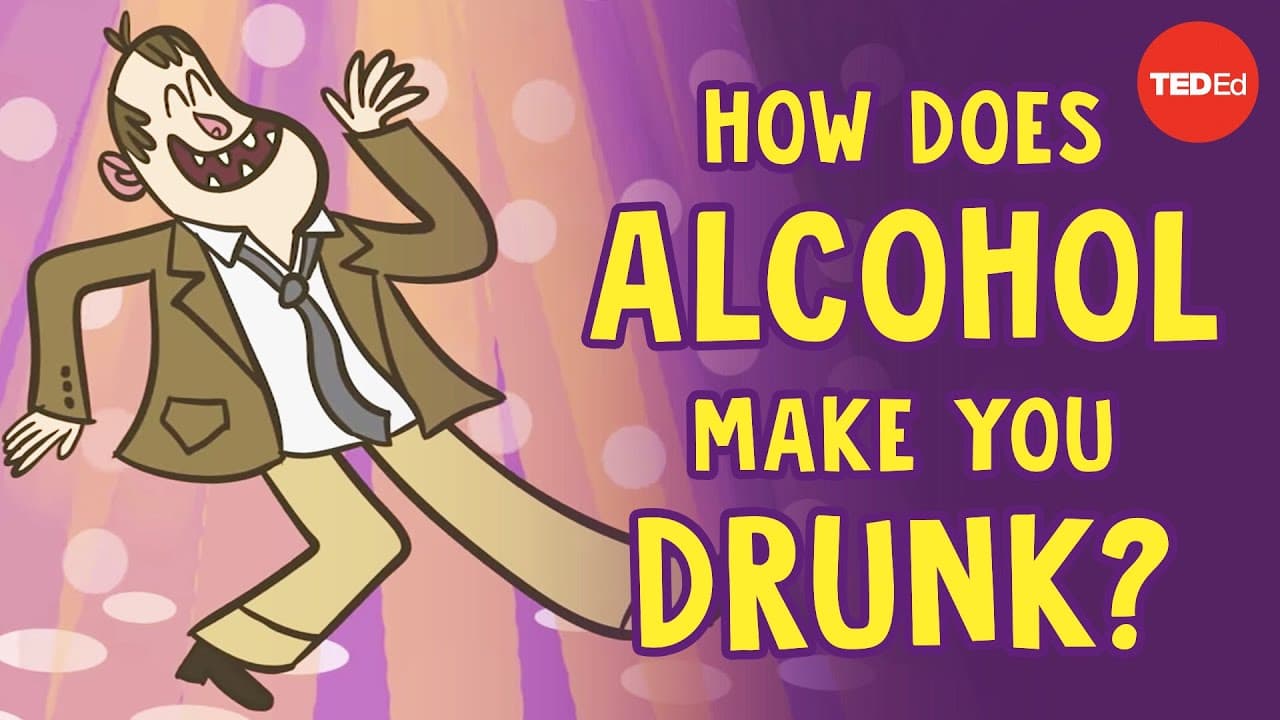
How does alcohol make you drunk? - Judy Grisel
TL;DR
Ethanol makes you drunk by impacting neurotransmitters in the brain, enhancing the inhibitory effects of GABA while decreasing excitatory activity from glutamate. Individual factors like gender, genetics, and drinking history also affect how alcohol is metabolized and experienced, leading to different levels of drunkenness among people.
Transcript
Ethanol: this molecule, made of little more than a few carbon atoms, is responsible for drunkenness. Often simply referred to as alcohol, ethanol is the active ingredient in alcoholic beverages. Its simplicity helps it sneak across membranes and nestle into a many different nooks, producing a wide range of effects compared to other, clunkier mo... Read More
Key Insights
- ❓ Ethanol interacts with neurotransmitters to cause drunkenness.
- 🍳 The liver breaks down alcohol, affecting blood alcohol levels.
- ❓ Individual differences in genetics and drinking habits impact alcohol's effects.
- 🥺 Chronic alcohol consumption leads to changes in brain function.
- 😒 Genetic factors can increase the risk of alcohol use disorder.
- 🩸 Gender differences affect blood alcohol concentration.
- 🥺 Regular drinking can lead to tolerance and liver damage.
Install to Summarize YouTube Videos and Get Transcripts
Explore YouTube Video Summarizer or Get YouTube Transcript Extractor
Questions & Answers
Q: How does alcohol cause drunkenness in the body?
Alcohol impacts the brain's neurotransmitters, GABA and glutamate, making neurons less communicative which results in relaxation, drowsiness, and impaired brain activity at toxic doses.
Q: What role does the liver play in processing alcohol?
The liver breaks down alcohol into toxic acetaldehyde, then non-toxic acetate through enzymes like ADH and ALDH, regulating the bloodstream alcohol levels reaching the brain.
Q: What are the factors influencing individual differences in alcohol's effects?
Gender, genetics affecting liver enzyme activity, body composition, endorphin, dopamine, and GABA levels, tolerance, and previous drinking habits can all influence how alcohol affects individuals.
Q: How does chronic alcohol consumption affect the brain?
Chronic drinking alters neurotransmitter levels, leading to anxiety, sleep disturbances, and decreased pleasure, creating a cycle of dependence and disordered use.
Summary
This video explains how ethanol, the active ingredient in alcoholic beverages, causes drunkenness and why it has different effects on different people. It follows the journey of alcohol through the body, from absorption in the stomach and small intestine to its impact on the liver and brain. The liver breaks down alcohol into toxic acetaldehyde and then converts it to non-toxic acetate. The brain's sensitivity to alcohol determines the emotional, cognitive, and behavioral effects, as it affects neurotransmitters like GABA and glutamate. Alcohol also stimulates dopamine release in the brain, causing pleasure, and increases endorphin levels, contributing to relaxation. Genetic differences, such as enzyme production and neurotransmitter transmission, along with previous drinking experiences, influence individuals' reactions to alcohol.
Questions & Answers
Q: How does alcohol cause drunkenness?
Alcohol causes drunkenness by affecting the brain's neurotransmitters. It turns up the brain's primary brake, GABA, and turns down the primary gas, glutamate. This reduces neuron communication, leading to relaxation at moderate doses, sedation at higher doses, and impaired brain activity at toxic doses.
Q: How does alcohol reach the blood after consumption?
After being consumed, alcohol lands in the stomach and is absorbed into the blood through the digestive tract, especially the small intestine. The presence of food in the stomach affects alcohol absorption, as the pyloric sphincter closes after eating, reducing the amount of alcohol that reaches the blood. Hence, drinking on an empty stomach results in a higher blood alcohol concentration compared to drinking after a meal.
Q: What happens to alcohol in the liver?
Alcohol is primarily processed in the liver. Enzymes in the liver, such as ADH and ALDH, break down alcohol in two steps. ADH converts alcohol into acetaldehyde, which is toxic, and then ALDH converts the toxic acetaldehyde into non-toxic acetate. The liver continuously eliminates alcohol, but the amount that reaches the brain and other organs depends on the liver's first-pass elimination.
Q: What impact does alcohol have on the brain?
Alcohol affects the brain's neurotransmitters, particularly GABA and glutamate. It turns up GABA, the primary brake, and turns down glutamate, the primary gas. This reduces neuron communication, leading to the emotional, cognitive, and behavioral effects of alcohol, known as drunkenness. Alcohol also stimulates a group of neurons in the midbrain, which releases dopamine in the nucleus accumbens, causing a surge of pleasure.
Q: Why do different people have different blood alcohol concentrations (BAC) after consuming the same amount of alcohol?
Several factors contribute to differences in individuals' BAC after consuming the same amount of alcohol. Women generally have a smaller blood volume than men, which means that the same amount of alcohol results in a higher concentration. Additionally, genetic differences in the liver's alcohol processing enzymes and individual tolerance to alcohol can also impact BAC.
Q: How do genetic differences affect risk for alcohol use disorder?
Genetic differences can influence an individual's risk for developing an alcohol use disorder. For example, some individuals may have low levels of endorphins or dopamine, leading them to self-medicate through drinking. Others may have a heightened endorphin response, increasing the pleasurable effects of alcohol. Variations in GABA transmission can make certain individuals more sensitive to the sedative effects of alcohol, decreasing their risk of developing disordered drinking.
Q: How does chronic alcohol consumption affect the brain?
Chronic alcohol consumption leads to structural and functional changes in the brain. It reduces GABA, dopamine, and endorphin transmission, while enhancing glutamate activity. This can result in anxiety, difficulty sleeping, and a decreased experience of pleasure. These changes contribute to a cycle of disordered alcohol use, where drinking feels normal, but not drinking becomes uncomfortable.
Q: How do genetics and previous drinking experiences influence alcohol consumption patterns?
Both genetics and previous drinking experiences play a significant role in how individuals experience alcohol and their drinking patterns. Genetic variations in enzymes, neurotransmitters, and endorphin response can predispose individuals to certain patterns of drinking. Additionally, repeated alcohol consumption leads to neural and behavioral changes, making drinking feel normal and establishing a cycle of dependence and tolerance.
Q: How does alcohol impact the liver and brain as it circulates in the blood?
As alcohol circulates in the blood, it first reaches the liver, where enzymes break it down into toxic acetaldehyde and then non-toxic acetate. The liver continuously eliminates alcohol, but the initial breakdown determines the amount that reaches the brain and other organs. In the brain, alcohol affects neurotransmitters, particularly GABA and glutamate, leading to the emotional and cognitive effects of alcohol consumption.
Q: What role do endorphins play in alcohol consumption?
Alcohol causes certain neurons to synthesize and release endorphins. Endorphins help calm down the body in response to stress or danger, contributing to the euphoric and relaxed feelings associated with alcohol consumption. Elevated levels of endorphins contribute to the pleasurable effects of drinking.
Takeaways
Alcohol, specifically ethanol, causes drunkenness by affecting neurotransmitters in the brain and reducing neuron communication. Its journey through the body involves absorption in the stomach and small intestine, processing in the liver, and subsequent impact on the major organs, especially the brain. Genetic differences and previous drinking experiences influence individual reactions to alcohol, and chronic consumption can lead to structural and functional changes in the brain. Understanding the complexity of alcohol's effects can help explain why different individuals have varying responses and potential risks for alcohol use disorder.
Summary & Key Takeaways
-
Ethanol, found in alcoholic drinks, causes drunkenness by interacting with the brain's neurotransmitters.
-
The liver processes ethanalcohol ends up in the bloodstream, affecting brain functions.
-
Gender, genetics, and drinking habits all play a role in how alcohol affects individuals.
Read in Other Languages (beta)
Share This Summary 📚
Summarize YouTube Videos and Get Video Transcripts with 1-Click
Try YouTube Summary with ChatGPT & Claude or YouTube Transcript Generator
Explore More Summaries from TED-Ed 📚




Summarize YouTube Videos and Get Video Transcripts with 1-Click
Try YouTube Summary with ChatGPT & Claude or YouTube Transcript Generator