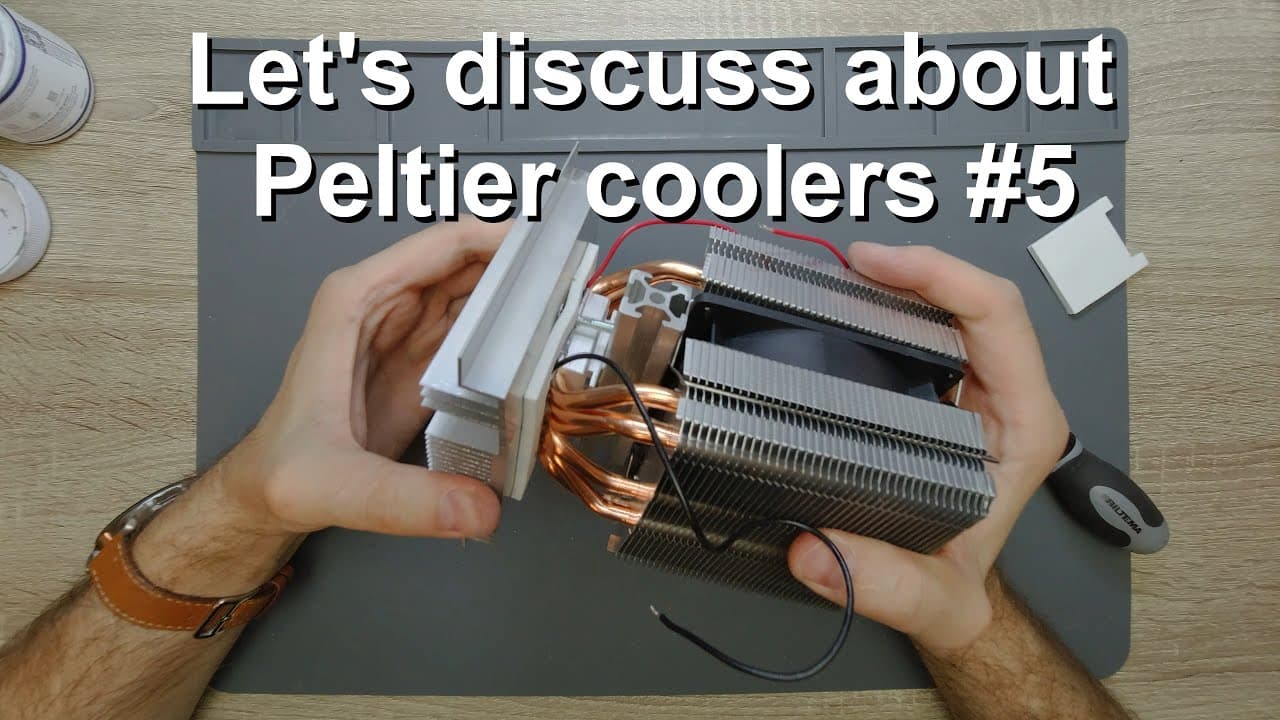
Let's discuss about Peltier coolers #5 - A new arrangement of heatsinks
TL;DR
Exploring a DIY patio cooler setup for effective temperature control.
Transcript
welcome everyone in this video we are going to look at another party cooler based cooler and what i show you is basically two different systems here so i want to mix some stuff but basically what we have is this system so you can usually buy these things on the internet for quite cheap uh price so what they sell to you is this uh cooler and they su... Read More
Key Insights
- 🥵 Utilizing Peltier technology offers a compact cooling solution for small spaces but requires efficient heat management.
- 👱 Airflow management through fans is crucial for circulating cooled air effectively and minimizing warm air from affecting the cold side.
- 😎 The performance of the cooling system is closely tied to both current supplied and the ambient temperature of the surrounding environment.
- 🥵 Proper thermal grease application plays a significant role in ensuring good thermal contact for effective heat transfer.
- 👱 While the setup showcases potential for personal cooling, it is not a substitute for full-scale air conditioning solutions.
- 😅 Future modifications could involve enhancing insulation further and separating hot and cold sides for greater efficiency.
- 🥵 The complexity of the setup highlights the balance needed between cooling power and heat dissipation to achieve desired results.
Install to Summarize YouTube Videos and Get Transcripts
Explore YouTube Video Summarizer or Get YouTube Transcript Extractor
Questions & Answers
Q: What are the main components used in this DIY patio cooler?
The main components of the DIY patio cooler include a Peltier cooler, which provides the cooling effect, various heatsinks for effective heat dissipation, fans to circulate air, and thermometers for measuring temperature across different setups. Additionally, insulating foam is used to enhance the separation of the hot and cold sides.
Q: How does the cooling power of the system vary with different electric currents?
The cooling power of the system was shown to vary with electric currents ranging from 2 to 5 amps. For example, at 4 amperes, the temperature on the cold side dropped to 1.5 degrees Celsius, indicating that as the current increases, the cooling capacity improves. However, the maximum performance is limited by the heat dissipation capability of the system.
Q: What methods did the presenter use to monitor temperature changes in the cooler?
The presenter utilized multiple temperature measurement techniques, including K-type thermocouples, infrared thermometers, and measured air outlet temperatures to comprehensively assess the performance of the cooling system. This allowed for real-time feedback on the effectiveness of the cooler's setup.
Q: What limitations does the presenter identify regarding the cooler's capability as an air conditioner?
The presenter emphasizes that the DIY patio cooler cannot serve as a conventional air conditioner due to its limited cooling power compared to standard units. While it can cool small volumes and provide localized comfort, it lacks the capacity required for cooling larger spaces effectively.
Q: How does the setup address heat dissipation on the hot side?
For optimal heat dissipation on the hot side, a large copper heat pipe cooler was attached, designed to manage around 150 watts of power. The presenter highlighted the importance of ensuring that this heatsink can efficiently dissipate waste heat generated by the Peltier cooler for sustained performance and overall efficiency.
Q: What environment did the presenter conduct the cooler experiment in?
The cooler experiment was conducted in a hot summer environment, which affected the temperature readings and overall performance of the patio cooler. The room temperature was noted to be higher than usual, providing context for the cooling effectiveness observed during the tests.
Summary & Key Takeaways
-
The video demonstrates a DIY patio cooler using various components, including a Peltier cooler and thermometer to measure temperature changes, showcasing an experimental approach to cooling.
-
The speaker explains the theoretical cooling power and performance characteristics of the setup, emphasizing the importance of efficient heat dissipation to ensure optimal performance.
-
The presenter shares insights about potential applications of the cooler while discussing limitations, such as its inability to function as a traditional air conditioner, and suggests improvements for future experiments.
Read in Other Languages (beta)
Share This Summary 📚
Summarize YouTube Videos and Get Video Transcripts with 1-Click
Try YouTube Summary with ChatGPT & Claude or YouTube Transcript Generator
Explore More Summaries from Curious Scientist 📚

![Building a coil winder [Part 6] - A few improvements thumbnail](/_next/image?url=https%3A%2F%2Fi.ytimg.com%2Fvi%2F3eyxG_g2iUA%2Fhqdefault.jpg&w=750&q=75)

Summarize YouTube Videos and Get Video Transcripts with 1-Click
Try YouTube Summary with ChatGPT & Claude or YouTube Transcript Generator