What is the AI era language and why natural language matters
TL;DR
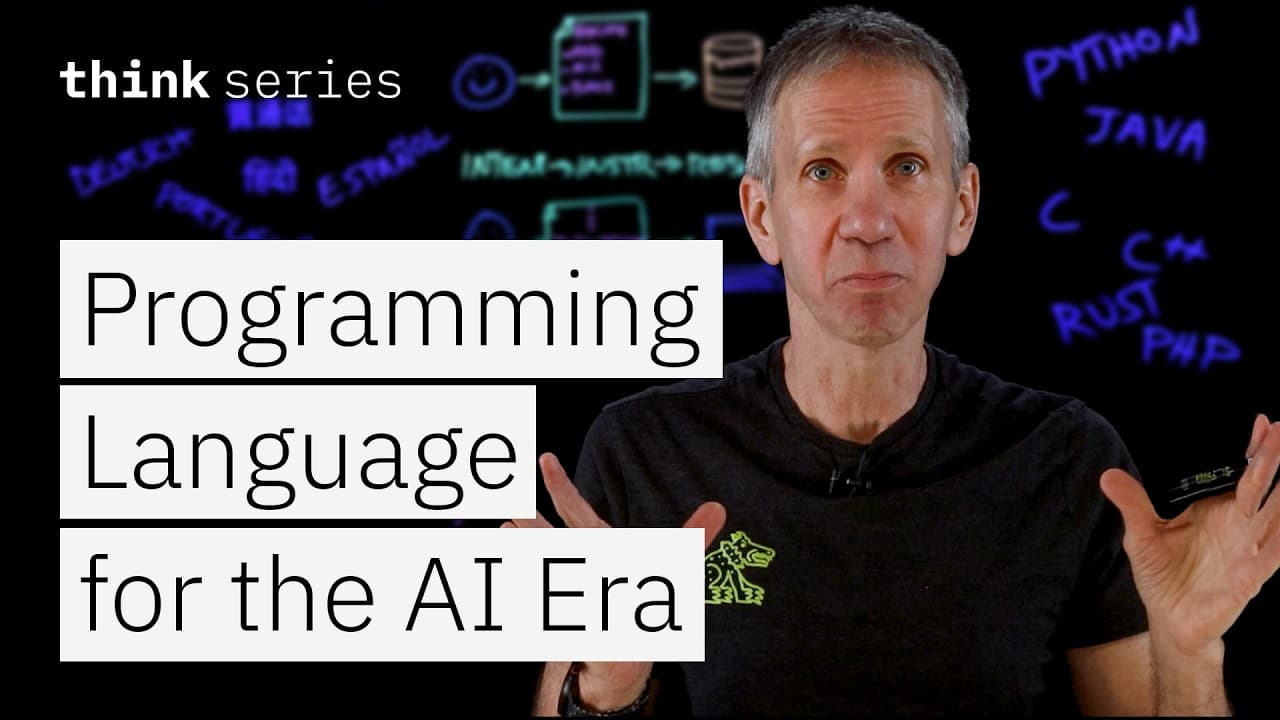
The most important programming language is the one you already know, your natural language. AI lets you go from intent to results directly, without translating into a machine language. This shift makes coding more accessible as LLMs understand natural language and can generate outcomes from it.
Transcript
One of the most common questions I get from aspiring IT professionals looking for career advice is this: What programming language is the most important one to learn? Well, my answer might surprise you. It's not Python or Java or any of those widespread technologies. Are you ready for this? The most important programming language is the one you alr... Read More
Key Insights
- Machine language was the original way computers expressed instructions, which required specialized knowledge. The key shift was moving toward higher level, more human-like languages.
- Structured programming and object-oriented concepts helped reduce spaghetti code and improve maintainability, paving the way for modern software development practices.
- The web era popularized cross platform execution with languages like Java, enabling write once, run anywhere, and reducing platform dependency.
- Scripting languages like Python and Ruby later emerged to provide easier, rapid development cycles and accessibility to non specialists.
- Safer languages with better memory management, such as Go and Rust, reduce common programming errors and improve reliability.
- The current era emphasizes natural language interfaces backed by AI, allowing users to describe goals in plain language rather than writing specialized code.
- Large language models enable direct mapping from intent to results, bypassing traditional translation layers between human and machine language.
- The future of programming may center on natural language prompts and AI that understands and executes tasks described by users in everyday speech.
Install to Summarize YouTube Videos and Get Transcripts
Explore YouTube Video Summarizer or Get YouTube Transcript Extractor
Questions & Answers
Q: What is meant by the AI era language and how does it differ from traditional programming languages?
The AI era language refers to using natural, human language to describe what you want a computer to do, instead of writing code in a traditional programming language. This approach leverages large language models to interpret intent stated in everyday words and convert it into actionable results. It represents a shift from translating human intent into machine instructions to translating intent directly into outcomes with AI assistance.
Q: Why is natural language considered more important than Python or Java in this view?
Natural language is considered more important because it is the language you already know, and AI can understand it through natural language processing. This reduces the barrier to programming, allowing people who are not trained coders to express goals in their own words and have AI generate the necessary steps or code to achieve them.
Q: How did programming languages evolve from machine code to high level languages according to the video?
The video traces evolution from machine and assembler languages, which are machine oriented, to higher level languages like Fortran and COBOL that are more human readable. It then covers structured programming and object oriented paradigms, followed by web oriented languages such as Java, JavaScript, and scripting languages like Python and Ruby, culminating in natural language interfaces.
Q: What role does the web play in the shift toward AI driven programming?
The web created a need for cross platform compatibility, which led to languages like Java that promised write once, run anywhere. This cross platform flexibility was crucial, opening the way for scripting and AI driven tools that can operate across diverse environments and leverage natural language as a universal interface.
Q: What are Rust and Go cited as examples of, and why are they relevant?
Go and Rust are cited as safer languages designed to prevent common memory safety issues and improve reliability, especially in microservices and cloud environments. They illustrate the ongoing effort to balance performance with safety, a backdrop for the broader shift toward languages and tools that support AI driven development.
Q: How does the transcript describe the final shift to natural language processing with AI?
The transcript describes the shift as moving from translating human intent into machine instructions to allowing AI to understand natural language and produce results directly. It emphasizes that this makes programming more accessible because the common language of computer science and the internet becomes natural language.
Q: What is the practical implication for aspiring IT professionals according to the video?
For aspiring IT professionals, the practical implication is that you can leverage your existing language and reasoning skills to work with AI systems. By using natural language prompts, you can guide AI to generate code, scripts, or workflows, reducing the need to master new programming languages while still achieving productive results.
Q: What does the video say about the future accessibility of programming with AI?
The video argues that AI and natural language processing will democratize programming, allowing more people to create software by describing what they want in plain language. As AI understands the user’s natural language, coding becomes more about specifying outcomes rather than writing intricate syntax, expanding participation in software development.
Summary & Key Takeaways
-
A historical view shows computers moved from machine code to human-like languages, culminating in natural language interfaces used with LLMs. The video argues that your everyday language is now a viable programming medium for AI workflows.
-
Natural language processing enables prompts to drive AI systems, reducing the need to learn specialized programming syntax and enabling broader participation in software creation.
-
The overall message is optimistic: with natural language, anyone who speaks a language can effectively program for the AI era, as machines increasingly understand and execute instructions stated in human speech.
Read in Other Languages (beta)
Share This Summary 📚
Summarize YouTube Videos and Get Video Transcripts with 1-Click
Try YouTube Summary with ChatGPT & Claude or YouTube Transcript Generator
Explore More Summaries from IBM Technology 📚




Summarize YouTube Videos and Get Video Transcripts with 1-Click
Try YouTube Summary with ChatGPT & Claude or YouTube Transcript Generator