How to Find Your Purpose and Build a Business
TL;DR
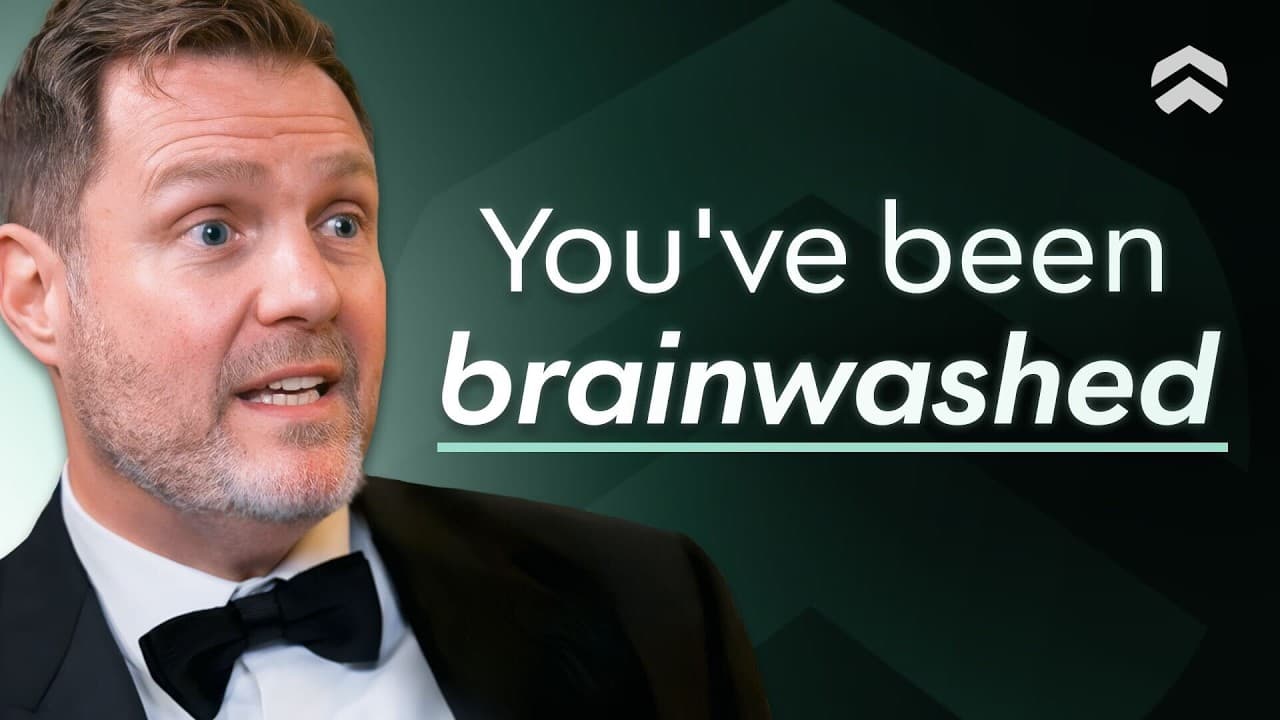
Find your purpose by identifying a problem you care about solving, then explore different experiences to discover your strengths and preferred ways of working. Turn that purpose into a business by developing useful skills, creating scalable value instead of only selling time, and accepting the difficult early learning curve in exchange for greater ownership and control.
Transcript
I've gone to ask thousands of people in the street what their dream is and I've seen what's stopping people people will use money as an excuse people will say I don't have enough money level two is I don't have time what you mean is you don't have a purpose if they can discover their purpose they will find the time so how do you do that I I didn't ... Read More
Key Insights
- Purpose is a problem that someone genuinely cares about solving, rather than merely a job title or predetermined career. Starting with a meaningful problem allows a person to explore several possible careers, skills, and business models without becoming trapped in a single professional identity.
- Direct experience is a way to discover abilities that formal education may not reveal. Squibb learned that he enjoyed sales by approaching a prospective gardening customer at age 15, despite having no previous experience running a gardening business or performing gardening work.
- A lack of time can indicate a lack of purpose, according to Squibb. He argues that people who discover a sufficiently meaningful purpose become more willing to make time, while money and time frequently serve as explanations for avoiding a dream.
- Self-employment is harder at the beginning because the founder faces a learning curve, uncertainty, and the discomfort of feeling inexperienced. Squibb argues that this difficulty supports personal growth and can decline as the business develops systems and other people take responsibility for operations.
- Employment is initially predictable but does not guarantee lasting control. A company can change its direction or dismiss an employee after years of work, particularly when that employee owns no equity and therefore retains no ownership in the organization they helped build.
- Youth is a useful period for taking risks because costs, expectations, and responsibilities may be lower. Squibb recommends choosing difficult experiences early, including travel, business exposure, and exploration, because comfortable choices made when young may contribute to a harder life later.
- University is not automatically the right choice for someone who lacks direction. Squibb argues that entering university without knowing what problem matters can consume four years, create debt in England, and produce a qualification that channels the graduate toward a particular kind of job.
- Selling time is limited because time is not infinite and an hourly rate does not scale. Squibb contrasts this model with building ownership, where several years of early effort can produce a business that another person eventually operates while the founder retains control and equity.
Install to Summarize YouTube Videos and Get Transcripts
Explore YouTube Video Summarizer or Get YouTube Transcript Extractor
Questions & Answers
Q: How do you identify your purpose before choosing a career?
Identify a problem you genuinely want to solve, then work backward from that problem to examine your interests, abilities, hobbies, and preferred ways of contributing. Do not assume that a school, parent, friend, or established profession already defines who you are. Exploration, travel, and experience in different businesses can help reveal strengths and motivations that abstract career planning may overlook.
Q: How can purpose be turned into a profitable business?
Turn purpose into a business by connecting a problem you care about with skills that help other people and can create revenue. Begin with practical experiments, speak directly to potential customers, and learn from the resulting response. Squibb's gardening business illustrates that a founder can discover an aptitude for sales through action, even without previous business or technical experience.
Q: Why does Simon Squibb say employment is not necessarily easier?
Employment can appear easier because it offers an immediate salary and a predictable monthly payment, but it does not provide complete control or ownership. A boss can change direction or end someone's employment after years of effort. Squibb argues that entrepreneurship has a steeper initial learning curve, yet it can become easier as systems develop and another person assumes daily operations.
Q: What first step can a young person take toward entrepreneurship?
The first step is to test an idea through direct action instead of waiting to feel fully qualified. Squibb began by knocking on a door, introducing himself, offering to care for a garden, and proposing a monthly price. The broader lesson is to approach a real potential customer, offer a useful service, and use the experience to discover personal strengths.
Q: Why should young people take difficult choices early?
Squibb argues that young people often have lower costs, fewer responsibilities, and fewer expectations about comfort, which makes experimentation and risk easier to absorb. Choosing only the immediate security of a salary may reduce exploration. Difficult early choices, including travel, varied work experiences, and starting a business, can reveal identity, develop resilience, and create more options for the future.
Q: What question should replace “What will you do when you grow up?”
Ask, “What problem would you like to solve when you are older?” Squibb believes the conventional question directs young people toward fixed labels such as doctor or lawyer before they understand themselves. A problem-centered question opens several possible careers and encourages them to connect their abilities, hobbies, and interests with a contribution they genuinely care about making.
Q: When might university be the wrong next step?
University may be the wrong immediate step when a young person does not know what they want and is attending mainly to leave home or follow expectations. Squibb argues that this choice can consume four important years, create serious debt in England, and produce a qualification that channels someone toward one job category. He recommends exploration before making that commitment.
Q: Why is selling time difficult to scale?
Selling time is difficult to scale because each person has limited hours and an hourly rate ties income directly to those hours. Squibb says people are widely taught to work 40 hours per week for a set rate, even though time is not infinite. Building a business and retaining equity can create ownership that continues after another person takes over operations.
Summary & Key Takeaways
-
Purpose becomes clearer through exploration, experimentation, and direct experience. Simon Squibb discovered an aptitude for sales only after starting a gardening company at 15 and asking someone to become his customer. He argues that practical action can reveal strengths that schools, parents, friends, and conventional career planning may never uncover.
-
A problem-centered question can produce more direction than choosing a fixed career. Instead of asking young people what job they want, Squibb recommends asking what problem they want to solve. That purpose can support several careers while allowing people to connect their interests, abilities, and hobbies to meaningful work.
-
Entrepreneurship is initially difficult because it requires learning, uncertainty, and personal responsibility, but Squibb believes it can create ownership and control over time. Employment may feel easier initially, yet workers can lose their positions without owning what they helped build. A business can eventually operate under someone else while its founder retains ownership.
Read in Other Languages (beta)
Share This Summary 📚
Summarize YouTube Videos and Get Video Transcripts with 1-Click
Try YouTube Summary with ChatGPT & Claude or YouTube Transcript Generator
Explore More Summaries from High Performance 📚

Summarize YouTube Videos and Get Video Transcripts with 1-Click
Try YouTube Summary with ChatGPT & Claude or YouTube Transcript Generator