How Did Nico Rosberg Beat Lewis Hamilton?
TL;DR
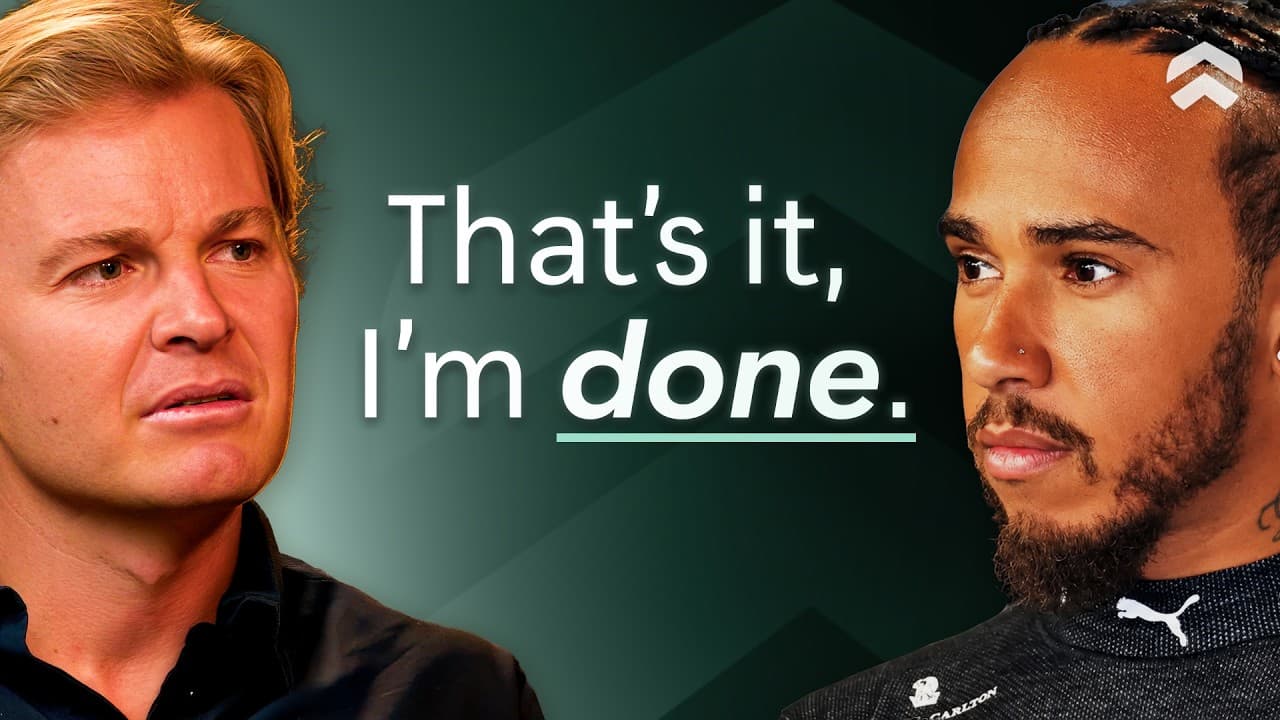
Nico Rosberg beat Lewis Hamilton by deliberately changing how he handled fear, conflict, and pressure, using visualization, meditation, firm wheel-to-wheel positioning, and detailed preparation. Winning the 2016 Formula 1 championship brought immediate relief rather than joy, and Rosberg decided as he crossed the line that he was finished because the pursuit had become intensely demanding.
Transcript
Get the hell back into that car. >> After becoming Formula 1 world champion, Nikico Rosberg is stunned motor racing. >> I've decided to end my Formula 1 career. >> But you were great buddies when you were growing up. >> We're best friends when we were kids. Yeah. Oh, there's no relationship. It's proper war. It's like war. This guy is like God. Whe... Read More
Key Insights
- Nico Rosberg's childhood ambition was to become a professional racing driver after watching his father compete and observing Mika Hakkinen become a two-time world champion under his father's management. The drivers appeared like unreachable gladiators, but their example established the goal around which Rosberg built his identity.
- Rosberg's motivation combined pursuing a dream with running away from failure. Near the top of Formula 1, that fear became stronger because almost any mistake could feel like a step down from the summit, making success increasingly intense rather than emotionally comfortable.
- Winning the 2016 championship produced relief before joy. Rosberg decided as he crossed the line in Abu Dhabi that he was finished, because completing the goal released him from an experience he described as exceptionally difficult, intense, and balanced on a knife's edge.
- The rivalry with Lewis Hamilton required Rosberg to suppress parts of his naturally agreeable personality. He believed he had yielded too often, so he consciously became tougher and more willing to hold his position, even when firmness increased the possibility of contact between the teammates.
- Visualization was a practical part of Rosberg's competitive preparation. He repeatedly imagined himself refusing to yield and even used a posture of strength while meditating, believing that these details would influence his behavior when instinctive reactions took over during high-pressure wheel-to-wheel racing.
- Crashes communicated that Rosberg's approach had changed. Although he acknowledged that incidents were often more his fault because Hamilton was exceptionally skilled, Rosberg believed holding his ground was necessary to show that he was no longer willing to remain the accommodating teammate.
- Mercedes used financial accountability to discourage collisions between its drivers. Rosberg said both teammates signed an arrangement requiring each to pay half of the damage regardless of fault, and one crash cost him $360,000, creating a strong practical incentive to avoid further contact.
- Detailed rules can prevent competitive disputes from spiraling out of control. Mercedes increasingly defined which driver had the corner in specific positions, giving the team standards for reviewing incidents and reducing the risk that uncertainty, perceived unfairness, and internal factions would intensify disagreements.
Install to Summarize YouTube Videos and Get Transcripts
Explore YouTube Video Summarizer or Get YouTube Transcript Extractor
Questions & Answers
Q: How did Nico Rosberg mentally prepare to beat Lewis Hamilton?
Rosberg used repeated visualization and meditation to rehearse the behavior he needed during competition. He pictured himself holding his ground instead of yielding and adopted a posture of strength while meditating. Because firmness did not come naturally to him, this preparation was intended to make a tougher response available automatically during intense wheel-to-wheel situations against Hamilton.
Q: Why did winning the Formula 1 championship bring Rosberg relief instead of joy?
Winning ended a pursuit that had become dominated by pressure, fear of failure, and relentless scrutiny. Rosberg said that near the top, almost any move could feel like a step backward. When he crossed the line in Abu Dhabi, his first reaction was relief because he had finally completed the goal and no longer needed to sustain its psychological demands.
Q: When did Nico Rosberg decide to retire from Formula 1?
Rosberg said he decided he was finished as he crossed the finish line in Abu Dhabi and secured the 2016 world championship. The decision was therefore immediate rather than the product of a long celebration afterward. His internal response was that he had accomplished the objective, and the relief of completion made him feel ready to stop.
Q: Why did Nico Rosberg stop being the nice teammate?
Rosberg believed his naturally agreeable behavior caused him to yield too often in direct competition. To have a realistic chance against Hamilton, he felt he needed to become firmer and show that he would defend his position. The change was deliberate, uncomfortable, and supported by mental rehearsal because toughness did not arise naturally from his usual personality.
Q: What did the Barcelona 2016 collision change at Mercedes?
The collision intensified concern within Mercedes because the teammates had handed a victory opportunity to rival Red Bull. Rosberg said Toto Wolff reacted angrily, and internal discussions considered serious consequences such as suspension. Mercedes also imposed a financial arrangement under which both drivers would share damage costs equally, regardless of which driver was primarily responsible.
Q: How did Mercedes discourage Rosberg and Hamilton from crashing?
Mercedes placed a contract before the drivers requiring each of them to pay half of the damage from their collisions, even if one driver was judged much more responsible. Rosberg said one crash cost him $360,000. The team also developed increasingly detailed guidelines to determine corner ownership and evaluate responsibility after wheel-to-wheel incidents.
Q: Why are detailed racing rules important between teammates?
Detailed rules provide a shared reference when teammates collide or dispute who owned a corner. Rosberg explained that without clear standards, arguments can grow behind closed doors because responsibility remains uncertain. People may take sides, and a driver may feel unfairly treated. Specific guidelines reduce ambiguity and help stop an internal conflict from spiraling out of control.
Q: What does Nico Rosberg's experience reveal about elite performance?
Rosberg's experience shows that wealth, public success, and technical ability do not remove the human strain of elite competition. Formula 1 performance is measured by fractions of a second, watched by hundreds of millions of people, and shaped by decisions made at extreme speed. For Rosberg, reaching the summit made failure feel more threatening, not less.
Summary & Key Takeaways
-
Rosberg built his identity around becoming a professional racing driver after watching his father race and following Mika Hakkinen's career. As he approached the top of Formula 1, his motivation increasingly included escaping failure. The closer he came to his goal, the more intense and frightening every potential setback became.
-
Beating Hamilton required Rosberg to behave more firmly than his naturally accommodating personality preferred. He repeatedly visualized holding his position, adopted a posture of strength during meditation, and accepted that clashes could follow. This psychological preparation helped him stop yielding and demonstrated to Hamilton that his competitive behavior had changed.
-
Rosberg crossed the finish line in Abu Dhabi as the 2016 world champion but initially felt relief rather than happiness. He decided immediately that he was finished with Formula 1. The championship had demanded relentless preparation under public scrutiny, with performance measured by fractions of a second and every decision carrying significant consequences.
Read in Other Languages (beta)
Share This Summary 📚
Summarize YouTube Videos and Get Video Transcripts with 1-Click
Try YouTube Summary with ChatGPT & Claude or YouTube Transcript Generator
Explore More Summaries from High Performance 📚
Summarize YouTube Videos and Get Video Transcripts with 1-Click
Try YouTube Summary with ChatGPT & Claude or YouTube Transcript Generator