Why Apple Is Struggling in the AI Era
TL;DR
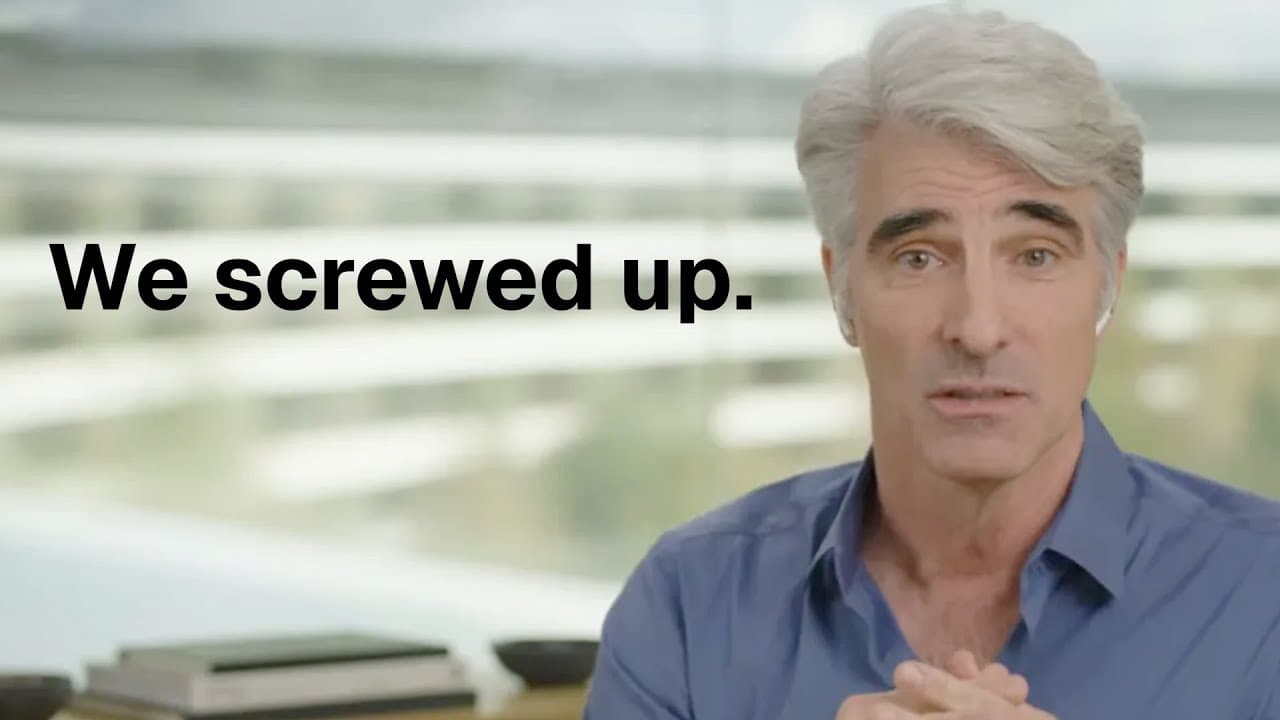
Apple's core identities, best-in-class hardware with no compromises and a deliberate 'late is better than wrong' strategy, are exactly what leave it unequipped for AI. Apple Intelligence was revealed as a slam dunk given its hardware and talent, but it failed to ship, and the internal AI/ML team is nicknamed 'aimless.'
Transcript
I still remember the reveal. Apple intelligence. The new era of how we would use and interface with our Apple devices. It made all the sense in the world. AI models had gotten so much better and smarter. It seemed like we were just days away from being able to run them on our phone with our data and do everything that we need to. The AI ML team at ... Read More
Key Insights
- Apple Intelligence was revealed as a new era for interfacing with Apple devices, and it seemed users were days away from running smart AI models on their phones with their own data, but it simply did not happen.
- Apple's AI/ML team is internally referred to as 'aimless,' a pun that also reflects how the team feels, signaling that the company got off on the wrong foot and kept going despite the problems.
- The last comparable Apple flop was AirPower, which the company scrubbed from history because it failed so badly, but AI is a core piece of Apple's business plan rather than a peripheral wireless charger.
- Best-in-class hardware defines Apple, meaning no compromises: when it launched the iPhone with capacitive touch, it cost comically more than the plastic resistive touchscreens rivals used but enabled multi-touch and finger use.
- Apple refuses to cheap out on parts, screens, or DACs; its $10 USB-C to headphone jack adapter is recommended in audiophile circles as better than the headphone jack on a $1,000 gaming motherboard.
- Apple would rather fight Qualcomm in court for 10 years than compromise on modem quality, illustrating how far the company goes to avoid cutting corners on hardware components.
- 'Late is better than wrong' is a key Appleism: Apple was not first to laptops, GUIs, smartphones, OLED, or tablets, but waits until a category is established so it can enter and do it right.
- Apple silicon's success traces partly to Anand Lal Shimpi of AnandTech, who was poached by Apple after his deep-dive writeup on the iPhone 5S 64-bit processor, and he helped enable the fanless 12-inch MacBook.
Install to Summarize YouTube Videos and Get Transcripts
Explore YouTube Video Summarizer or Get YouTube Transcript Extractor
Questions & Answers
Q: What is Apple Intelligence and what happened to it?
Apple Intelligence was revealed as a new era for how people would use and interface with their Apple devices, arriving as AI models got much better and smarter. It seemed users were just days away from running these models on their phones with their own data to do everything they needed. According to the video, the AI/ML team had a lot of cool things to share, and then it just did not happen, becoming a rare and public failure for the company.
Q: Why is Apple's AI/ML team called 'aimless'?
The video says Apple's AI/ML team is internally referred to as 'aimless.' It works as a funny pun on ML, but it also reflects how the team actually feels about their situation. The creator frames it as evidence that Apple got off on the wrong foot with AI and kept sprinting with a broken ankle, producing what he calls nonsense rather than a coherent, shippable product that lives up to the initial reveal.
Q: How does the Apple Intelligence failure compare to AirPower?
The creator says the only comparable Apple flop he had seen before was AirPower, a wireless charger that failed so hard the company basically scrubbed its history out of existence. The key difference is scale of importance: AirPower was just a fancy wireless charger, whereas AI is a core piece of Apple's business plan. So while both are flops, the AI failure strikes at something central to Apple's future rather than a peripheral accessory.
Q: What does 'best-in-class hardware' mean for Apple?
Best-in-class hardware means Apple makes no compromises on quality. When it launched the iPhone, rivals used resistive plastic touchscreens that felt awful and needed a stylus; Apple used capacitive touch, which was far more expensive but enabled multi-touch and smooth finger use. Apple similarly refuses to cheap out on DACs, screens, and modems, and its $10 USB-C to headphone jack adapter is recommended by audiophiles as better than a $1,000 gaming motherboard's headphone jack.
Q: What does the 'late is better than wrong' philosophy mean?
It means Apple generally is not first to a category and does not try to be. The video notes Apple was not first to laptops, GUIs, or smartphones, arguably stole GUIs, and did not plan to be first to AI. Instead Apple waits until a category is roughly established with clear patterns, benefits, and drawbacks, then enters to do it right. It was late to OLED screens and tablets but ended up winning or near the top in both.
Q: Who is Anand Lal Shimpi and how is he connected to Apple silicon?
Anand Lal Shimpi ran AnandTech, described as one of the greatest tech sources and one of the most capable hardware people in the world. He wrote a deep-dive breaking down how Apple's 64-bit phone processor worked in the iPhone 5S, and that writeup was so good he was hired off his own site by Apple. There he helped run chip and Apple silicon work, including enabling the fanless, super-thin 12-inch MacBook and letting it use an SSD bigger than 128GB.
Q: Why is Apple considering buying a search engine like Perplexity?
The video raises Apple's reported interest in buying out a search engine like Perplexity as one of the puzzling signs that something is wrong with Apple's AI strategy. It is posed alongside questions about how small startups are able to trounce Apple and how the company that invented the modern smartphone cannot figure out how to get people to use new AI features. The video presents it as a symptom of Apple's AI struggles rather than explaining the deal in detail.
Q: Why does the creator defend Apple before criticizing it?
The creator argues you cannot understand what Apple is doing wrong unless you first see what it does right. He insists Apple genuinely makes best-in-class, no-compromise hardware and follows a deliberate late-but-right strategy. He says Apple haters whose views are blinded by battery-gate style complaints cannot meaningfully join the conversation. His goal is to establish shared premises so the audience can understand how Apple, which should have been best equipped for AI, ended up failing.
Summary & Key Takeaways
-
Apple Intelligence was unveiled as a new era for using Apple devices, and with better, smarter AI models it looked like users were days from running them on-device with their own data. Then it just did not happen, a rare and public flop for the company.
-
The creator argues you cannot understand what Apple did wrong without first accepting what it does right: best-in-class hardware with no compromises, from capacitive multi-touch on the original iPhone to high-quality DACs, screens, and modems it refuses to cheap out on.
-
The other defining Appleism is 'late is better than wrong.' Apple was not first to laptops, GUIs, smartphones, OLED, or tablets, but enters established categories to execute well. These same traits, the argument goes, left Apple unequipped to win in the fast-moving AI space.
Read in Other Languages (beta)
Share This Summary 📚
Summarize YouTube Videos and Get Video Transcripts with 1-Click
Try YouTube Summary with ChatGPT & Claude or YouTube Transcript Generator
Explore More Summaries from Theo - t3․gg 📚






Summarize YouTube Videos and Get Video Transcripts with 1-Click
Try YouTube Summary with ChatGPT & Claude or YouTube Transcript Generator