What Hassett Says About Fed Warsh and Markets
TL;DR
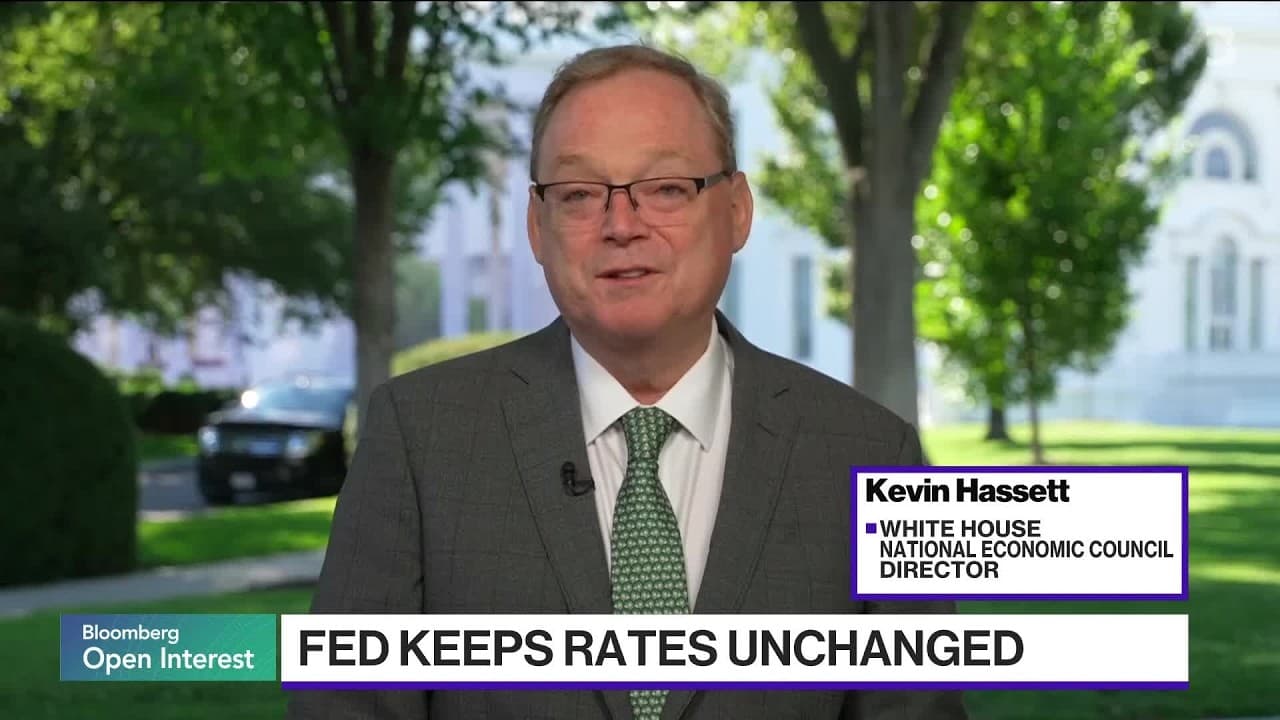
Hassett says he has full confidence in Fed Chair Warsh and expects a new, improved reaction function guided by top economists. He notes recent PCE data showing inflation relief, GDP signs of strength, and argues markets will adjust to the data rather than stay misaligned, while cautioning on political pressures.
Transcript
Kevin, we can talk about the state of this economy in just a moment, but I wanna begin with what you discussed yesterday. Yesterday before this Fed decision saying that you have full confidence in chair Kevin Walsh. Now it is a market that is rethought that is losing confidence with long term yields pushing at their highest in more than two decades... Read More
Key Insights
- Hassett expresses full confidence in Warsh as Fed chair.
- The Fed is moving toward a new, improved reaction function influenced by a brain trust.
- PCE data showed a negative top line and a falling core, signaling inflation could head lower.
- The dissents on the FOMC came from regional presidents, not governors.
- Hassett critiques the old Phillips curve approach as outdated for policy decisions.
- He argues the stimulus under the prior administration contributed to inflation, not the Fed alone.
- He asserts the Fed will stay independent and data-driven despite political pressures.
- Market mispricing will correct as more CPI and PCE data prints arrive.
- More videos from this channel:
- More from this channel: Bloomberg Television
Install to Summarize YouTube Videos and Get Transcripts
Explore YouTube Video Summarizer or Get YouTube Transcript Extractor
Questions & Answers
Q: What is Hassett's view on Fed Warsh leadership and the current market alignment?
Hassett says he has full confidence in Fed Chair Warsh and believes Warsh has brought together a brain trust to rethink the Fed’s response to supply versus demand shocks. He notes that the market is currently unsettled, but expects the new approach to be data driven and ultimately stabilize expectations as more data, such as PCE prints, come in.
Q: How does Hassett describe the role of data in Fed decisions?
Hassett emphasizes that policy should be guided by the data and not by political considerations. He points to recent PCE data showing inflation pressures easing and argues that the Fed will adapt its reaction function quickly based on incoming evidence. This approach aims to maintain independence and credibility.
Q: What does Hassett say about the GDP figures and final sales?
He notes that final sales were up almost 4 percent, with strong consumption and investment, and that housing numbers were positive. The bottom line includes adjustments like imported capital goods and oil inventory revaluations, but he interprets the 3.9 percent final sales as a strong signal, not a glass half empty view.
Q: Does Hassett think the Fed will be influenced by political factors?
No, he argues that the Fed should be independent and data driven. He contends that Warsh’s leadership will help ensure the central bank remains nonpartisan, focusing on reliable policy responses rather than political pressures, and that the data will ultimately guide decisions.
Q: What stance does Hassett take on inflation and the Fed’s target?
Hassett describes inflation as the part of the mandate that has been out of control and asserts the Fed should bring it back toward the target. He credits policy choices and the administration’s actions for improving price stability and expects Warsh to continue tightening or adjusting as necessary to reach the target.
Q: What does Hassett say about the AI sector and bubble concerns?
He distinguishes AI from the dot-com era by noting that AI firms are currently generating profits, unlike many dot-coms that did not. He argues that this profitability reduces bubble risk, although vigilance remains important as markets reassess valuations in light of new technologies.
Q: How does Hassett characterize the political dynamics surrounding the Fed?
He avoids inside-the-head speculation about individual dissents but asserts that the past pattern of political influence on Fed decisions is shifting. With Warsh in charge and an emphasis on data, Hassett believes policy will move in a nonpartisan, independent direction.
Q: What guidance does Hassett offer to American consumers amid inflation concerns?
He suggests inflation drivers are broad and that energy prices are only a small portion of the inflation story. By highlighting positive CPI and PCE prints and the role of deregulation and policy actions to lower prices, he implies that overall inflation pressures should ease, supporting consumer purchasing power over time.
Summary & Key Takeaways
-
Hassett expresses unwavering faith in Warsh and describes the chair as bringing a brain trust to rethink policy, moving away from outdated Phillips curve logic. He highlights data suggesting inflation pressures may be receding and emphasizes the independence and data-driven nature of the Fed under Warsh.
-
He argues the economy shows resilience with strong final sales and consumption, aided by new supply-demand considerations, and asserts that the Fed will act on data rather than politics, with a focus on bringing inflation back to target.
-
He cautions that markets can misprice risk if they overreact to short-term data and political commentary, but remains optimistic that the Fed will maintain independence and a principled, evidence-based approach to policy.
Read in Other Languages (beta)
Share This Summary 📚
Summarize YouTube Videos and Get Video Transcripts with 1-Click
Try YouTube Summary with ChatGPT & Claude or YouTube Transcript Generator
Explore More Summaries from Bloomberg Television 📚




Summarize YouTube Videos and Get Video Transcripts with 1-Click
Try YouTube Summary with ChatGPT & Claude or YouTube Transcript Generator