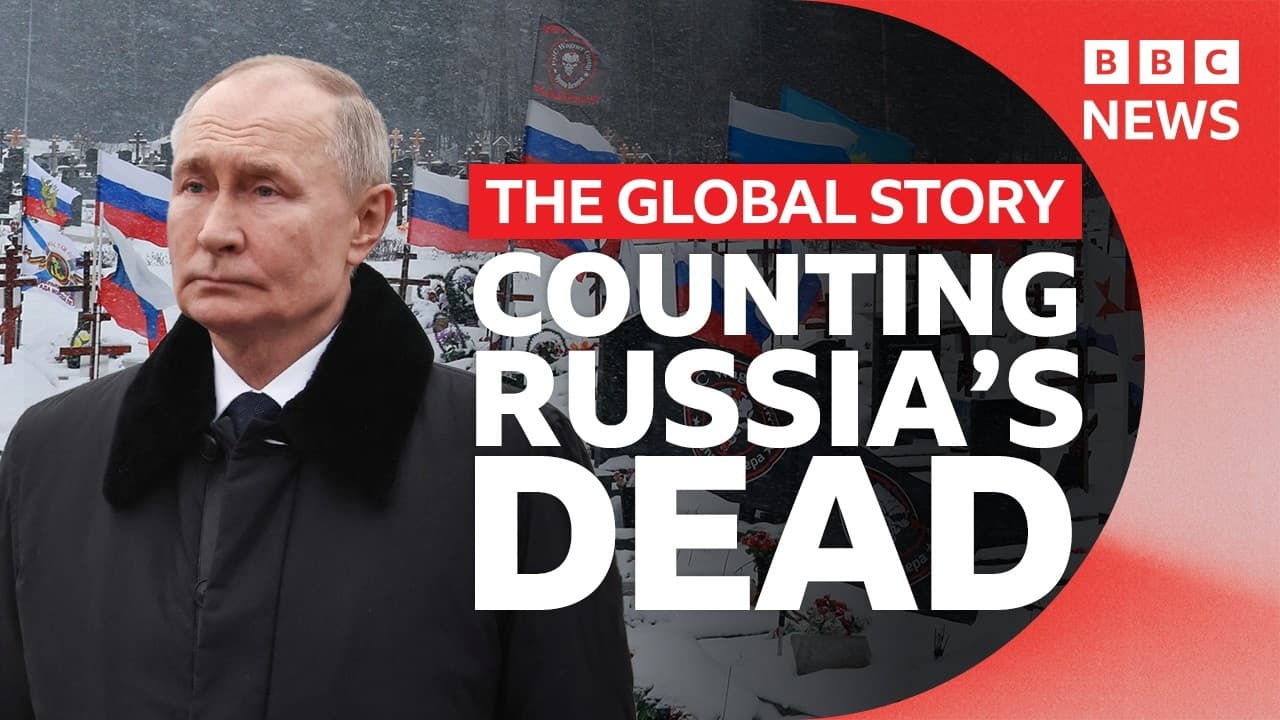
How many Russian soldiers have died in Ukraine war?
TL;DR
Open-source researchers have compiled a list of around 250,000 confirmed Russian deaths in Ukraine, drawn from official reports and relatives. The data shows that losses are concentrated in small towns and economically disadvantaged regions, suggesting regional disparities and broader social impact. The work aims to reveal a truer toll beyond Kremlin figures.
Transcript
Could Ukraine be Vladimir Putin's Vietnam? Check this out from the famous political theorist Francis Fukuyama. >> They're estimating that the Russians have been losing like 30 to 40,000 soldiers per month uh in the year 2026. >> 30 to 40,000 soldiers a month. That's huge if true. For perspective, the United States lost 52,000 soldiers in 10 years i... Read More
Key Insights
- Losses are tracked using open-sourced data and family corroboration to establish confirmed deaths.
- The database contains nearly 250,000 names with details like origin, birth date, and death date.
- Losses are disproportionately higher in small towns and poor regions compared to big cities.
- Open-source counting began when regional officials stopped publishing casualty figures.
- The project aims to reveal the true toll that official numbers may fail to reflect.
- Many deaths involve prisoners recruited into the conflict and their families seek closure.
- Region and socioeconomic status correlate with higher casualty rates in the data.
- Tracking fatalities helps analysts understand recruitment patterns and the war’s societal impact.
Install to Summarize YouTube Videos and Get Transcripts
Explore YouTube Video Summarizer or Get YouTube Transcript Extractor
Questions & Answers
Q: How do researchers count Russian losses if official figures are not published?
Researchers rely on open-source information, regional reports, and family outreach to identify confirmed deaths. They compare names, birth dates, and other identifiers to build a verified list, while verifying details against available public records and relatives. This method allows for a transparent, independently verifiable tally that can persist even when state figures are scarce.
Q: What does the data reveal about where losses are coming from?
Data shows most losses come from small towns and economically disadvantaged regions. This pattern suggests that regional factors and economic conditions influence recruitment and casualty rates, with larger cities showing comparatively lower losses. The distribution helps explain the societal impact and potential disparities in how communities experience the war.
Q: Why is it important to have a confirmed death toll that even the Kremlin cannot dispute?
A confirmed, independent death toll provides accountability and a clearer understanding of the conflict’s human cost. It helps families seek closure, informs policy discussions, and offers a more complete picture for researchers, journalists, and the international community, reducing reliance on potentially underreported or delayed official figures.
Q: How many names are in the current database of confirmed deaths?
The database contains almost 250,000 names with associated details such as where the person came from, birth date, and date of death. This extensive repository is designed to enable analysis of patterns in who dies and from which regions, contributing to a deeper understanding of the war’s demographics.
Q: What role did prisoners play in the casualty numbers according to the data?
The data notes that thousands of prisoners were recruited to join the ranks and fight in Ukraine. This factor adds complexity to casualty calculations, as it reflects a portion of the toll tied to coercive recruitment practices and the broader dynamics of conscription and deployment within the conflict.
Q: How has the publication of fatalities changed over time during the war?
At the outset, regional officials published casualty names as they expected a quick operation. As the war continued and losses grew, officials published less and pressured locals not to publish. This shift necessitated independent monitoring and formal open-source tracking to preserve a public record of fatalities.
Q: What insights can be drawn about life prospects and regional disparities from the data?
The dataset reveals significant regional disparities in risk and life prospects. Regions with lower incomes and harsher economic conditions show higher casualty rates, highlighting how social and economic factors influence military participation and risk, and underscoring the broader social cost of ongoing conflict.
Q: What is the broader purpose of building this death toll database?
The project aims to establish a credible, shareable record of Russian fatalities to illuminate the true scale of losses, inform public understanding, support families seeking closure, and contribute to analyses of how the war affects Russian society, recruitment, and regional demographics, beyond official narratives.
Summary & Key Takeaways
-
The BBC project tracks Russian losses using publicly available information and family reports, compiling an extensive database to illuminate the true toll of the war. It shows how data collection evolved as war progressed and official counts waned.
-
The effort highlights regional disparities, indicating higher losses from smaller communities and economically strained areas. It argues that local visibility drives understanding of the war’s human cost and social consequences.
-
The collection of 250,000 names provides context about who dies and where they come from, offering insight into recruitment, regional demographics, and the broader societal impact of the conflict.
Read in Other Languages (beta)
Share This Summary 📚
Summarize YouTube Videos and Get Video Transcripts with 1-Click
Try YouTube Summary with ChatGPT & Claude or YouTube Transcript Generator
Explore More Summaries from BBC News 📚




Summarize YouTube Videos and Get Video Transcripts with 1-Click
Try YouTube Summary with ChatGPT & Claude or YouTube Transcript Generator