How to Adapt Cold Email for Better Reply Rates
TL;DR
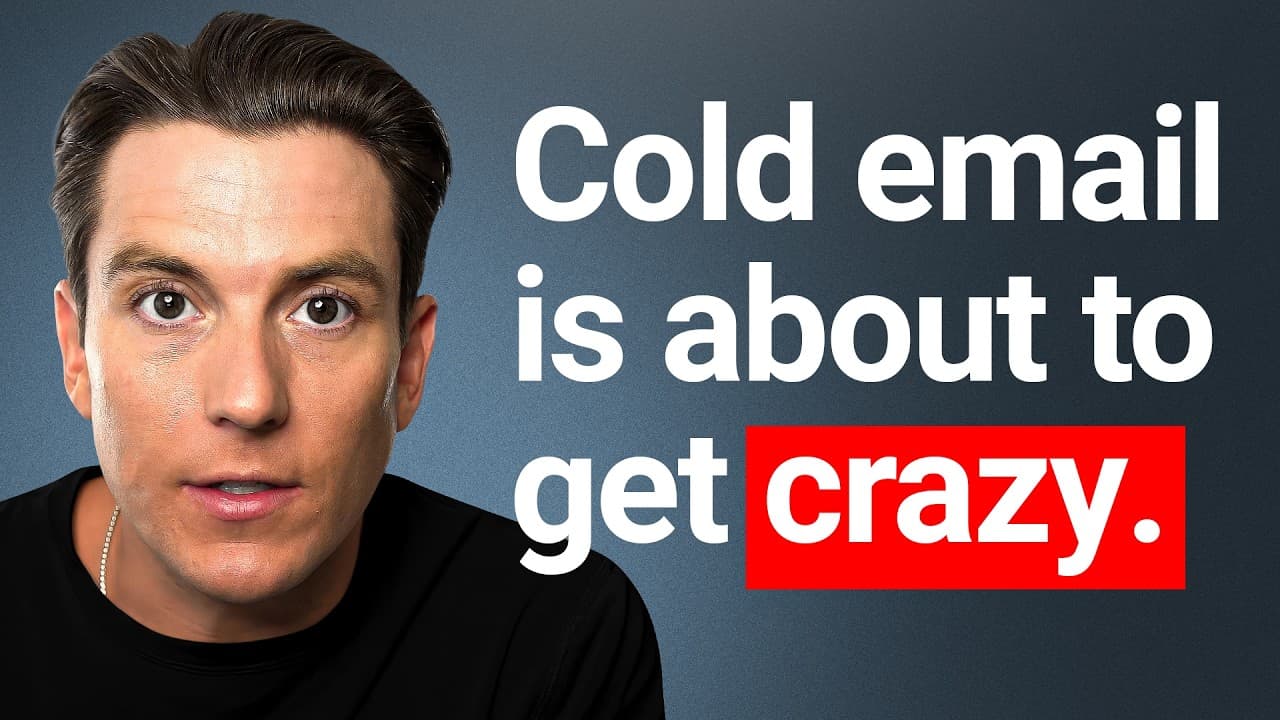
Improve cold email performance by replacing large generic blasts with small, precisely segmented campaigns tied to job functions, locations, technologies, buying intent, or trigger events. Protect deliverability by authenticating domains, distributing volume across more inboxes, warming those inboxes continuously, limiting follow-ups, and tracking reply rates instead of treating send volume as the primary goal.
Transcript
Okay, I'm going to be honest with you. I don't think that you're ready for the next phase of cold email. And I don't think most people sending cold emails right now are ready for it either because the game is changing extremely quickly. And what worked even 6 months ago is barely working right now. But the good news is is that this doesn't have to ... Read More
Key Insights
- Cold email reply rates are declining as decision-makers receive more messages, spam filtering improves, and AI-generated outreach becomes increasingly similar. Continuing to use older high-volume tactics can therefore reduce booked meetings without making the underlying cause immediately obvious.
- The central strategy is precision rather than volume. Smaller prospect groups selected through trigger events, job functions, location, buying intent, or technology usage allow senders to create messages that are more relevant to each recipient.
- Mailbox-level sending volume is a deliverability risk. Concentrating too much outreach in a single inbox can damage sender reputation, causing future messages to reach spam and potentially forcing the sender to rebuild using new domains.
- Email authentication is a basic requirement for modern outbound campaigns. The transcript identifies SPF, DKIM, and DMARC as necessary controls following stricter bulk-sender requirements introduced by major mailbox providers.
- Inbox rotation spreads campaign volume across more email accounts. The recommended operating model uses many inboxes at conservative volume rather than relying on a small number of inboxes to carry an aggressive daily workload.
- Continuous inbox warm-up is presented as a protective practice. New inboxes should be warmed before real campaigns begin, and the warm-up process should remain active rather than being stopped once outbound sending starts.
- Smaller lists produce stronger engagement than broad blasts according to the studies cited in the transcript. Better engagement can help future messages reach the primary inbox, while poorly targeted campaigns teach filtering systems that recipients do not value the sender's messages.
- Long follow-up sequences can reduce campaign performance. The cited sequence analysis found that early follow-ups increased replies, while additional follow-ups eventually lowered results as spam complaints and unsubscribes increased.
Install to Summarize YouTube Videos and Get Transcripts
Explore YouTube Video Summarizer or Get YouTube Transcript Extractor
Questions & Answers
Q: How can cold email campaigns maintain reply rates?
Cold email campaigns can maintain stronger reply rates by prioritizing relevance over raw sending volume. Build smaller prospect segments around job function, location, technology, buying intent, or a meaningful trigger event, then tailor the message to that segment. Track replies closely, compare campaign performance, and avoid assuming that sending more generic emails will compensate for weakening engagement.
Q: Why are cold email reply rates declining?
Cold email reply rates are declining because decision-makers are receiving very large amounts of email, spam filters are becoming more capable, and many senders use AI tools to produce messages that sound alike. These forces make generic outreach easier to ignore or filter. Older tactics can therefore deliver progressively weaker results even when the campaign structure has not visibly changed.
Q: Why do smaller cold email lists perform better?
Smaller lists make it easier to select prospects with shared, relevant characteristics and write a message suited to their circumstances. The transcript also argues that mailbox providers observe recipient engagement. A compact campaign that earns replies can create a healthier signal, while a large generic blast with weak engagement can reduce both immediate performance and future inbox placement.
Q: How should a cold email list be segmented?
A cold email list should be divided using characteristics that make the outreach meaningfully more relevant. The transcript suggests job title, job function, location, technology usage, buying intent, and trigger events. Rather than placing every founder or business in one campaign, create multiple focused campaigns and adapt each message to the specific reason that group might care.
Q: How can senders protect cold email deliverability?
Senders can protect deliverability by configuring SPF, DKIM, and DMARC, controlling spam complaints, and avoiding excessive volume from any individual mailbox. Campaign volume should be spread across more inboxes through rotation. New inboxes should also be warmed before real outreach begins, with warm-up continuing during normal campaign activity to support a safer sending pattern.
Q: Why is high volume from one inbox risky?
High volume from one inbox can damage its sending reputation, especially when recipients ignore, delete, or report the messages. Once reputation deteriorates, later emails may go directly to spam even if their content is better. The transcript warns that senders often notice the problem only after replies disappear, when recovering may require starting again with new domains.
Q: How many follow-ups should a cold email sequence use?
A cold email sequence should concentrate on the initial message and its early follow-ups rather than relying on a long chain of repeated contact. The sequence analysis cited in the transcript found meaningful gains from early follow-up activity, but performance declined when further messages were added. Longer sequences can annoy recipients while increasing unsubscribes and spam complaints.
Q: What cold email metrics should senders track?
Reply rate is the central metric emphasized in the transcript because it shows whether prospects find the campaign relevant enough to respond. Senders should compare reply performance across audience segments and watch for declines that may indicate weak targeting, generic messaging, or deliverability problems. Spam complaints, unsubscribes, and inbox engagement also matter because mailbox providers can use those behaviors when filtering future messages.
Summary & Key Takeaways
-
Cold email reply rates are declining because decision-makers receive crowded inboxes, spam filters are becoming more capable, and AI-written messages increasingly sound alike. The recommended response is greater precision: identify narrow audiences through job functions or trigger events, write more relevant messages, and measure reply rates closely instead of simply increasing volume.
-
Mailbox providers are imposing stricter expectations on senders, making authentication, complaint control, and conservative inbox volume essential. Sending too heavily from one mailbox can damage its reputation and push future messages into spam. Volume should be distributed across more warmed inboxes, with warm-up maintained while campaigns continue to operate.
-
Smaller, segmented campaigns outperform broad generic lists because they can generate stronger engagement and signal relevance to mailbox providers. Early follow-ups may improve total replies, but repeatedly contacting uninterested recipients can increase complaints and unsubscribes. Sustainable outreach therefore depends on list quality, message relevance, controlled infrastructure, and shorter sequences.
Read in Other Languages (beta)
Share This Summary 📚
Summarize YouTube Videos and Get Video Transcripts with 1-Click
Try YouTube Summary with ChatGPT & Claude or YouTube Transcript Generator
Explore More Summaries from Instantly 📚




Summarize YouTube Videos and Get Video Transcripts with 1-Click
Try YouTube Summary with ChatGPT & Claude or YouTube Transcript Generator