Playing with circuit bending
TL;DR
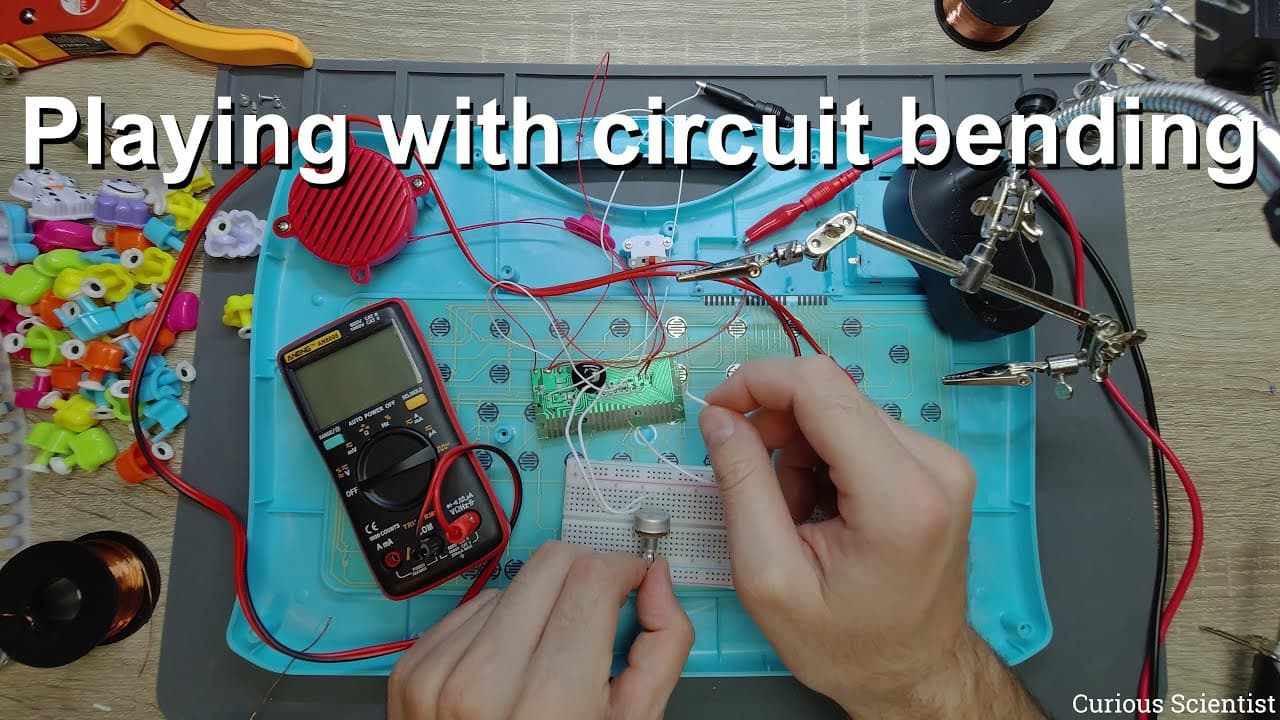
The video explores circuit bending a children's piano to create unique sounds.
Transcript
welcome everyone in this video i will try something different i will try the circuit bending so as you can see i have a very nice toy here on my desk and this is a piano for children but the video will be not for children so what i try to do is that i will disassemble this uh tool or instrument by just unscrewing all the screws here and i will try ... Read More
Key Insights
- 👂 Circuit bending transforms ordinary electronics, enabling creative sound exploration and music production.
- 🤩 Tools like conical drills and soldering irons are key for effective modifications, impacting the precision of changes.
- 👂 Understanding circuit layouts, including resistors and potentiometers, is essential for successful sound alterations.
- ❓ Experimentation with components can yield unexpected results, reflecting the inherent unpredictability of circuit bending.
- 👂 Learning through experimentation can foster deeper knowledge of electronics and creative sound design techniques.
- 🦺 Safety and proper handling techniques are critical to avoid risks involved with electronic modifications.
- 🎼 The process showcases not just technical skills but also the enjoyment of creative exploration in music.
Install to Summarize YouTube Videos and Get Transcripts
Explore YouTube Video Summarizer or Get YouTube Transcript Extractor
Questions & Answers
Q: What is circuit bending, and why is it done?
Circuit bending is an experimental approach to creating new electronic sounds by modifying the circuits of electronic devices, primarily toys or instruments. It is done to explore sonic possibilities beyond the original design, allowing creators to produce unique, often random sounds, which can be desirable in music production or sound design.
Q: What tools did the creator use for the modifications?
The creator utilized various tools, including a conical drill bit for creating precise holes in the casing, a soldering iron for attaching wires to the circuit, and potentiometers to adjust resistance and modify sound characteristics. These tools were crucial for accessing and altering the internal components of the piano effectively.
Q: What challenges did the creator face during the circuit bending process?
The creator encountered multiple challenges, including difficulty in soldering due to the small size of the components, managing the physical layout of the circuit, and the complexity of understanding how the changes affected the audio output. They also dealt with limitations of the circuit's design, which restricted certain modifications.
Q: How did the modifications change the sounds produced by the piano?
By adding potentiometers and experimenting with resistors, the creator was able to adjust the pitch and speed of the sounds. Certain manipulations resulted in slower, vaporwave-style effects and alterations to built-in sounds from the piano, creating distinct new audio experiences from the original toy.
Q: What did the creator learn from this project?
Throughout the project, the creator learned about the intricacies of electronic circuits, the importance of using appropriate tools, and how small changes can lead to impactful results in sound design. They also gained insight into the trial-and-error process involved in circuit bending.
Q: Will the creator continue exploring circuit bending in the future?
Yes, the creator expressed a desire to continue experimenting with circuit bending, indicating enthusiasm for discovering more about other instruments and electronic devices. They showcased a commitment to learning and innovation in sound creation through future projects.
Q: What safety precautions should be taken when circuit bending?
Important safety precautions include ensuring the device is powered off and unplugged while working on it, using proper tools to avoid injury, and being cautious of any live wires or components to prevent electric shocks. It is also advisable to work in a well-ventilated area when using soldering tools.
Summary & Key Takeaways
-
The creator disassembles a children's toy piano, aiming to modify its circuit to produce interesting sounds. They detail the process of opening the device and understand the underlying components.
-
Essential tools like conical drill bits are introduced for precise modifications. The creator experiments with resistors and potentiometers to alter the pitch and speed of the sounds emitted by the piano.
-
The creator successfully implements modifications, resulting in new sound effects, demonstrating a learning process that showcases both the challenges and rewards of circuit bending.
Read in Other Languages (beta)
Share This Summary 📚
Summarize YouTube Videos and Get Video Transcripts with 1-Click
Try YouTube Summary with ChatGPT & Claude or YouTube Transcript Generator
Explore More Summaries from Curious Scientist 📚




Summarize YouTube Videos and Get Video Transcripts with 1-Click
Try YouTube Summary with ChatGPT & Claude or YouTube Transcript Generator