How to grow to 1M subs with YouTube analytics
TL;DR
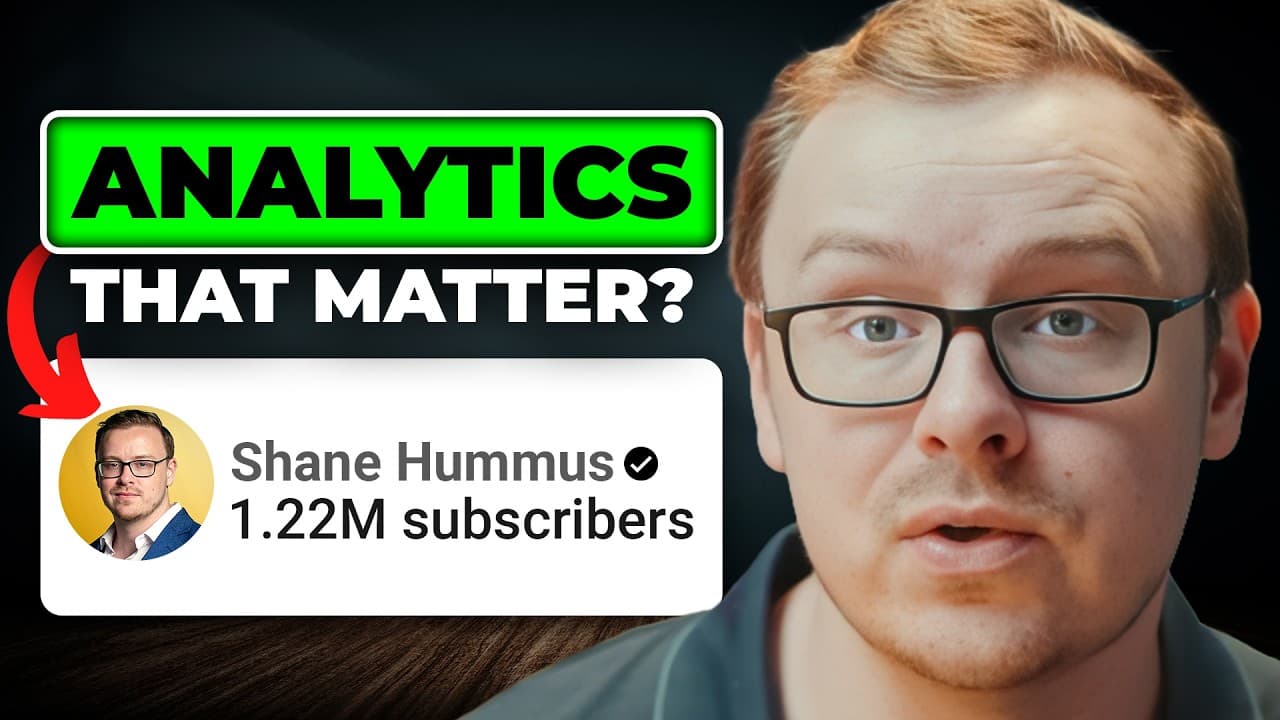
The key to growing a channel is using the right analytics at the right times. Focus on first hour and first day performance, then conduct a weekly review to align content with what moves views and revenue. The method combines metric reading, data driven decisions, and ongoing optimization to scale earnings and subscribers.
Transcript
In this video, I'll reveal the complete YouTube analytics system that's helped me build a channel to over a million subscribers and generate millions in revenue from our videos. And this isn't theory. Look at these screenshots. This video went from 5,000 views in its first 70 days to over 3 million views after I implemented just one of the strategi... Read More
Key Insights
- Analytics drive growth by focusing on the right time windows, not just overall views. The first hour and first day are critical for shaping long term performance.
- CTR and thumbnail quality are key signals in early stages; improving thumbnails and titles can lift performance quickly when early metrics lag.
- A weekly review helps identify what content fits the audience and what formats drive revenue, enabling strategic repeatability.
- Content experimentation is essential; start with diverse topics, then double down on winning formats based on data.
- Reader engagement signals such as comments and viewer feedback should be integrated into ongoing optimization, not ignored.
- Advanced metrics differentiate professionals from amateurs and guide decisions on scaling and monetization.
- The Moneyball approach applies data driven decisions to content creation and monetization to maximize RPM and revenue.
- Understanding that not all high views come from high CTR is crucial; sometimes high view counts occur with moderate CTR but strong watch time.
Install to Summarize YouTube Videos and Get Transcripts
Explore YouTube Video Summarizer or Get YouTube Transcript Extractor
Questions & Answers
Q: How can I start using YouTube analytics to grow my channel today
Begin by identifying your first hour and first day metrics for your recent videos, focusing on click through rate and views. Compare videos with contrasting CTRs to learn how thumbnail and title influence early engagement. Then schedule a weekly review to track trends, adjust content strategy, and apply learnings to new videos for compounding growth.
Q: What is the first hour analysis and why does it matter
The first hour analysis looks at how the algorithm responds to your video during its initial launch. It matters because early signals can influence long term performance and viewer retention. By monitoring CTR and views in the first hour, you can decide whether to tweak thumbnails or headlines to improve engagement.
Q: How should I test thumbnails without harming early performance
You should avoid frequent split testing in the very first hours of a video. Instead, publish with a solid thumbnail and title, then observe CTR and views for the next several hours. If necessary, make focused adjustments after the initial window while keeping the rest of the publishing plan intact.
Q: What is the ‘Moneyball’ approach to YouTube growth
The Moneyball approach uses data driven decisions to optimize content and monetization. It involves tracking key metrics, running controlled experiments, and applying insights to select topics and formats that maximize RPM and revenue while maintaining viewer satisfaction and long term channel health.
Q: Which metrics should I track for revenue optimization
Track metrics such as RPM, CTR, average view duration, and watch time to understand revenue potential. Pair these with topic and format data to identify content that both attracts viewers and monetizes effectively. Use weekly reviews to adjust content mix toward higher value formats.
Q: How do I identify winning content frameworks from data
Identify content that consistently performs well across views, engagement, and revenue. Look for patterns in topics, presentation style, and pacing. Then create more videos that fit that framework while testing small variations to refine your winning formula.
Q: What role does audience feedback play in the framework
Audience feedback provides qualitative context to the quantitative metrics. Reading comments and analyzing viewer questions helps refine thumbnails, titles, and content structure. Incorporate this feedback into iterations and maintain a balance between data driven decisions and audience expectations.
Q: How often should I review analytics to stay on track
Perform a weekly analytics review to monitor trends, assess the impact of changes, and adjust strategy. This cadence keeps you aligned with evolving audience preferences, maintains momentum, and supports consistent optimization of titles, thumbnails, and content formats.
Summary & Key Takeaways
-
In the video, the creator emphasizes reading the right analytics and interpreting them correctly to drive subscribers and revenue growth. The approach blends early performance signals with long term review cycles to identify winning content and scale it.
-
The framework covers time windows such as the first hour, the first day, and weekly reviews, and explains how to adjust thumbnails, titles, and content strategy based on CTR and views.
-
The video provides examples of client success and offers a coaching program to help creators implement the data driven method, aiming to help viewers replicate the growth seen on the creator’s channels.
Read in Other Languages (beta)
Share This Summary 📚
Summarize YouTube Videos and Get Video Transcripts with 1-Click
Try YouTube Summary with ChatGPT & Claude or YouTube Transcript Generator
Explore More Summaries from Shane Hummus 📚






Summarize YouTube Videos and Get Video Transcripts with 1-Click
Try YouTube Summary with ChatGPT & Claude or YouTube Transcript Generator