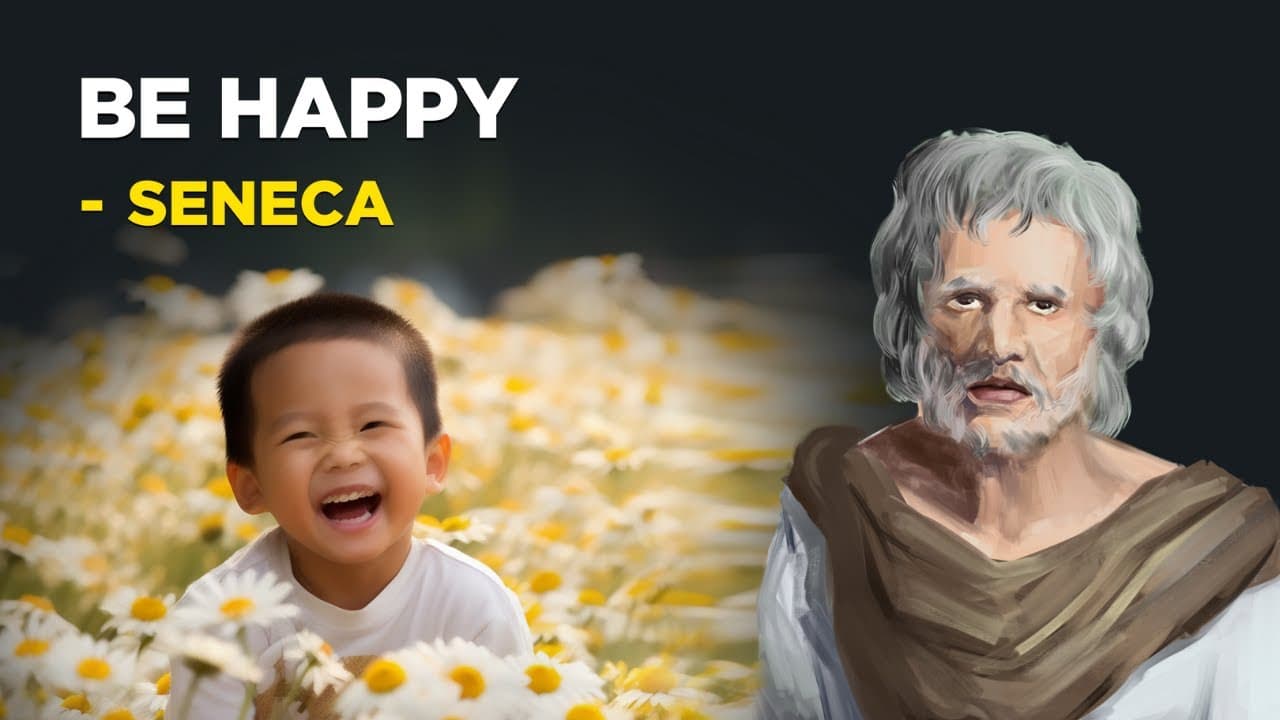
How To Be Happy - Seneca (Stoicism)
TL;DR
Seneca’s Stoic path to happiness is to live with arete, accept what you cannot control, and take responsibility for your responses. The framework distinguishes three levels of influence, high, partial, and none, while identifying voluntary actions and judgments as the two things under our control. Read on for practical guidance on anger, purpose, money, mindfulness, and generosity.
Transcript
this video is sponsored by nordvpn nordvpn is the leading virtual private Network that encrypts your internet traffic and protects your identity online whether you're in a coffee shop hotel or anywhere we'll talk more about nordvpn later but right now let's find out how to be happy from the wisdom of Seneca Lucius Anaya Seneca was a prominent Roman... Read More
Key Insights
- 😑 Happiness is an internal affair and can be achieved through living with arate, expressing our highest selves in every moment.
- 🥺 Focusing on what we can control and accepting what we cannot leads to emotional well-being and reduces suffering.
- 🥡 Taking responsibility for our reactions and choices improves our chances of attaining happiness.
- 💀 Anger is a destructive emotion that interferes with problem-solving and good judgment.
- 🛟 Knowing our purpose and goals in life is essential for finding happiness and meaning.
- ⛔ Following the crowd limits personal growth and happiness; being unique and true to oneself is important.
- 🤑 Money should be seen as a tool, not the source of happiness, and seeking luxury can lead to unhappiness.
- 🎁 Cherishing the present moment and practicing mindfulness contribute to happiness and well-being.
- ❓ Giving without expectations and being kind to others brings happiness and fulfillment.
Install to Summarize YouTube Videos and Get Transcripts
Explore YouTube Video Summarizer or Get YouTube Transcript Extractor
Questions & Answers
Q: How does Seneca say we can be happy?
Seneca presents happiness as an internal affair grounded in good character rather than external possessions. His approach includes living with arete, accepting what cannot be controlled, and consciously choosing how to respond to circumstances.
Q: What is arete, and why is it important for happiness?
Arete means expressing your highest self and closing the gap between what you are capable of and what you are actually doing. The smaller that gap becomes, the closer you move toward eudaimonia, a happy, smoothly flowing life.
Q: What does Stoicism say is within our control?
The transcript identifies two things within our control: voluntary actions and judgments. We can choose what events mean to us and decide how to react, even when we cannot change the events themselves.
Q: What are the three levels of influence in Stoicism?
High influence covers our choices in judgments and actions. Partial influence includes health, wealth, relationships, and the outcomes of our behavior, while no influence includes weather, ethnicity, and most external circumstances.
Q: Why does accepting what happens support happiness?
Worrying about matters over which we have little or no influence creates emotional suffering. Accepting what cannot be controlled redirects attention toward the judgments and actions we can choose under the circumstances.
Q: How can someone take responsibility for their reactions?
A gap exists between a stimulus and the response, even when it is extremely small. By noticing the first impression, stepping back, and questioning it, a person can avoid rash or automatic behavior and choose a response aligned with their best self.
Q: How does anger interfere with happiness?
The existing insights describe anger as destructive because it interferes with problem-solving and good judgment. Recognizing anger triggers early and responding mindfully can help prevent those negative effects on well-being.
Q: What role should money play in happiness?
Money should be treated as a tool rather than the source of happiness. Seneca’s framework locates the good life in inner potential and character, not in a villa by the beach, a million dollars in the bank, diamond rings, or luxury.
Summary & Key Takeaways
-
Seneca emphasized the importance of living with arate, which means expressing your highest self and closing the gap between what you're capable of and what you're actually doing.
-
Stoicism teaches acceptance of things we cannot control and focusing on what is within our control through voluntary actions and judgments.
-
Taking responsibility for our reactions to external events and choosing our responses consciously can lead to happiness and well-being.
Read in Other Languages (beta)
Share This Summary 📚
Summarize YouTube Videos and Get Video Transcripts with 1-Click
Try YouTube Summary with ChatGPT & Claude or YouTube Transcript Generator
Explore More Summaries from Philosophies for Life 📚


Summarize YouTube Videos and Get Video Transcripts with 1-Click
Try YouTube Summary with ChatGPT & Claude or YouTube Transcript Generator