How to survive seven days on a deserted island
TL;DR
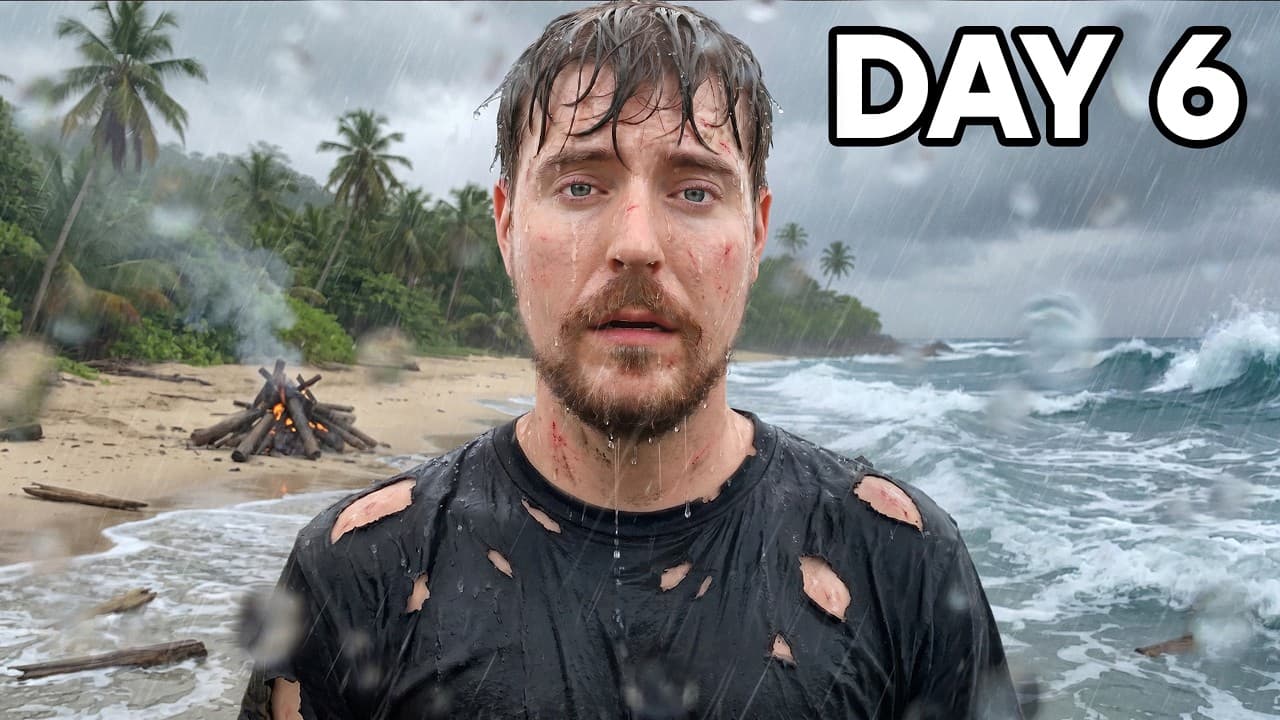
They rapidly establish a shelter, secure water and fire, and manage supplies while dealing with heat, bugs, and a looming storm. The crew upgrades their camp, experiments with a chicken trap, and attempts a risky fishing plan, testing teamwork and endurance throughout the ordeal.
Transcript
We are now stranded on this deserted island in the middle of the ocean, and we're going to be stranded here for the next seven days. And that boat that just left was our only way out of here. - Why do we keep doing this?
- I thought it'd be fun. Despite its beauty, civilization has not been able to survive on this island for over 250 years. But for... Read More
Key Insights
- Survival starts with a quick shelter and water plan to prevent dehydration and heat exposure.
- The team prioritizes practical upgrades to shelter and seating to improve comfort and protection from weather.
- Resourcefulness is key, as participants repurpose debris and natural materials for traps, nets, and structure improvements.
- Water management is critical; conserving and sharing water becomes a daily priority among the group.
- Food strategy evolves from scavenging to attempting traps and fishing, testing risk versus reward.
- Weather awareness drives prep and shelter reinforcement, particularly before storms.
- Group dynamics shift under stress, revealing leadership, humor, and occasional missteps that affect morale.
- Safety considerations, such as avoiding dangerous flora and ensuring sturdy shelter, are essential for long term survival.
Install to Summarize YouTube Videos and Get Transcripts
Explore YouTube Video Summarizer or Get YouTube Transcript Extractor
Questions & Answers
Q: What was the first priority on day one and why was it important for survival?
The first priority on day one was to build a shelter and set up a reliable fire and water plan because shelter protects from heat, sun, and potential weather changes, while fire enables cooking and signaling. Establishing a stable base also helps conserve energy and reduces the risk of injury as they begin to spend extended time on the island. This foundational setup creates a safe environment to plan further actions and manage resources more effectively, which is crucial for surviving several days in a harsh outdoor setting.
Q: How did they attempt to improve shelter on day two and what purpose did it serve?
On day two they upgraded the shelter to be bigger and more rain proof, using long sturdy sticks to support a tarp and leaves to channel rain away from the sleeping area. The purpose was to prevent water from pooling and to keep occupants dry during rain, which reduces the risk of hypothermia and illness and enhances overall comfort. A stronger shelter also supports heavier weather that could occur, helping the group maintain safety and morale as conditions change.
Q: What role did the chicken trap play and what does it reveal about the group’s approach?
The chicken trap represented a proactive, hands on approach to food sourcing rather than relying solely on prepackaged supplies. By building a net trap and practicing teamwork to set it up, the group demonstrated problem solving and persistence. Although it initially seemed like a waste of effort, the trap illustrated how collaboration and trial and error could yield potential future food sources and reinforce a sense of agency in the survival effort.
Q: Why did water management become a recurring theme during the days on the island?
Water management became recurring because water is essential for hydration, cooking, and preventing heat illness. As supplies diminished, the crew emphasized responsible use and conservation to stretch what remained. The dialogue about water use, combined with the need to wash and prepare meals, highlights how critical resource management is in a limited environment and how it directly affects energy and decision making.
Q: What challenges did the weather pose and how did the group respond?
Weather posed the challenge of heat, bugs, and the threat of storms. The group reinforced the shelter, collected palm leaves for protection, and prepared for rain by improving drainage and structure. They also monitored the sky for approaching storms and adjusted their plans accordingly, which demonstrated adaptive thinking, teamwork, and a calm approach under pressure that is essential for enduring adverse conditions.
Q: How did the group balance safety with exploration on the island?
They balanced safety with exploration by assigning responsibilities, checking each other for safe paths, and limiting risky activities to measured experiments. For example, attempts to catch fish involved rope and coordinated movement, while some ventures like climbing to a rocky area were approached with care and awareness of potential hazards. This balance ensured they could explore for resources without compromising their safety.
Q: What leadership dynamics emerged during the survival challenge?
Leadership dynamics emerged as individuals stepped up to organize tasks, assign roles, and keep morale high. One member acted as a practical coordinator for shelter and water management, while others contributed with tools, nets, and food gathering strategies. Conflicts and humor arose, but the group generally showed resilience, collaboration, and a willingness to adapt plans based on current conditions and available resources.
Q: What lessons about problem solving did the group demonstrate?
The group demonstrated that practical problem solving in survival involves rapid assessment, prioritization, and iterative testing. They moved from a basic camp to a more robust shelter, sought alternative food sources, and used improvised tools. The process showed that small, deliberate steps under pressure can compound into meaningful progress, turning initial limitations into actionable solutions through teamwork and experimentation.
Summary & Key Takeaways
-
The group initiates a basic camp with a fire pit and a shelter frame, prioritizing protection from weather and sun, while distributing tasks to maximize efficiency and safety during the first days.
-
They adapt to growing challenges by upgrading the shelter, seeking better seating, managing water use, and figuring out how to catch food, including attempting a chicken trap and exploring netting options.
-
A storm and fatigue test the crew, highlighting how improvisation and teamwork sustain them, with moments of tension and resilience that shape their survival experience on the island.
Read in Other Languages (beta)
Share This Summary 📚
Summarize YouTube Videos and Get Video Transcripts with 1-Click
Try YouTube Summary with ChatGPT & Claude or YouTube Transcript Generator
Explore More Summaries from MrBeast 📚





Summarize YouTube Videos and Get Video Transcripts with 1-Click
Try YouTube Summary with ChatGPT & Claude or YouTube Transcript Generator