How to survive a plane crash with limited supplies
TL;DR
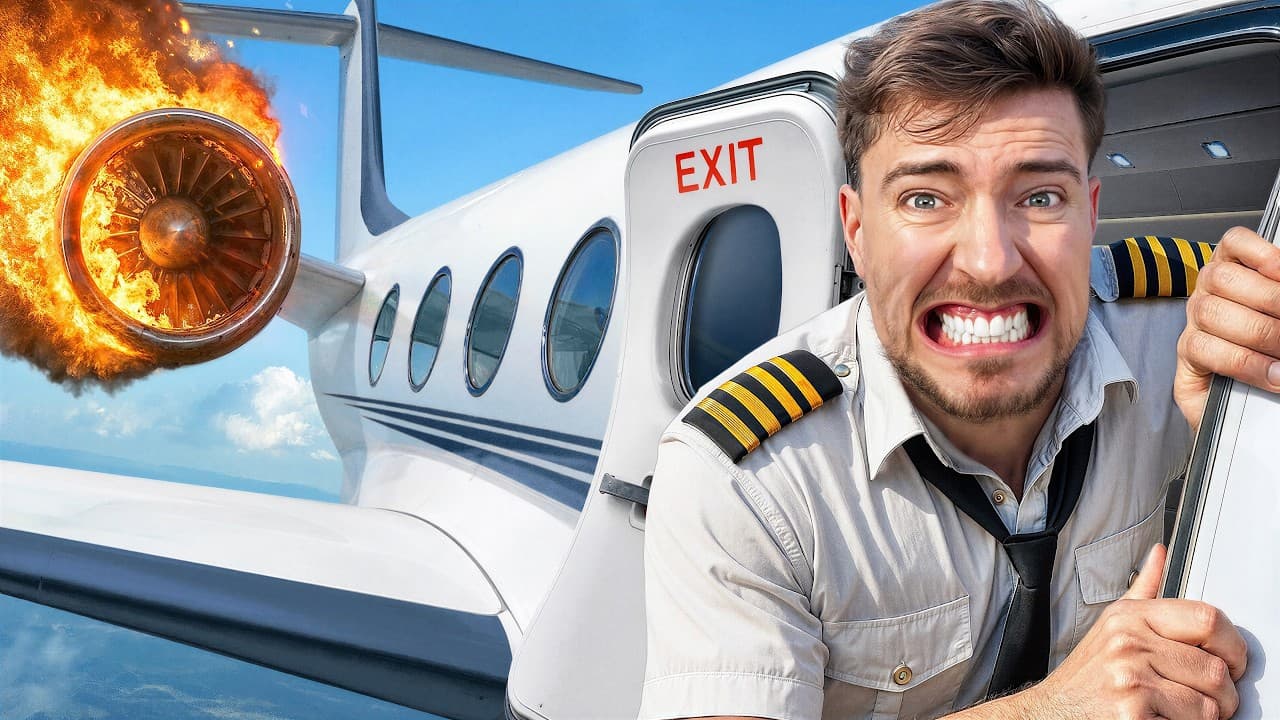
Start by securing the essentials and rationing what you have. Establish a shelter area, locate a water source, and plan for rescue by signaling with a flare and preparing a landing zone. Recovery comes from steady tasks, teamwork, and keeping morale high until help arrives.
Transcript
- I just bought this private jet. And now it's crashed. It takes on average 31 hours for a rescue team to find the survivors of a plane crash. And now me and the boys are literally stranded in the middle of nowhere until help arrive. All right, let's assess the damage over here. - I see some water bottles. We're gonna get thirsty out here. You know... Read More
Key Insights
- Resources matter first, rationing is essential to extend the limited food and water supply.
- Teamwork and role assignment improve efficiency when building shelter and gathering materials.
- Exploration balances risk and reward, as wandering can reveal water sources but consumes precious energy.
- Tools like a drone can aid reconnaissance and improve situational awareness.
- A makeshift fire pit provides warmth and a processing area for planning.
- Signaling devices such as a flare gun are critical for attracting rescue attention.
- Missing or scarce water drives the pace of decision making and forces prioritization.
- Rescue becomes imminent once a usable landing area is prepared and a signal is clearly presented.
Install to Summarize YouTube Videos and Get Transcripts
Explore YouTube Video Summarizer or Get YouTube Transcript Extractor
Questions & Answers
Q: What is the first priority when you are stranded after a plane crash?
The first priority is to secure the essentials and ration what is available. In the video, the group assesses water bottles and food, then decides to pool resources and ration them to ensure survival over the unknown duration of isolation. Without water and nourishment, the body cannot sustain basic functions and recovery tasks.
Q: How do they manage shelter and safety with limited materials?
They discuss and implement a plan to use plane pieces to create a shelter area and a fire pit. This approach helps protect from the cold and provides a focal point for warmth and cooking. The team emphasizes careful allocation of resources and building a functional space rather than wandering aimlessly.
Q: What role does exploration play in their strategy?
Exploration is used to locate water and assess surroundings, but it is weighed against its energy cost. They note that exploring too much can reduce time available for building shelter and collecting resources. The strategy is to balance exploration with maintaining the group’s safety and resource management.
Q: How is water located and obtained during the ordeal?
Water becomes a critical factor, with the group discovering a river source using scouting and a drone. They then face the challenge of drinking safely and prioritizing hydration. The video underscores that dehydration worsens fatigue and impairs decision making, so locating water is central to survival.
Q: What signaling methods are used to attract rescue, and how effective are they?
They use a flare gun to attract attention, and also leverage a drone with a thermal camera for signaling and locating team members. The aim is to create visible indicators for helicopters or passing rescuers, which is pivotal since the clock is ticking and rescue is time sensitive.
Q: What improvisations help in extending the chance of rescue?
Improvements include building a helipad area, burning a path for landing, and creating a dependable meeting point. These improvisations show how the crew adapts to the environment, prioritizes the path to rescue, and uses available materials to signal readiness for a helicopter pickup.
Q: How long does the simulated ordeal last and what signals the turnaround?
The scenario lasts 31 hours, with the exhaustion and dehydration building as resources dwindle. The turnaround comes when the rescue helicopter appears and the crew is able to signal and reach safety. The moment is framed by the final discovery of a usable landing area and a visible helicopter, ending the trial.
Q: What practical lessons about survival can be drawn from this video?
Key lessons include prioritizing water and calories, maintaining group organization, using tools like drones for reconnaissance, and signaling for rescue. The video also highlights the importance of role distribution, staying focused on shelter and water, and keeping morale up to endure extended isolation until help arrives.
Summary & Key Takeaways
-
A makeshift shelter area is built from plane debris to create a dry, safe space while conserving limited water and food. The crew prioritizes gathering resources, scouting for water, and maintaining organization to maximize odds of survival.
-
The group coordinates exploration and inventory management, using a drone for scouting and a fire pit for warmth, while maintaining a basic routine to prevent dehydration and fatigue.
-
Rescue hinges on timing and signaling, with the team preparing a clear landing area and using a flare gun to attract attention, culminating in a helicopter rescue after 31 hours of isolation.
Read in Other Languages (beta)
Share This Summary 📚
Summarize YouTube Videos and Get Video Transcripts with 1-Click
Try YouTube Summary with ChatGPT & Claude or YouTube Transcript Generator
Explore More Summaries from MrBeast 📚





Summarize YouTube Videos and Get Video Transcripts with 1-Click
Try YouTube Summary with ChatGPT & Claude or YouTube Transcript Generator