Why Non-Controlling Parenting May Not Work
TL;DR
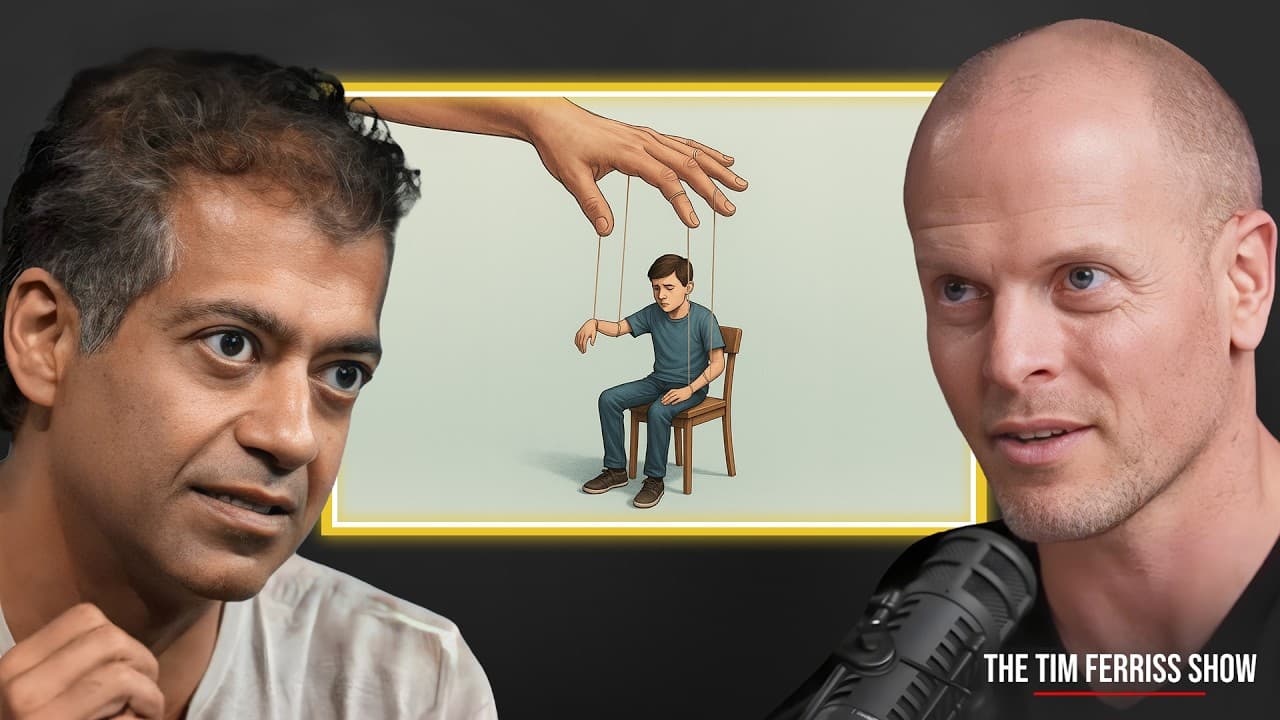
Non-controlling parenting may lead to challenges in rule enforcement as children negotiate privileges with lenient parents. Instead of strict control, focusing on curating a supportive environment that prioritizes peer interactions and experiences can promote independence and reduce feelings of judgment in children.
Transcript
naval what about you just in terms of parenting style we have a no control philosophy in the house with each other my wife and I We've had that for a long time She can't even schedule me I can't schedule her We don't commit each other We don't you know have big expectations She can't make me go to like her parents' birthday I can't like make her go... Read More
Key Insights
- 🥺 A non-controlling parenting approach promotes independence but can lead to negotiating dilemmas regarding rules and privileges.
- 👪 As children grow older, parents find it increasingly difficult to enforce rules, necessitating a shift towards curating environments instead of strict control.
- 🗯️ The importance of choosing the right peer group and educational environment is emphasized as vital in shaping a child's upbringing.
- 👪 Parents should consider the impact of their actions and behaviors as children are adept at recognizing hypocrisy.
- 👶 Communication between spouses about differing parenting styles helps create a cohesive strategy for managing children.
- 👪 The speaker aims to create a relaxed atmosphere to help reduce family pressures on children, encouraging openness rather than fear of disapproval.
- 👶 Modeling desired behavior rather than enforcing rules directly influences children's behavior positively.
- 🎙️ More videos with Naval Ravikant:
Install to Summarize YouTube Videos and Get Transcripts
Explore YouTube Video Summarizer or Get YouTube Transcript Extractor
Questions & Answers
Q: What is the core philosophy of your parenting style?
The core philosophy focuses on a non-controlling approach where both spouses allow each other significant freedom in their individual decisions. This philosophy extends to their children, promoting autonomy, but it creates challenges with rule enforcement, leading to negotiated boundaries depending on leniency from either parent.
Q: How do you handle differences in parenting approaches between you and your spouse?
Differences in parenting approaches are acknowledged, and both parents communicate openly about their styles. They allow for flexibility in decision-making and often discuss parenting strategies through reading relevant literature, which helps them align better despite differences in their immediate reactions to children's requests.
Q: What do you mean by children negotiating screen time?
Children can negotiate screen time with each parent individually due to the contrasting styles of enforcement. If one parent is more lenient, kids will approach that parent for extra privileges, which reinforces the idea of good cop versus bad cop, ultimately complicating consistent rule enforcement between the parents.
Q: How do you aim to curate your children's environment?
The speaker emphasizes that the best way to influence their children positively is by curating their environment. This includes selecting the right neighborhood, school, and friend's circle, which significantly impacts their upbringing and development, allowing for a more peer-driven growth experience rather than strict parental control.
Q: How do you plan to lead by example for your children?
Leading by example is crucial. The speaker plans to model behaviors they wish to see in their children, such as respect for others and appropriate social conduct. They understand that children are observant and will imitate behaviors, particularly focusing on how they treat others as an important teaching tool.
Q: What challenges do you face in enforcing rules as children grow older?
As children grow, enforcing rules becomes increasingly challenging. The autonomy they develop can lead to self-assertion, making it difficult to maintain strict control over behaviors, and parents often find themselves adjusting rules based on their children's evolving capabilities and societal influences.
Q: How do you feel about the potential hypocrisy in enforcing screen time rules?
The speaker acknowledges considerable hypocrisy in establishing screen time rules for children while using devices themselves. They recognize that such behavior can undermine their authority, and they are leaning towards consistent family guidelines rather than unilateral enforcement, admitting the complexity of the issue.
Summary & Key Takeaways
-
The speaker and their spouse practice a non-controlling approach to parenting, allowing each other, and their children, flexibility in decision-making, which sometimes leads to inconsistent enforcement of rules.
-
They recognize the natural changes as children grow older, leading to evolving dynamics where children can exploit gaps in parental rules, emphasizing the need for strategic environments instead of strict control.
-
The speaker aims to foster an atmosphere where their children feel less monitored and more free to express themselves, reducing potential feelings of judgment or disapproval.
Read in Other Languages (beta)
Share This Summary 📚
Summarize YouTube Videos and Get Video Transcripts with 1-Click
Try YouTube Summary with ChatGPT & Claude or YouTube Transcript Generator
Explore More Summaries from Tim Ferriss 📚






Summarize YouTube Videos and Get Video Transcripts with 1-Click
Try YouTube Summary with ChatGPT & Claude or YouTube Transcript Generator