What Causes Hyperthyroidism and Its Symptoms?
TL;DR
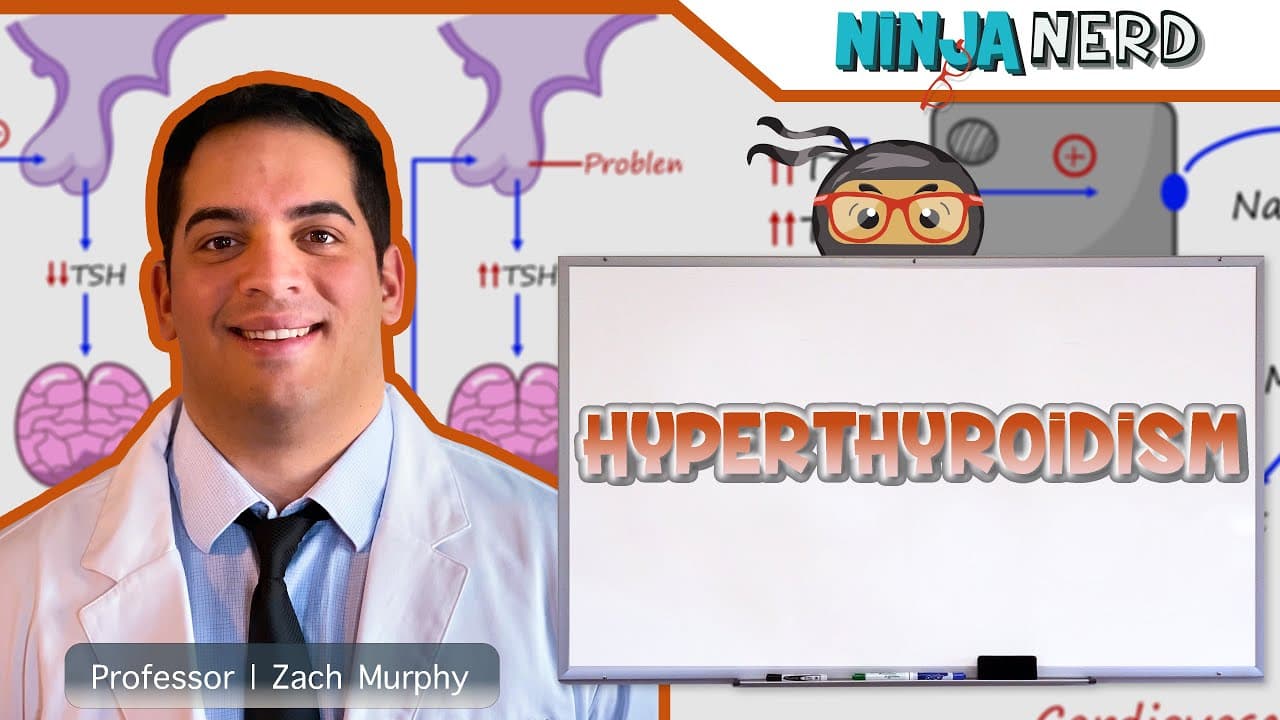
Hyperthyroidism results from excessive thyroid hormone production, often due to conditions like Graves' disease. Common symptoms include weight loss, heat intolerance, and increased heart rate. Diagnosis involves assessing TSH and thyroid hormone levels, while treatment options range from medications to surgery, especially for severe cases like thyroid storm.
Transcript
what's up Ninja nerds in this video today we're going to be talking about hyperthyroidism this is part of our clinical medicine section if you guys are liking these videos you're really enjoying them and learning a lot from them please hit the like button comment down in the comment section and subscribe also for you guys&am... Read More
Key Insights
- Hyperthyroidism is characterized by excessive production of thyroid hormones, primarily T3 and T4, leading to increased metabolic activity.
- Primary hyperthyroidism results from issues within the thyroid gland, whereas secondary hyperthyroidism involves the pituitary gland producing excess TSH.
- Graves' disease, the most common cause of hyperthyroidism, involves autoimmune antibodies stimulating thyroid hormone production.
- Toxic adenomas and multinodular goiters result from benign tissue masses that autonomously produce thyroid hormones.
- Transient hyperthyroidism can occur due to thyroid gland destruction in conditions like Hashimoto's, postpartum, and DeQuervain's thyroiditis.
- Thyroid storm is a severe complication of hyperthyroidism, characterized by extreme symptoms like hyperthermia, tachycardia, and delirium.
- Diagnosis involves measuring TSH and T4 levels, with further tests like pituitary MRI and radioactive iodine uptake scans to determine the cause.
- Treatment includes antithyroid medications, beta-blockers for symptom control, radioactive iodine therapy, and potentially thyroidectomy.
Install to Summarize YouTube Videos and Get Transcripts
Explore YouTube Video Summarizer or Get YouTube Transcript Extractor
Questions & Answers
Q: What is the primary cause of hyperthyroidism?
The primary cause of hyperthyroidism is Graves' disease, an autoimmune disorder where antibodies stimulate the thyroid gland to produce excessive thyroid hormones, leading to hyperactivity of the gland.
Q: How does secondary hyperthyroidism differ from primary hyperthyroidism?
Secondary hyperthyroidism is caused by excessive TSH production from the pituitary gland, often due to a microadenoma, whereas primary hyperthyroidism originates from the thyroid gland itself, producing excess hormones.
Q: What are the classic symptoms of hyperthyroidism?
Classic symptoms of hyperthyroidism include weight loss, heat intolerance, palpitations, anxiety, increased appetite, tremors, and a goiter. It can also cause neurological, cardiovascular, and reproductive dysfunctions.
Q: What is a thyroid storm and why is it dangerous?
A thyroid storm is a life-threatening complication of hyperthyroidism characterized by extreme symptoms like hyperthermia, tachycardia, and delirium. It requires immediate medical intervention to prevent severe outcomes.
Q: How is hyperthyroidism diagnosed?
Hyperthyroidism is diagnosed through blood tests measuring TSH and free T4 levels. Further tests, like pituitary MRI and radioactive iodine uptake scans, help determine the specific cause and guide treatment.
Q: What treatment options are available for hyperthyroidism?
Treatment options for hyperthyroidism include antithyroid medications like PTU and methimazole, beta-blockers for symptom control, radioactive iodine therapy to reduce hormone production, and surgical thyroidectomy in severe cases.
Q: How does Graves' disease cause hyperthyroidism?
In Graves' disease, the immune system produces antibodies that mimic TSH and bind to thyroid receptors, stimulating the gland to produce excessive thyroid hormones, leading to hyperthyroidism and associated symptoms.
Q: What is the role of radioactive iodine in hyperthyroidism treatment?
Radioactive iodine therapy treats hyperthyroidism by destroying overactive thyroid cells, reducing hormone production. It's a non-surgical option often used when antithyroid medications are ineffective or not tolerated.
Summary & Key Takeaways
-
Hyperthyroidism involves excessive thyroid hormone production, primarily affecting metabolic rate. It can be primary or secondary, with Graves' disease being a common cause. Symptoms include weight loss, heat intolerance, and cardiovascular issues.
-
Diagnosis relies on TSH and free T4 measurements, with additional tests like radioactive iodine uptake scans to identify the underlying cause. Treatment options include antithyroid medications, radioactive iodine, and surgery.
-
Thyroid storm, a severe complication, requires urgent treatment with beta-blockers, antithyroid drugs, and supportive care. Management aims to control hormone levels and alleviate symptoms while preventing complications.
Read in Other Languages (beta)
Share This Summary 📚
Summarize YouTube Videos and Get Video Transcripts with 1-Click
Try YouTube Summary with ChatGPT & Claude or YouTube Transcript Generator
Explore More Summaries from Ninja Nerd 📚




Summarize YouTube Videos and Get Video Transcripts with 1-Click
Try YouTube Summary with ChatGPT & Claude or YouTube Transcript Generator