How to View an Active Circuit with a Scanning Electron Microscope
TL;DR
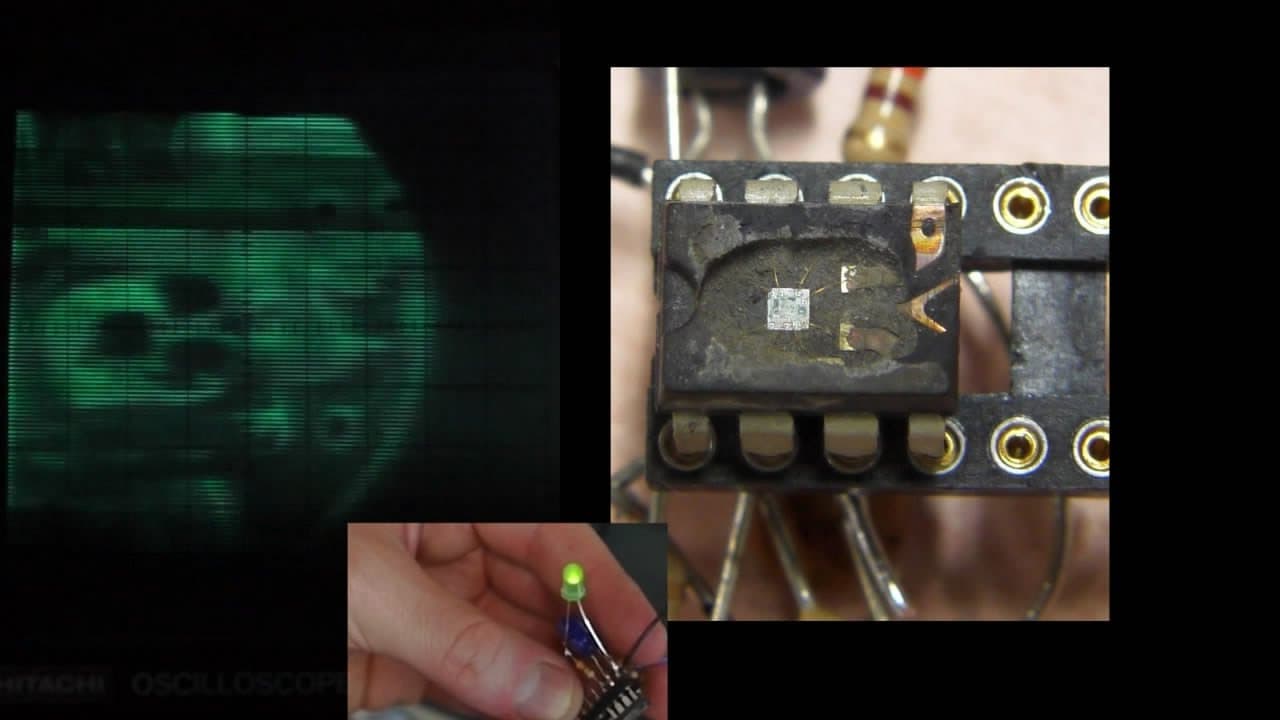
To view an active electronic circuit with a scanning electron microscope, decap the chip and eliminate any light contamination by replacing LEDs with resistors. The experiment allows observation of charge differences in the circuit's wiring, but care is needed to avoid damaging the integrated circuit, as the electron beam can induce excessive current draw.
Transcript
I can see electricity hey everyone here's an experiment I wanted to try for a while the idea is to put a working electric circuit into a scanning electron microscope and then use the microscope to probe the circuit while it's operating so one of the cool things is you can do this with an integrated circuit that you D capped and there you can see th... Read More
Key Insights
- 👻 Decapping chips allows for direct observation of internal circuitry using a scanning electron microscope.
- 🈂️ The presence of an oxide layer on top of the IC can impede the observation of charge changes within the chip.
- 👫 Replacing certain components, like LEDs, with resistors is necessary to avoid signal contamination in the scanning electron microscope.
Install to Summarize YouTube Videos and Get Transcripts
Explore YouTube Video Summarizer or Get YouTube Transcript Extractor
Questions & Answers
Q: What is the purpose of decapping chips before using them in the scanning electron microscope?
Decapping chips involves removing the epoxy packaging, allowing direct access to the internal circuitry for observation in the microscope.
Q: Why did the experimenter replace the LED with a resistor in the circuit?
The scanning electron microscope uses a photomultiplier tube, so to avoid signal contamination, the LED was replaced with a resistor to eliminate any light emission.
Q: What caused the IC to stop working when the experimenter zoomed in on it with the electron beam?
The high-energy electron beam from the microscope's zoomed-in scanning caused a build-up of charge inside the chip, eventually frying it and rendering it inoperable.
Q: How does removing the oxide layer on the top of the chip with hydrofluoric acid help prevent damage in future experiments?
Removing the oxide layer prevents charge build-up in the insulation on top of the chip, allowing for more accurate observation of the IC's behavior without risking damage.
Summary & Key Takeaways
-
The video demonstrates decapping chips and using a scanning electron microscope to probe the circuitry while it operates.
-
The experimenter uses a 555 timer chip and verifies its functionality before setting it up in the microscope.
-
By observing the circuit with the microscope, the experimenter can see the state changes and charge differences in the wires but unintentionally damages the IC.
Read in Other Languages (beta)
Share This Summary 📚
Summarize YouTube Videos and Get Video Transcripts with 1-Click
Try YouTube Summary with ChatGPT & Claude or YouTube Transcript Generator
Explore More Summaries from Applied Science 📚





Summarize YouTube Videos and Get Video Transcripts with 1-Click
Try YouTube Summary with ChatGPT & Claude or YouTube Transcript Generator