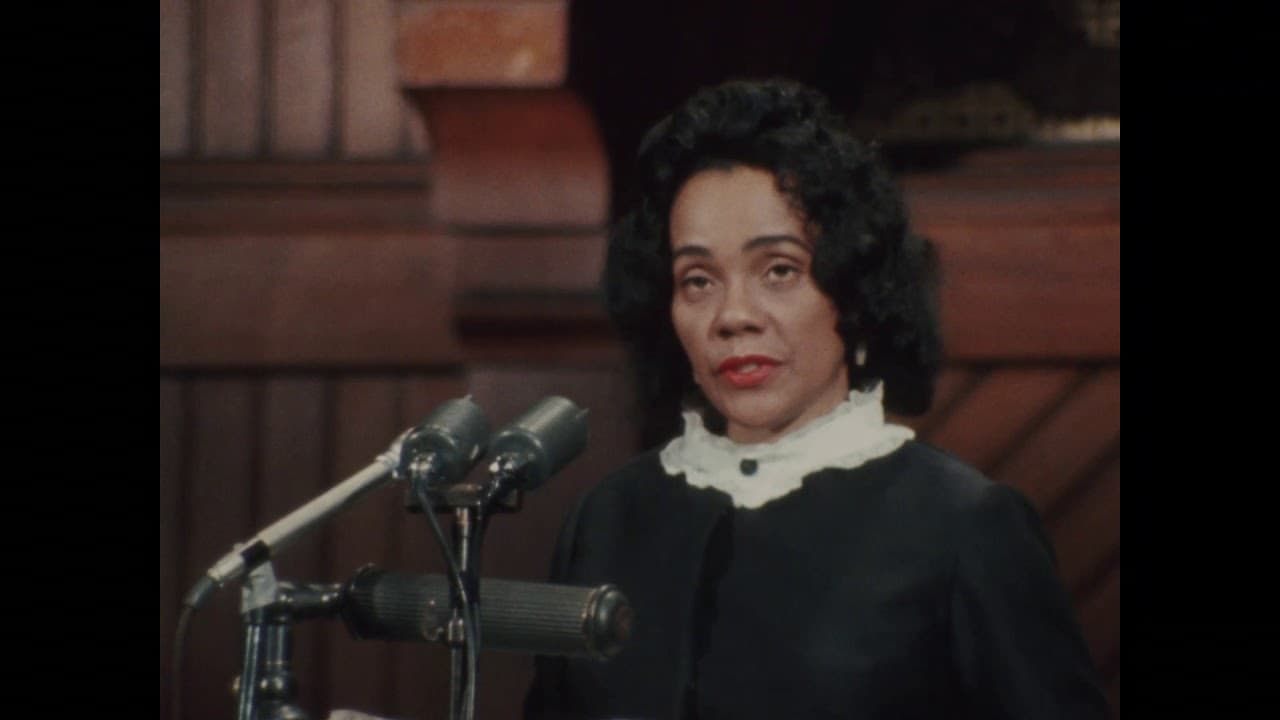
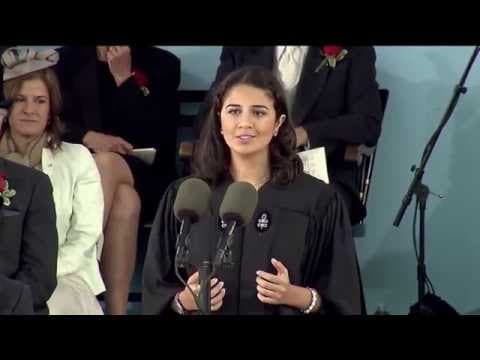
Coretta Scott King speaks at Harvard’s Class Day in 1968
TL;DR
Coretta Scott King argued at Harvard’s 1968 Class Day that students had become a formidable political force capable of advancing freedom, justice, human dignity, and peace. Speaking after the assassinations of Martin Luther King Jr. and Robert F. Kennedy, she connected student protest to the urgent struggles against racism, poverty, and war. Read on to understand her case for activism, representation, and progressive change.
Transcript
[Applause] Thank You Mr. Noah, Dean for the English. Gentlemen of the graduating class of 1968, your parents and friends. It is indeed a humbling experience for me to have been invited by you to give your Class Day address. In trying to perform this awesome task which my late husband would have done with great ease, I feel a deep sense of inadequac... Read More
Key Insights
- 🫱 The assassinations of Martin Luther King Jr. and Robert F. Kennedy have highlighted the urgent need for addressing systemic issues of racism, poverty, and war.
- ✊ Students are a significant political force with the power to influence elections and government policies.
- 🖤 Student protests are a reaction to the lack of representation in policy-making decisions and a desire for a more inclusive and just society.
- 🖤 The demands of black and white students complement each other, reflecting a desire for both survival-oriented changes and a focus on freedom, participation, and social restructuring.
- ❓ The younger generation possesses a sensitivity to the dehumanizing elements of technocracy and seeks to restore human values in an increasingly impersonal society.
- 🖤 Poverty and racial oppression disproportionately affect black Americans, necessitating a focus on their specific demands and goals in the student protest movement.
- 🗯️ The alliance between the civil rights movement and student activism has the potential to save the nation and bring about much-needed change.
Install to Summarize YouTube Videos and Get Transcripts
Explore YouTube Video Summarizer or Get YouTube Transcript Extractor
Questions & Answers
Q: What was Coretta Scott King’s main message at Harvard’s Class Day in 1968?
Coretta Scott King urged the graduating class to speak out against the forces threatening freedom, justice, human dignity, and peace. She presented students as serious, independent thinkers and a formidable political force for progressive change.
Q: Why did Coretta Scott King deliver the 1968 Harvard Class Day address?
She said she had been invited to perform a task that her late husband would have carried out with great ease. Although she felt inadequate, she drew encouragement and inspiration from the students’ confidence in her.
Q: How did the assassinations of Martin Luther King Jr. and Robert F. Kennedy shape the speech?
King said the two assassinations occurred exactly two months apart and showed that society’s very fabric was being torn away. She described both men as champions who confronted racism, poverty, and war through different but necessary methods.
Q: How did Martin Luther King Jr. and Robert F. Kennedy pursue social change differently?
Martin Luther King Jr. sought change through moral persuasion, love, and nonviolence. Robert F. Kennedy pursued change through the political process, and Coretta Scott King called both approaches necessary and legitimate.
Q: Why were students protesting against institutions and administrators?
King described student protests largely as a reaction to status quo institutions that gave students little or no voice in policymaking. She rejected media portrayals that reduced the movement to a few leftist militants making trouble.
Q: How did Coretta Scott King describe the political power of American students?
She said students had become significant political actors whose support concerned candidates seeking the nation’s highest office. Their enthusiasm behind Senator Eugene McCarthy and Robert Kennedy helped create what she called a virtual political miracle, influencing the presidency, the Paris peace talks, and potential revisions in foreign policy.
Q: What examples did Coretta Scott King give of student activism outside the United States?
She said student action in France ignited a political upheaval that forced society to confront economic justice and political freedom. In Czechoslovakia, she credited young people with stimulating far-reaching developments that could alter Eastern Europe.
Q: Why did Coretta Scott King believe student movements had become so influential?
She argued that students, faculty, and intellectuals had become a mass force within rapidly evolving technological societies. They were no longer merely supplying ideas or rationalizing the status quo; their brains and labor had become crucial to how society functioned.
Summary
This video features a speech given by a speaker at a Class Day address to the graduating class of 1968. The speaker discusses the importance of young people and students in bringing about change in society. They touch on the assassinations of Martin Luther King Jr. and Robert F. Kennedy, the role of students in protests, the impact of student movements in the United States and Europe, and the need for individuals to question the status quo and work towards a more inclusive and just society.
Questions & Answers
Q: What tragic events are mentioned in the speech?
The assassination of Martin Luther King Jr. and Robert F. Kennedy are mentioned as tragic events that have occurred recently.
Q: How are Martin Luther King Jr. and Robert F. Kennedy described?
Martin Luther King Jr. and Robert F. Kennedy are described as great men, loyal Americans, and dedicated servants of humanity. They are acknowledged as influential figures who spoke out against racism, poverty, and war.
Q: How are protesting students portrayed in the media?
The speaker suggests that the media often portrays protesting students as a few leftist militants causing trouble, but this misrepresents the actual issues at hand and overlooks the legitimate concerns and motivations of the students.
Q: What impact have students had on politics in the United States?
Students in the United States have become a significant political force and have the power to influence the course of societies. Political candidates now value student support, and student activism has led to political changes such as the retirement of an incumbent president and revisions in foreign policy.
Q: How are students described in relation to other social groups?
Students are described as a relatively progressive and socially constructive group compared to other white groups in society. They are seen as less influenced by racism and materialistic greed and more committed to ending war and fighting for equality.
Q: What role do students play in society today?
Students are seen as playing a crucial role in questioning and challenging the dehumanizing elements of technocracy and the loss of personal identity and creativity in society. They are described as a vital force for progressive change and the preservation of freedom.
Q: How are students and intellectuals contributing to society?
In modern technological societies, students and intellectuals are no longer just contributors of ideas, but they have become a mass force themselves. They are seen as vital in society, with their brain and muscle being essential for progress and change.
Q: What conflicts exist in the lives of students?
Students face conflicts between their individual creativity and the rigid systems and standards imposed by society. The clash between their creative drive and the stifling system leads to their protest for individual expression, freedom from psychological taboos, and participation in decision-making.
Q: What unique challenges do black Americans face?
Black Americans face a history of exclusion and frustration, with poverty and racism disproportionately affecting their lives. They suffer from deprivation, lack of opportunities, and a loss of identity. The speaker emphasizes the need for job opportunities, economic justice, and an end to racism.
Q: What issues are mentioned regarding the poor in the United States?
The speaker highlights how the tax and welfare system in the United States discourages the poor from improving their conditions and perpetuates inequality. Wealthy individuals receive favorable treatment, while the poor face restrictions and burdens when trying to escape poverty.
Takeaways
In this speech, the speaker addresses the importance of student activism and the need for society to listen to and address the concerns raised by young people. They emphasize the power and influence of students in effecting change and suggest that the alliance between the civil rights movement and the student movement played a vital role in shaping and saving the nation. The speaker also calls for a spiritual awakening and the preservation of eternal values such as love, justice, mercy, and peace in order to triumph over the challenges faced by society.
Summary & Key Takeaways
-
The speech acknowledges the tragic assassinations of Martin Luther King Jr. and Robert F. Kennedy, emphasizing the need for change in society.
-
It highlights the significance of student protests as a reaction to a lack of student representation in policy-making decisions.
-
The speech recognizes the power of student activism in influencing political change, both in the United States and around the world.
Read in Other Languages (beta)
Share This Summary 📚
Summarize YouTube Videos and Get Video Transcripts with 1-Click
Try YouTube Summary with ChatGPT & Claude or YouTube Transcript Generator
Explore More Summaries from Harvard University 📚
Summarize YouTube Videos and Get Video Transcripts with 1-Click
Try YouTube Summary with ChatGPT & Claude or YouTube Transcript Generator