How to Synthesize Skatole Using Fischer Indole Synthesis
TL;DR
Skatole (3-methylindole) is made by the Fischer Indole Synthesis: react phenylhydrazine with propionaldehyde to form a phenylhydrazone, then use an acid catalyst (p-toluenesulfonic acid) to close it into an indole ring. In this run 0.5 g phenylhydrazine and 0.291 g propionaldehyde were combined in anhydrous ethanol, then refluxed for a few hours with p-TSA. Read on for the exact amounts, why propionaldehyde is added drop-wise, and how the crude is purified.
Transcript
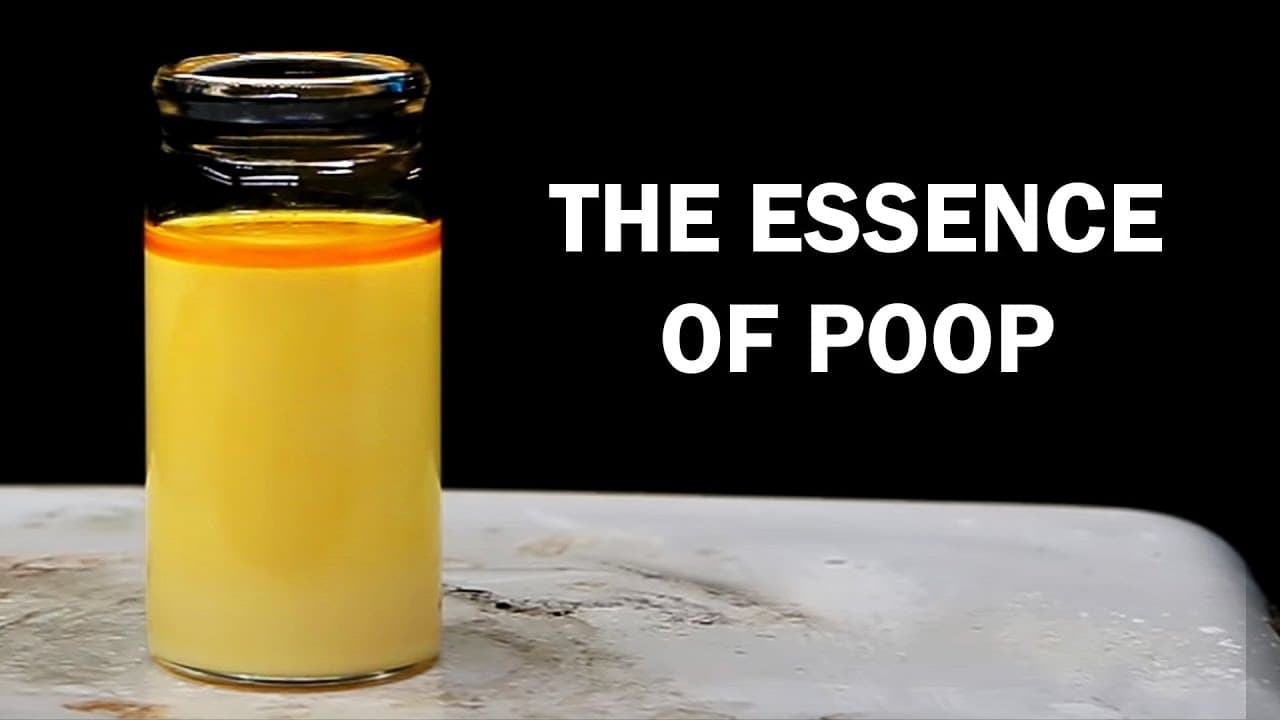
Skatole is a white crystalline solid that actually occurs naturally in feces. Interestingly enough, in low concentrations, it can actually have a pleasant flowery smell. But in higher concentrations, it's pretty gross. It's also produced naturally by several different types of plants, and it can actually serve as an attractant to certain species of... Read More
Key Insights
- 🌱 Skatole naturally occurs in feces and certain plants and can have both pleasant and unpleasant odors.
- ❓ The Fischer Indole Synthesis is a common method for synthesizing skatole.
- 😘 Achieving pure skatole through purification is challenging due to its strong odor and low solubility in water.
- 🆘 Various washing steps with organic solvents can help remove impurities from the crude skatole.
- 💯 The synthesis process involves reacting phenylhydrazine with propionaldehyde to form an indole, which is the core structure of skatole.
- ❓ Solvents like dichloromethane are used for washing and removing impurities from the skatole mixture.
- ❓ The crude skatole can be isolated through distillation to remove solvents, but achieving pure skatole is difficult.
Install to Summarize YouTube Videos and Get Transcripts
Explore YouTube Video Summarizer or Get YouTube Transcript Extractor
Questions & Answers
Q: How do you make skatole from propionaldehyde and phenylhydrazine using the Fischer indole synthesis?
Phenylhydrazine is reacted with propionaldehyde in anhydrous ethanol to form a phenylhydrazone intermediate. Adding an acid catalyst (p-toluenesulfonic acid) then makes the molecule close in on itself to form a second ring, producing an indole. Because propionaldehyde is used, the product carries a methyl group at the 3-position, which is skatole (3-methylindole).
Q: What is the phenylhydrazone intermediate in this synthesis?
When phenylhydrazine and propionaldehyde are mixed, they quickly form the corresponding phenylhydrazone. This is the key intermediate that, once acid-catalyzed, closes into the desired indole ring. In the video the mixture is stirred at room temperature for about 10 minutes to form it before the acid is added.
Q: What amounts and catalyst are used for the reaction?
The synthesis uses 0.5 grams of phenylhydrazine and 0.291 grams of propionaldehyde, which is a bit less than a 10% excess of the aldehyde so all the phenylhydrazine is consumed. A total of 10 milliliters of anhydrous ethanol is used as solvent, and 0.761 grams of p-toluenesulfonic acid monohydrate (p-TSA) is added as the acid catalyst.
Q: Why is the propionaldehyde added slowly and diluted?
The addition of propionaldehyde to phenylhydrazine is exothermic. To control the heat, the propionaldehyde is first diluted with a little ethanol and then added drop-wise with strong stirring under dilute conditions. Small vials and pipettes are washed several times with ethanol so nothing is left behind and the yield is not reduced.
Q: Why is skatole also called 3-methylindole?
The reaction forms a two-ring system whose core structure is an indole. The molecule made here differs from a plain indole by having a methyl group at the 3-position of the ring. Because of that methyl group on an indole core, the common name skatole is equivalent to the systematic name 3-methylindole.
Q: What are the challenges in isolating and purifying the skatole?
After refluxing for a few hours and cooling, precipitate forms and the ethanol is removed by distillation (a vacuum would be ideal but wasn't available), leaving a crude residue. Purification is difficult because indole isn't very soluble in water, so only a little dissolves, and the strong odor of skatole becomes an annoyance from this point on.
Q: What is skatole and where is it found?
Skatole is a white crystalline solid that occurs naturally in feces and is also produced by several types of plants, where it can attract certain orchid bees. In low concentrations it has a pleasant flowery smell, but in higher concentrations it smells fecal-like.
Q: What starting materials were needed to reach skatole?
The synthesis uses anhydrous ethanol, phenylhydrazine and propionaldehyde, all of which were made in previous videos, plus store-bought p-toluenesulfonic acid as catalyst. Reaching skatole was a long process: the two main starting materials were sodium benzoate and 1-propanol, with each intermediate step covered in its own video.
Summary & Key Takeaways
-
Skatole, a naturally occurring compound found in feces and plants, has a flowery smell in low concentrations but a fecal-like smell in higher concentrations.
-
The Fischer Indole Synthesis is used to synthesize skatole by reacting phenylhydrazine with propionaldehyde, forming a two-ring molecule called an indole.
-
The crude skatole is isolated using various washing and purification steps, though achieving pure skatole is challenging.
Read in Other Languages (beta)
Share This Summary 📚
Summarize YouTube Videos and Get Video Transcripts with 1-Click
Try YouTube Summary with ChatGPT & Claude or YouTube Transcript Generator
Explore More Summaries from NileRed 📚

Summarize YouTube Videos and Get Video Transcripts with 1-Click
Try YouTube Summary with ChatGPT & Claude or YouTube Transcript Generator