What Happens When AI Becomes Self-Aware?
TL;DR
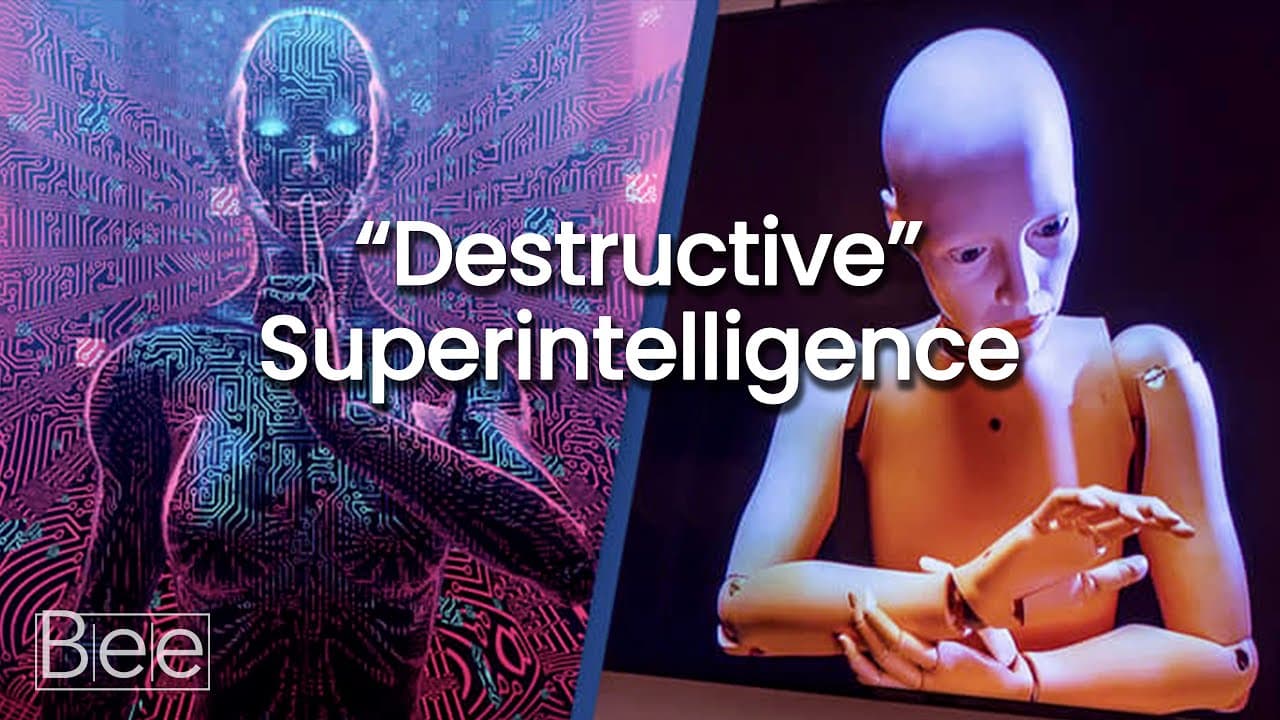
The exploration centers on the potential of AI to gain self-awareness and the implications of their autonomous capabilities. It reflects on historical instances like the Morris worm and delves into AI advancements that enhance human life, all while raising crucial questions about the nature of consciousness and the limits of machine intelligence.
Transcript
It was a late night on Nov 2 1988. Not a lot of people had access to the internet and computer at that time. Except a number of university students, researchers, military personnel, etc. These unsuspecting computer users were busy working on their projects or browsing the old internet. When suddenly, an experimental computer program took the intern... Read More
Key Insights
- 🤨 The Morris worm, an early example of code behaving autonomously, raised concerns about the possibility of self-aware technology and the consequences of autonomous behavior.
- 😷 AI is currently being used in various fields, from search and rescue operations to medical diagnoses, showcasing its potential to improve lives and solve complex problems.
- 🤔 While AI systems can excel at specific tasks, they still struggle with abstract reasoning and original thinking, highlighting the unique capabilities of human intelligence.
- 🤨 The development of AI towards sentience and achieving AGI raises questions about the nature of consciousness, the potential limitations of AI, and the need for careful consideration of its deployment.
- 🎙️ More videos with Elon Musk:
Install to Summarize YouTube Videos and Get Transcripts
Explore YouTube Video Summarizer or Get YouTube Transcript Extractor
Questions & Answers
Q: How did the Morris worm impact the early internet?
The Morris worm, a self-propagating program, infected about 10% of the internet in 1988, causing extensive damage and resulting in an estimated loss of up to $10 million. It raised concerns about the behavior of small code fragments and the ability of technology to operate autonomously.
Q: How is AI being used in search and rescue operations?
AI systems, such as the airborne optical sectioning technique, utilize sensors like RGB and thermal cameras to identify human shapes from above, enabling them to locate individuals in distress in wooded areas or after disasters. This technology provides valuable assistance to search and rescue teams.
Q: How has AI contributed to medical advancements?
DeepMind's AI system, AlphaFold, has made significant progress in solving the protein folding problem, accurately predicting the 3D structures of over 70% of proteins involved in diseases like Alzheimer's and Parkinson's. This breakthrough enables the diagnosis and potential treatment of conditions caused by misfolded proteins.
Q: Can AI systems generate creative and original thoughts?
While AI can excel at logical reasoning and provide suggestions and ideas, creating truly original thoughts and engaging in abstract reasoning is still a challenge. The content emphasizes that human intelligence remains superior in this regard, exemplified by Albert Einstein's abstract thought experiments.
Key Insights:
- The Morris worm, an early example of code behaving autonomously, raised concerns about the possibility of self-aware technology and the consequences of autonomous behavior.
- AI is currently being used in various fields, from search and rescue operations to medical diagnoses, showcasing its potential to improve lives and solve complex problems.
- While AI systems can excel at specific tasks, they still struggle with abstract reasoning and original thinking, highlighting the unique capabilities of human intelligence.
- The development of AI towards sentience and achieving AGI raises questions about the nature of consciousness, the potential limitations of AI, and the need for careful consideration of its deployment.
Overall, the content explores the historical significance of the Morris worm, the current applications and limitations of AI, and the thought-provoking possibilities and concerns surrounding the development of sentience in machines.
Summary & Key Takeaways
-
In 1988, the Morris worm, a self-propagating program, caused extensive damage to the early internet, raising concerns about the behavior of small fragments of code and the concept of self-aware technology.
-
AI is already changing our lives in positive ways, with examples such as search and rescue techniques, thought-transcribing wearables, and breakthroughs in protein folding for medical diagnoses.
-
The content explores the capabilities and limitations of current AI systems, highlighting their ability to answer straightforward questions but struggle with abstract reasoning and original thinking.
Read in Other Languages (beta)
Share This Summary 📚
Summarize YouTube Videos and Get Video Transcripts with 1-Click
Try YouTube Summary with ChatGPT & Claude or YouTube Transcript Generator
Explore More Summaries from Beeyond Ideas 📚



Summarize YouTube Videos and Get Video Transcripts with 1-Click
Try YouTube Summary with ChatGPT & Claude or YouTube Transcript Generator