Why Haven't We Found Aliens? Fermi Paradox Explained
TL;DR
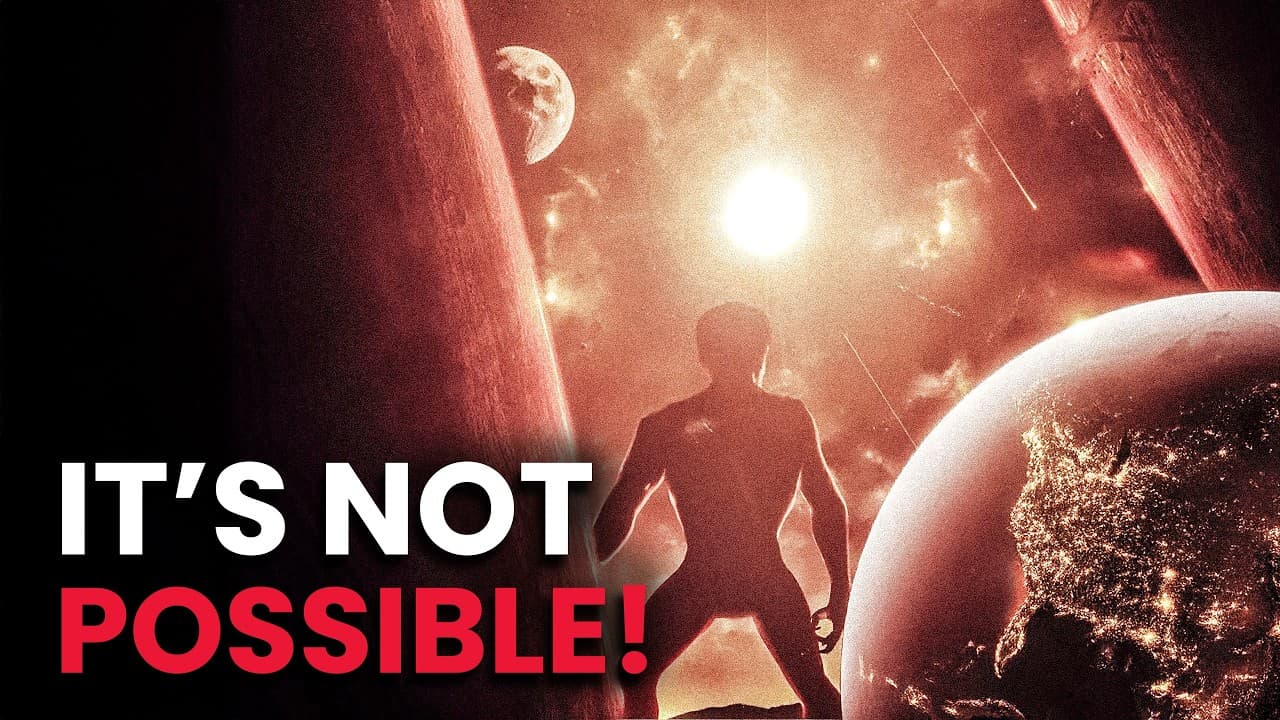
The silence of the universe may come from Earth being extraordinarily rare, with a roughly 10 to the negative 20 chance of having all life-supporting conditions together. Alternatively, a 'great filter' may stop civilizations before interstellar contact, or advanced aliens may have transcended physical form, communicate in undetectable ways, or simply not care about us.
Transcript
Our universe is vast with billions of stars, trillions of planets, and endless possibilities for life to emerge, and yet the silence is haunting. Scientists have proposed theories to explain it. Earth might be a rare gem, or perhaps civilizations destroy themselves before they ever reach the stars. Some suggest advanced aliens like Type seven civil... Read More
Key Insights
- The rare earth hypothesis, popularized by Peter Ward and Donald Brownlee, argues that complex animal life is extraordinarily rare and Earth's habitability comes from a unique combination of factors unlikely to be found elsewhere.
- Earth sits in the galactic habitable zone, a quiet region of the Milky Way that shields it from harmful radiation and supernova explosions, while orbiting the sun at a distance allowing liquid water to exist.
- Earth's odds are estimated at 10 to the negative 20 to have all life-supporting conditions together, including a stable long-lasting sun, Jupiter deflecting asteroids, tectonic plate activity, and a large moon steadying its tilt.
- The great filter is a barrier that stops most civilizations from reaching interstellar travel or communication, and the jump from single-celled to multicellular life may have been an incredibly rare accident.
- Brian Cox framed the key question as whether the filter lies in our past or future; if the origin of multicellular life was the filter, we are very lucky to have already passed through it.
- The self-destruction hypothesis holds that civilizations collapse under their own progress, citing nuclear weapons that UN estimates could wipe out humanity 55 times, plus environmental damage, biotechnology, and AI.
- Technological singularity could transform a species so profoundly that aliens upload their consciousness into virtual worlds, no longer needing to physically explore space or emit detectable signals.
- Advanced aliens may not contact us not out of hostility but indifference, viewing us as insignificant as ancient microbes are to us, and may communicate using methods beyond our current understanding.
Install to Summarize YouTube Videos and Get Transcripts
Explore YouTube Video Summarizer or Get YouTube Transcript Extractor
Questions & Answers
Q: What is the rare earth hypothesis?
The rare earth hypothesis, popularized by scientists Peter Ward and Donald Brownlee in their book 'Rare Earth: Why Complex Life Is Uncommon in the Universe,' argues that earth-like planets with complex animal life are likely extraordinarily rare. It challenges the belief that life is widespread, suggesting Earth's ability to support life comes from a unique combination of factors that may not exist anywhere else, meaning most planets have only simple microbes or no life at all.
Q: What makes Earth special enough to support complex life?
Earth lies in the galactic habitable zone, a safe quiet region of the Milky Way that shields it from harmful radiation and supernova explosions. It orbits the sun at the perfect distance for liquid water, benefits from a stable long-lasting sun, has Jupiter deflecting asteroids and comets, uses tectonic plates to recycle carbon and regulate climate, and has a large moon keeping its tilt steady for regular seasons. The likelihood of all these together is 10 to the negative 20.
Q: What is the great filter and where might it be?
The great filter is the idea that something stops most civilizations from reaching the level where they can travel to other planets or send messages across the stars. It could be the rare leap from single-celled to multicellular life, the difficulty of developing advanced technology, or self-destruction. Physicist Brian Cox framed it as whether the filter lies in our past or future. If behind us, we were lucky to pass it; if ahead, we must be cautious.
Q: Why might advanced civilizations destroy themselves?
The self-destruction hypothesis suggests advanced civilizations may collapse under the weight of their own progress, since greater achievement brings greater risk. Nuclear energy also produces weapons that UN estimates could destroy humanity 55 times over. Environmental damage from overusing limited resources causes deforestation and mass extinctions. Biotechnology could release an engineered pathogen by accident or intent, and artificial intelligence could become smarter than its creators or foster dangerous over-reliance that erodes human skills.
Q: How could a technological singularity explain the silence?
A technological singularity is when a civilization's technological growth becomes so rapid it transforms their way of life beyond recognition. After such a change, a species might upload their consciousness into sophisticated computer systems, creating perfect virtual worlds offering limitless experiences, so they no longer need to physically explore space. They might also redefine energy use, focusing on sustaining virtual realities rather than building massive spaceships or transmitting detectable radio signals, leaving no traces we can detect.
Q: Why might aliens choose not to contact us?
Advanced aliens may not contact us not because they are hostile, but simply because they don't care. Their evolution may have taken them so far beyond our level that reaching out feels unnecessary, and to them we might be as insignificant as ancient microbes are to us. As the video notes, aliens don't have to be evil to be dangerous; they may just not care about us and pave us over in the process.
Q: Why might we fail to detect alien communication signals?
In 1959, physicists Philip Morrison and Giuseppe Cocconi published a paper in Nature suggesting the search for extraterrestrial intelligence focus on radio signals at a specific wavelength, assuming aliens use similar technology. But advanced civilizations may have discovered communication methods entirely beyond our current understanding, using signals too faint for us to detect. If they have transcended physical existence or refined energy use for virtual realities, they would leave no traces we can currently scrape or detect.
Q: How does Jupiter and the moon protect life on Earth?
The massive planet Jupiter acts as Earth's protector because its gravity deflects asteroids and comets that might otherwise crash into Earth. Earth's large moon helps keep the planet's tilt steady, ensuring regular seasons and stable climates. Without the moon, Earth's tilt would wobble, potentially causing extreme climate changes that could make life harder to sustain. These factors, combined with tectonic plates recycling carbon and a stable sun, form the rare combination that allows complex life to persist.
Summary & Key Takeaways
-
The rare earth hypothesis by Peter Ward and Donald Brownlee suggests complex life is extremely uncommon. Earth benefits from the galactic habitable zone, a perfect orbital distance, a stable sun, Jupiter's protective gravity, tectonic recycling of carbon, and a large moon steadying its tilt, giving odds of 10 to the negative 20.
-
The great filter proposes a barrier preventing life from becoming interstellar civilizations. The leap from single-celled to multicellular life may be a rare accident. Brian Cox asks whether the filter is behind or ahead of us. The self-destruction hypothesis warns that nuclear weapons, environmental collapse, biotech, and AI could end civilizations first.
-
Advanced aliens may have passed a technological singularity, uploading consciousness into virtual realities and abandoning detectable spaceships or radio signals. They may ignore us out of indifference rather than hostility, seeing us as microbes. Morrison and Cocconi's 1959 radio-search assumption may be wrong if aliens communicate through methods too faint or alien for us to detect.
Read in Other Languages (beta)
Share This Summary 📚
Summarize YouTube Videos and Get Video Transcripts with 1-Click
Try YouTube Summary with ChatGPT & Claude or YouTube Transcript Generator
Explore More Summaries from Beeyond Ideas 📚

Summarize YouTube Videos and Get Video Transcripts with 1-Click
Try YouTube Summary with ChatGPT & Claude or YouTube Transcript Generator