How to Get Clients Before Building Your Product
TL;DR
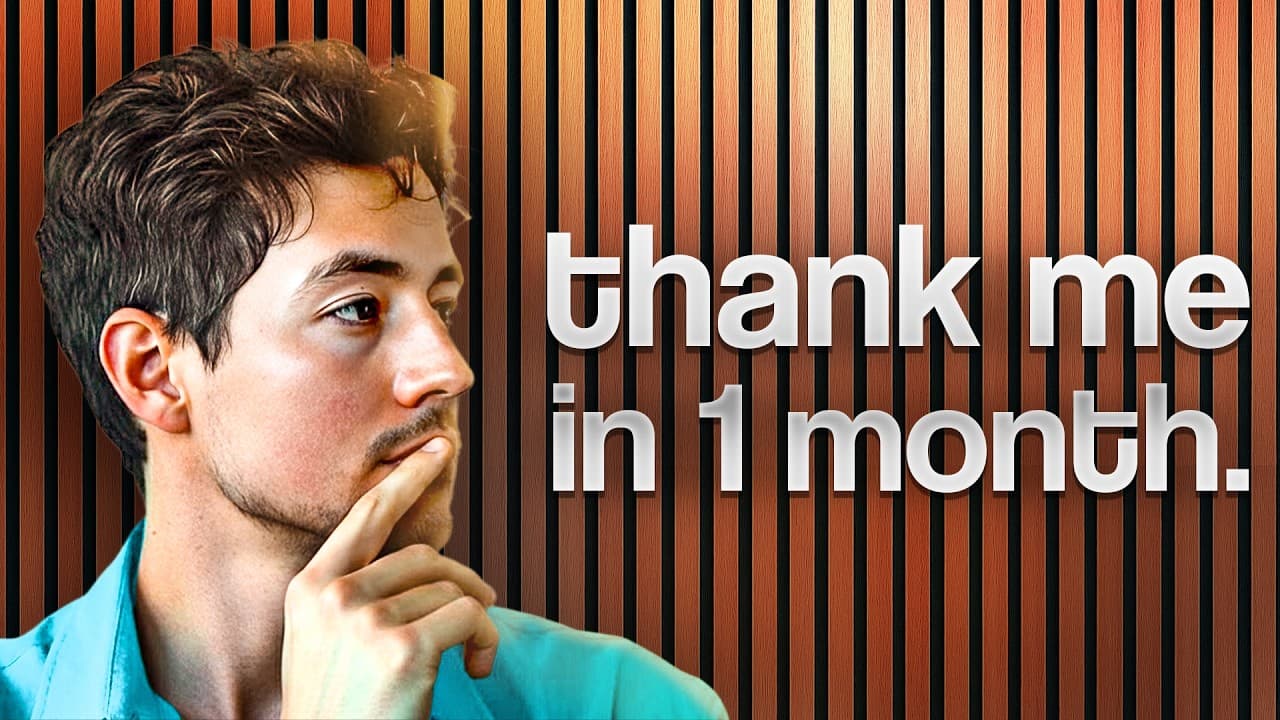
Sell the idea before building the product, then use buyer responses to decide what deserves to be created. Define the proposed benefits, features, and scope, test several offers through personalized cold outreach, and treat replies as live market data. This approach provides revenue and feedback earlier while reducing the time, bias, and risk involved in developing an unvalidated product.
Transcript
Hey, so this video is probably going to seem dumb just like the title, but it is going to get you some clients. I started my very first business back in college. I scaled two agencies to over 160 grand a month in combined profit. That's taken me to here where I make over 400 grand a month. Makes me one of the highest income people in my country, Ca... Read More
Key Insights
- Selling before building is a validation strategy that tests demand while an offer still exists primarily as an idea. It allows an entrepreneur to discover whether buyers value the proposed outcome before committing the substantial time required to create a polished product.
- The traditional build-first sequence requires learning a skill, investing that skill in product development, and later discovering how to monetize the result. Selling the skill first shortens that sequence while producing both revenue and information that can guide a later product.
- Market feedback is live evidence from the people expected to buy the product. Testing an offer through real sales conversations can expose weak assumptions, unwanted features, and poor positioning more reliably than relying only on the creator's personal beliefs.
- Fast economic and AI development increases the risk of lengthy product creation. A solution that appears useful when development begins may become unnecessary by completion, so minimal initial investment and early demand testing can reduce exposure to changing customer needs.
- A product concept is sellable through its proposed shape, benefits, features, and scope before full delivery exists. Compiling these elements was described as taking roughly two hours, far less time than the weeks, months, or years potentially required for a strong product.
- Community research is a direct method for finding recurring customer problems. The example examined discussions involving website agencies, video editors, and real estate businesses, identifying insufficient client flow and repetitive follow-up work as problems that possible AI services could address.
- Cold outreach is both a client-acquisition channel and a product-research mechanism. The example sourced leads, personalized messages with AI-generated icebreakers, and launched campaigns to test several proposed services, reportedly generating more than 10 leads in around two hours.
- Effective cold-email structure is built around four elements: personalization that signals the message is not spam, a clear explanation of who is contacting the prospect, a reason for reaching out, and an explicit next step. The exact wording can vary while preserving this structure.
Install to Summarize YouTube Videos and Get Transcripts
Explore YouTube Video Summarizer or Get YouTube Transcript Extractor
Questions & Answers
Q: How can you get clients before building a product?
Start by identifying a recurring problem within a specific niche, then outline a proposed service through its benefits, features, scope, and expected outcome. Present that offer to relevant prospects through sales conversations or personalized cold email before investing heavily in delivery. Their replies reveal whether demand exists, and an actual sale provides both funding and practical information for building the solution afterward.
Q: Why should entrepreneurs sell an idea before building it?
Selling an idea first reduces the risk of spending weeks, months, or years on something the market does not want. It replaces personal assumptions with responses from intended buyers and can produce money before extensive development begins. Those funds and customer reactions can then be invested in a better product whose features and positioning reflect demonstrated demand rather than the creator's preferences alone.
Q: What should a product concept include before it is sold?
A testable product concept should describe the proposed shape of the solution, its benefits, its features, its scope, and the result it is intended to deliver. The transcript argues that sales conversations focus on this idea rather than on the finished product itself. Preparing these elements can take roughly two hours, allowing demand to be tested before undertaking a much longer development process.
Q: How can online communities reveal profitable service ideas?
Search niche communities for questions, complaints, and repeated operational problems posted by members. The example reviewed discussions involving website agencies, video editors, and real estate businesses, then grouped recurring concerns such as insufficient clients, content needs, job discovery, and repetitive follow-up. Each recurring problem became the starting point for a potential service that could be offered to prospects for validation.
Q: What services can address a business's lack of clients?
The examples proposed cold-outreach systems that scrape or organize prospects, feed contacts into email platforms, and support campaign execution. For video professionals, a search-intent or job-scraping system was also considered. For real estate businesses, the proposed ideas included business-to-consumer email systems and automated follow-up or reactivation. These were hypotheses to test through outreach, not products assumed to have proven demand.
Q: How do you test multiple service offers with cold email?
Create prospect audiences for each chosen niche, collect suitable leads, add personalized icebreakers, and place the contacts into separate outreach campaigns. The example created audiences for website or creative agencies, videographers, and real estate agencies, then prepared simultaneous lead-sourcing runs and used pre-warmed email accounts. Campaign responses provide direct feedback about which problem and proposed service attract genuine interest.
Q: What makes a cold email feel personal instead of spammy?
Use a personalized opening that demonstrates the message was prepared for the specific recipient, then clearly answer who you are and make the language sound like a person speaking directly to them. Explain why you chose to contact that prospect and finish with a clear next step. The transcript presents these four elements as more important than copying any exact template wording.
Q: Why is market feedback more reliable than personal conviction?
Entrepreneurs can become attached to their ideas, seek confirming evidence, and continue investing because of existing emotional commitment. Market feedback comes directly from the people expected to buy the proposed solution, so their willingness or reluctance to engage provides more relevant evidence. If the business objective is to create something people want, buyer reception is the practical standard for judging the offer.
Summary & Key Takeaways
-
The recommended business sequence is to learn a useful skill, sell that skill directly, and build a scalable product only after receiving market feedback. Selling first replaces assumptions with evidence, provides money that can fund development, and reduces the risk of spending months or years creating something that customers no longer want.
-
A proposed offer can be tested by documenting its intended benefits, features, scope, and outcome before creating the underlying product. Sales conversations then reveal whether prospects care about the idea. Because the market consists of the intended buyers, its reception is presented as more reliable than an entrepreneur's opinions, biases, or emotional commitment.
-
The practical workflow starts by studying niche communities for repeated problems, designing services that address those problems, sourcing suitable prospects, and launching personalized cold-email campaigns. Example offers included outreach systems, content generation, job scraping, and automated follow-up. The demonstrated experiment reportedly produced more than 10 leads from around two hours of work.
Read in Other Languages (beta)
Share This Summary 📚
Summarize YouTube Videos and Get Video Transcripts with 1-Click
Try YouTube Summary with ChatGPT & Claude or YouTube Transcript Generator
Explore More Summaries from Nick Saraev 📚





Summarize YouTube Videos and Get Video Transcripts with 1-Click
Try YouTube Summary with ChatGPT & Claude or YouTube Transcript Generator