Resist the temptation of simple ideas | Behavioural Psychologist Adam Grant Meets Tim Harford
TL;DR
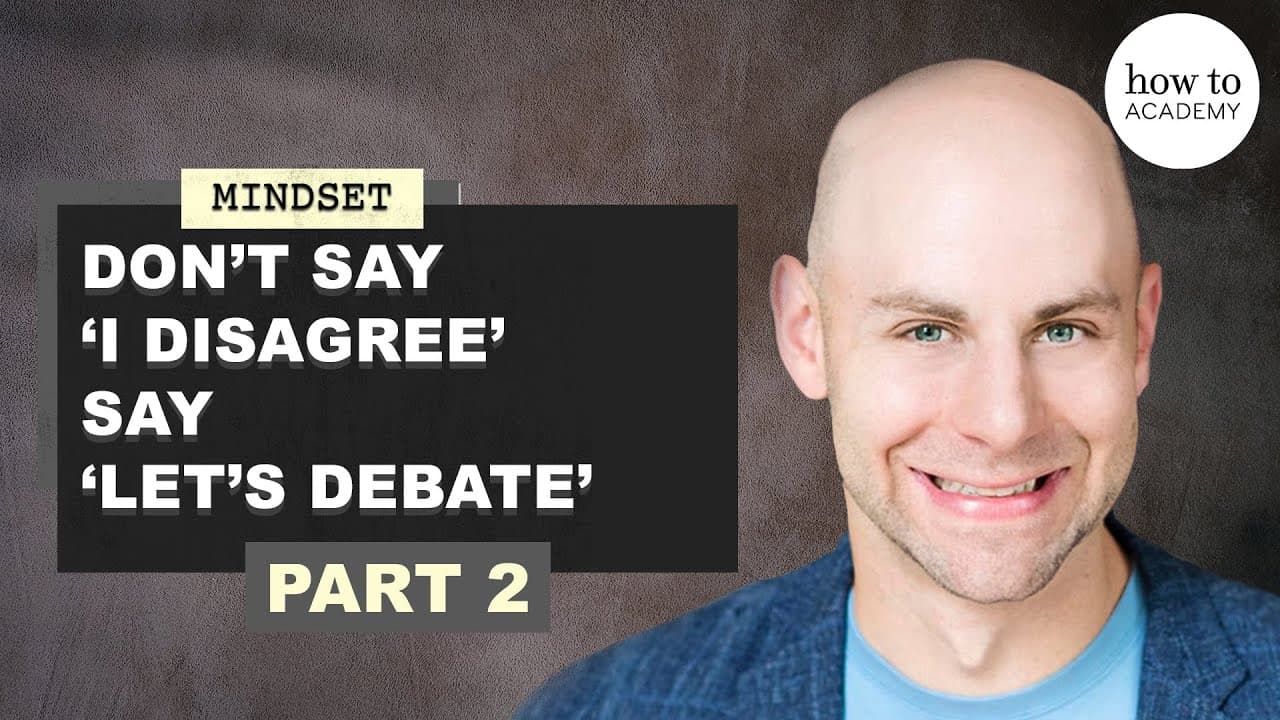
Debate can foster equal participation and task conflict, but real-world debates often devolve into relationship conflict lacking agreed-upon rules.
Transcript
i mean really i i'm gonna win either way tim no i i don't think the goal is winning right i think the goal is learning and i think the the the way you pose this question is interesting because you you basically just asked me if you should rethink your rethinking of debate and i i do want to applaud you before i answer your question because you have... Read More
Key Insights
- 👔 Formal debates ensure equal participation and prevent domination, fostering fairness.
- ❓ Task conflict in debates promotes intellectually challenging discussions without personal animosity.
- 🥺 Lack of agreed-upon rules in real-world debates leads to polarization and ineffective dialogue.
- ❓ Collaborative efforts, like joint experiments, can enhance understanding and resolve debates.
- 🤗 Participating in forecasting tournaments can enhance cognitive flexibility and open-mindedness.
- 🦸 Super forecasters achieve partial success in a challenging task, emphasizing cognitive diversity.
- 😨 Engaging in scenario planning encourages exploring diverse possibilities without fear of being wrong.
Install to Summarize YouTube Videos and Get Transcripts
Explore YouTube Video Summarizer or Get YouTube Transcript Extractor
Questions & Answers
Q: How does formal debate structure ensure fair participation?
In formal debate settings, all participants are allocated equal time, preventing domination and ensuring everyone gets a chance to express their views without interruption.
Q: What distinguishes task conflict from relationship conflict in debates?
Task conflict in debates focuses on intellectual disagreements over the topic at hand, allowing for engaged and passionate discussions without devolving into personal attacks or emotional conflicts.
Q: How does the media ecosystem affect the quality of debates in the real world?
In real-world debates across platforms like politics, news shows, and social media, the lack of agreed-upon rules leads to polarization, insults, and a focus on scoring points rather than fostering genuine dialogue.
Q: Can collaborative approaches like joint experiments improve the quality of debates?
Engaging in collaborative efforts, like joint experiments to resolve debates, can lead to insightful discoveries and better understanding by encouraging diverse perspectives and shared problem-solving.
Summary & Key Takeaways
-
Debate provides equal time allocation for participants, fostering fairness and preventing domination.
-
Encourages task conflict over relationship conflict, promoting intellectual engagement without personal animosity.
-
Concerns arise in real-world debates, where lack of agreed-upon rules leads to polarization and ineffective dialogue.
Read in Other Languages (beta)
Share This Summary 📚
Summarize YouTube Videos and Get Video Transcripts with 1-Click
Try YouTube Summary with ChatGPT & Claude or YouTube Transcript Generator
Explore More Summaries from How To Academy Mindset 📚




Summarize YouTube Videos and Get Video Transcripts with 1-Click
Try YouTube Summary with ChatGPT & Claude or YouTube Transcript Generator