Why Are Frontier AI Models Released in Stages?
TL;DR
Staggered releases give selected companies earlier access to frontier AI models while startups, independent builders, and the public must wait. The creator argues that this approach amounts to de facto regulation, concentrates power among leading labs and their partners, slows broad access to advanced capabilities, and makes open-source AI development more important.
Transcript
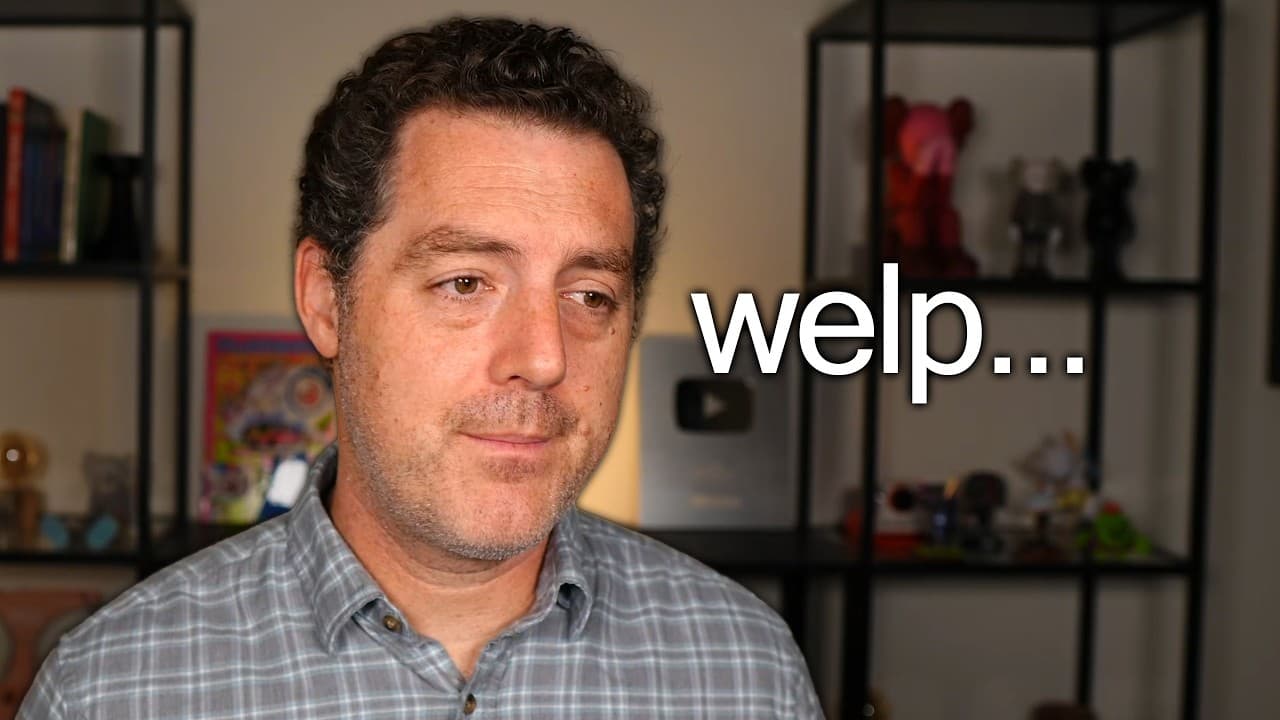
This is really bad. Daario got his way. He has regulatory capture and now all of us don't get the Frontier model right when it drops. Here is GPT 5.6 sole preview. Only a select group of companies get to use it right now. And the rest of us, we wait. We wait for the little morsels. And it's I'm I'm so disappointed right now. I really it's hard for ... Read More
Key Insights
- Staggered model releases give a small group of selected companies access before the general public. The creator characterizes this arrangement as de facto AI regulation because government concerns reportedly influenced OpenAI to preview GPT 5.6 with trusted partners before considering a broader release.
- Anthropic's safety messaging is presented as a major cause of tighter release controls. The creator argues that repeated warnings about cybersecurity capabilities, prompt hacking, model extraction by Chinese companies, and potential white-collar job losses encouraged the government to intervene more aggressively.
- Perfect protection against prompt hacking is described as impossible because large language models are non-deterministic. The creator uses this claim to argue that security concerns cannot be completely eliminated through testing, restricted previews, or attempts to create a fully protected model.
- Restricted access can concentrate economic and technological power among frontier laboratories and large corporate partners. These organizations can build products with the newest models while startups, independent developers, and tinkerers must rely on older capabilities and attempt to compete from behind.
- Frontier laboratories continue advancing even when public access is delayed. The government restrictions described by the creator concern who receives a model, not whether its developer can use that model internally to train and build subsequent systems.
- OpenAI's possible IPO delay until 2027 is interpreted by the creator as a consequence of regulatory uncertainty. He disputes the reported explanations involving choppy markets and weak retail enthusiasm, arguing instead that an unclear AI regulatory framework directly affects the company's business visibility.
- United States release restrictions may create a competitive disadvantage against China. The creator argues that even a delay of several weeks matters during an international AI race because American developers and businesses lose time while Chinese artificial intelligence development continues.
- Open-source AI is presented as increasingly important for democratizing access to advanced intelligence. The creator acknowledges that open-source models trail the frontier, but promises greater coverage of open-source laboratories worldwide in hopes that they can reduce dependence on a few powerful companies.
Install to Summarize YouTube Videos and Get Transcripts
Explore YouTube Video Summarizer or Get YouTube Transcript Extractor
Questions & Answers
Q: Why is GPT 5.6 being released to selected companies first?
The transcript says the United States government asked OpenAI to stagger the release of GPT 5.6. Under that approach, a small group of partners receives a limited preview and tests the model before any broader public release. The creator connects this decision to government concerns about powerful model capabilities, cybersecurity risks, prompt hacking, and the extraction of model capabilities by Chinese companies.
Q: What does de facto AI regulation mean in this context?
De facto AI regulation means that frontier model access is being controlled through government-influenced release decisions, even without the transcript describing a comprehensive new regulatory law. Selected partners receive advanced models first, while startups, independent builders, and the general public wait. The creator believes this establishes a precedent for government review or restrictions based on model capabilities or training compute.
Q: Why does the creator blame Anthropic for staggered AI releases?
The creator blames Anthropic because he believes its fear-based messaging encouraged aggressive government intervention. He points to Anthropic's warnings about powerful cybersecurity capabilities, prompt hacking, Chinese distillation attacks, and white-collar job losses. In his interpretation, Anthropic also established the practice of sharing powerful models with selected partners before making them broadly available, which OpenAI then followed.
Q: How could staggered AI releases hurt startups and independent developers?
Staggered releases can leave startups and independent developers working with older models while established companies receive frontier capabilities first. According to the creator, early recipients can build better software more quickly and accelerate before smaller competitors gain access. Frontier laboratories also continue using their newest systems internally, creating an expanding advantage that a newly founded company may struggle to overcome.
Q: Why could limited model access concentrate power?
Limited access concentrates power because frontier laboratories retain exclusive use of their newest intelligence, then share it first with large and trusted partners. Those organizations gain extra time to improve products, automate development, and advance their competitive positions. Meanwhile, smaller companies and the public wait, allowing technological and economic value to accumulate around a narrow group of existing institutions.
Q: Does restricting public access stop frontier AI development?
The restrictions described in the transcript do not stop frontier laboratories from developing their next models. They limit distribution to the broader public. The creator argues that a laboratory can continue using its current frontier system to help train or build later versions. Selected corporate partners can also begin building once they receive preview access, while everyone else remains behind.
Q: Why does the creator think AI release delays could benefit China?
The creator argues that the United States is slowing access to advanced artificial intelligence while China is not slowing its own development. Even if a staggered release delays public access by only a few weeks, he considers every minute important in an AI race. His concern is that repeated restrictions could weaken the American lead that makes controlled access a workable strategy.
Q: Why does the creator support open-source AI more strongly now?
The creator supports open-source AI because he sees it as a way to democratize advanced intelligence and reduce dependence on a few frontier laboratories and their preferred partners. He acknowledges that open-source systems remain behind the frontier and may fall further behind as private laboratories keep accelerating internally. Even so, he promises to highlight open-source labs worldwide and encourage their success.
Summary & Key Takeaways
-
The creator argues that the limited preview of GPT 5.6 marks a negative turning point for artificial intelligence. Selected companies receive early access while the public waits, creating what he considers de facto regulation. He attributes the shift largely to Anthropic's warnings about cybersecurity, model extraction, and job losses.
-
The central concern is unequal access to frontier intelligence. Leading AI labs can use unreleased models to develop their successors, while large partners gain an advantage before startups and independent builders receive access. The creator believes this arrangement will concentrate power and make it harder for new companies to compete effectively.
-
The creator also argues that restricting public releases slows the United States while China continues developing artificial intelligence. He responds by strengthening his support for open-source labs, although he acknowledges that open-source models remain behind the frontier. He wants broader access to advanced intelligence instead of prolonged control by selected organizations.
Read in Other Languages (beta)
Share This Summary 📚
Summarize YouTube Videos and Get Video Transcripts with 1-Click
Try YouTube Summary with ChatGPT & Claude or YouTube Transcript Generator
Explore More Summaries from Matthew Berman 📚





Summarize YouTube Videos and Get Video Transcripts with 1-Click
Try YouTube Summary with ChatGPT & Claude or YouTube Transcript Generator