Will Tesla's RoboTaxi Launch Transform Ride-Hailing?
TL;DR
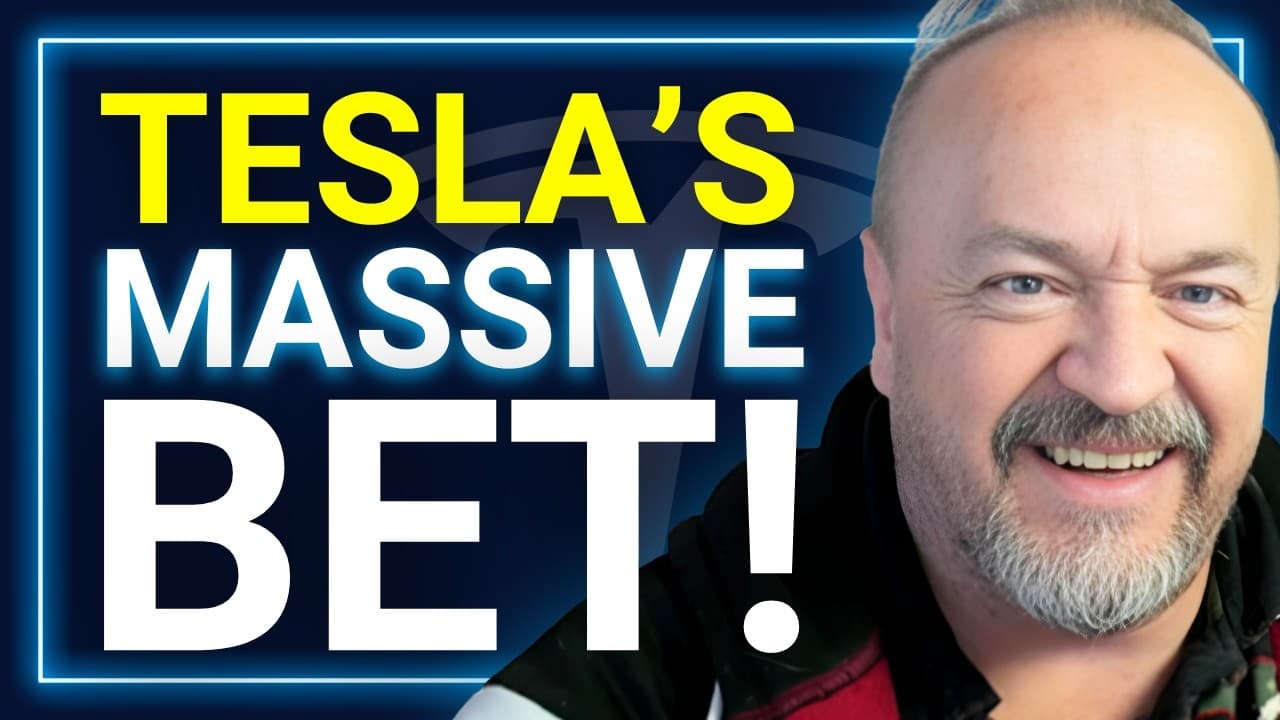
Tesla's RoboTaxi service is set to debut in Austin this June, backed by local officials, marking a pivotal moment in autonomous transport. Simultaneously, Waymo plans to expand its services to Washington D.C. next year, intensifying the competition in the robo-ride sector. Tesla's Full Self-Driving technology showcases advanced capabilities, including hand gesture recognition and navigation on unmarked roads.
Transcript
for Tesla investors we really don't have much longer to wait to see if our bet on Robo taxi is going to come true Tesla has announced that they're moving forward with the launch of autonomous ride healing in Austin this June with City officials supporting their efforts weo the other hand has also made their own announcement that the... Read More
Key Insights
- Tesla is set to launch its autonomous RoboTaxi service in Austin, Texas, this June, with support from city officials and the Texas Department of Transportation.
- Waymo has announced plans to expand its RoboTaxi services to Washington D.C. next year, following expansions in Atlanta and Miami.
- Tesla's Full Self-Driving (FSD) system is being tested against competitors like Huawei and Li Auto, showcasing its ability to navigate complex scenarios.
- FSD's capability to recognize hand gestures and adjust to pedestrian movements is highlighted, demonstrating its advanced perception and planning abilities.
- The discussion emphasizes the importance of operational milestones and permits in the rollout of autonomous services, with Tesla showing significant progress.
- Waymo faces challenges in scaling its operations, with a limited number of vehicles and high operational costs compared to Uber and Lyft.
- The robustness of Tesla's vehicles is showcased through a crash test, where the Model Y demonstrated exceptional safety features.
- Upcoming Tesla innovations include the launch of a lower-cost vehicle, mass production of the Optimus robot, and expansion of battery production facilities.
Install to Summarize YouTube Videos and Get Transcripts
Explore YouTube Video Summarizer or Get YouTube Transcript Extractor
Questions & Answers
Q: What is the significance of Tesla's RoboTaxi launch in Austin?
Tesla's RoboTaxi launch in Austin is significant as it represents a major step forward in the company's autonomous vehicle strategy. With city support, Tesla aims to provide safe, low-cost, and premium point-to-point electric transport, marking a key milestone in the commercialization of autonomous technology.
Q: How does Tesla's FSD compare to its competitors?
Tesla's FSD is being tested against competitors like Huawei and Li Auto. It shows strong performance in navigating complex scenarios, recognizing hand gestures, and adjusting to pedestrian movements, which suggests that Tesla's perception and planning capabilities are more advanced than its competitors.
Q: What challenges does Waymo face in expanding its RoboTaxi services?
Waymo faces significant challenges in scaling its RoboTaxi services, including a limited number of vehicles and high operational costs. Despite charging rates comparable to Uber Black, Waymo struggles with profitability, indicating a need for more efficient scaling and cost management strategies.
Q: What are some key upcoming innovations from Tesla?
Key upcoming innovations from Tesla include the launch of a lower-cost vehicle, mass production of the Optimus robot, expansion of battery production facilities, and potential updates to existing models like the Model S and X. These initiatives reflect Tesla's ongoing commitment to innovation and market expansion.
Q: How does Tesla's vehicle safety compare in real-world scenarios?
Tesla vehicles, such as the Model Y, demonstrate exceptional safety in real-world scenarios. A recent crash test showed the Model Y maintaining structural integrity and protecting the driver, underscoring Tesla's focus on building vehicles that prioritize safety in various driving conditions.
Q: What role do permits and regulatory approvals play in Tesla's RoboTaxi rollout?
Permits and regulatory approvals are critical in Tesla's RoboTaxi rollout, ensuring that the service complies with local transportation laws and safety standards. Tesla's collaboration with Austin city officials and the Texas Department of Transportation highlights the importance of these approvals in launching autonomous services.
Q: What is the impact of Tesla's FSD on driving efficiency and energy consumption?
Tesla's FSD can potentially improve driving efficiency and energy consumption by maintaining smooth and consistent driving patterns. This can lead to better range management and reduced energy usage compared to more aggressive human driving, aligning with Tesla's goals for sustainable transport solutions.
Q: How does Tesla's approach to autonomous driving differ from Waymo's?
Tesla's approach to autonomous driving focuses on vision-based systems, while Waymo relies heavily on lidar and detailed mapping. Tesla believes its camera-based system offers a more scalable and cost-effective solution, although each approach has its own strengths and challenges in achieving full autonomy.
Summary & Key Takeaways
-
Tesla is moving forward with the launch of its autonomous RoboTaxi service in Austin, Texas, this June, with strong backing from city officials. This marks a significant milestone for Tesla's autonomous vehicle ambitions.
-
Waymo, a competitor in the autonomous vehicle space, is planning to expand its RoboTaxi services to Washington D.C. next year, following recent expansions in Atlanta and Miami, highlighting the growing competition in this sector.
-
Tesla's Full Self-Driving technology is being tested against competitors like Huawei and Li Auto, with tests showing its ability to recognize hand gestures and navigate complex, unmarked roads, indicating its advanced capabilities.
Read in Other Languages (beta)
Share This Summary 📚
Summarize YouTube Videos and Get Video Transcripts with 1-Click
Try YouTube Summary with ChatGPT & Claude or YouTube Transcript Generator
Explore More Summaries from Brighter with Herbert 📚
Summarize YouTube Videos and Get Video Transcripts with 1-Click
Try YouTube Summary with ChatGPT & Claude or YouTube Transcript Generator