What Are the Psychological Tricks to Influence Others?
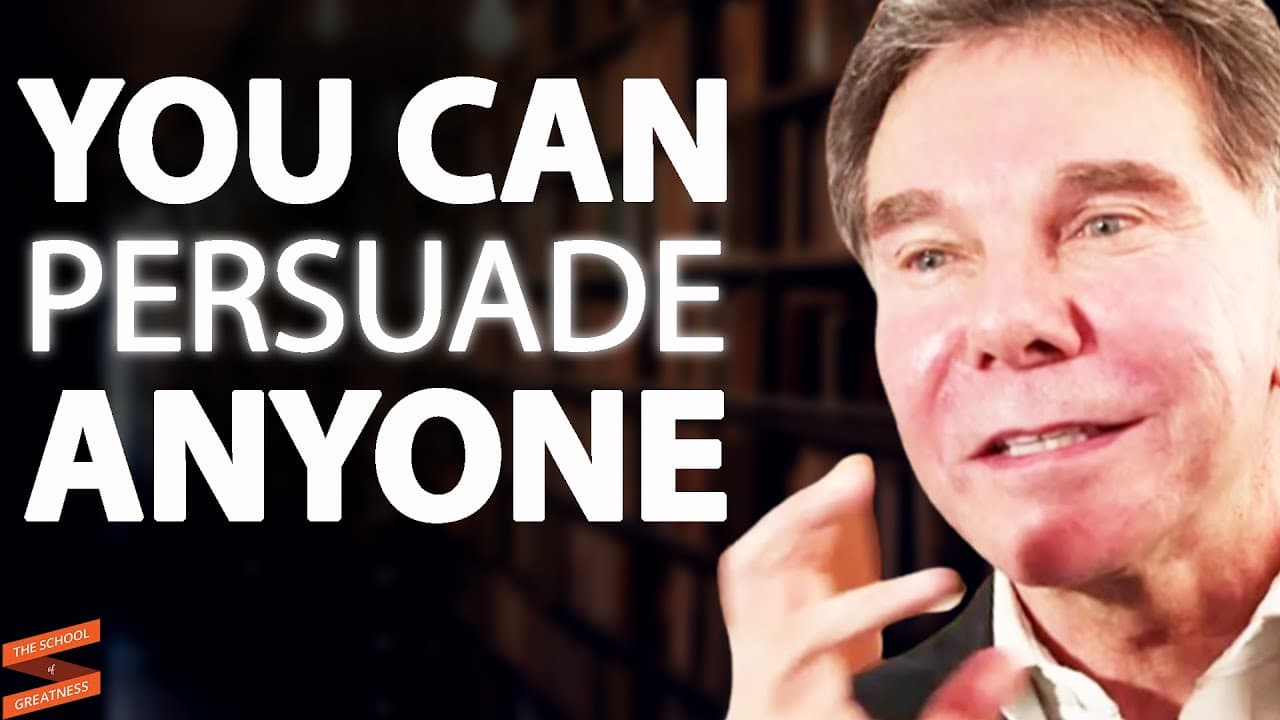
TL;DR
The psychological tricks to influence others include seven key principles: reciprocity, commitment and consistency, social proof, liking, authority, scarcity, and unity. Understanding these principles allows you to create messages that resonate deeply and effectively persuade individuals to comply with requests or follow recommendations.
Transcript
people think that the way to make an appeal or a message more successful is what you put into the message and that's those seven principles right so that's true but it turns out there's research to show what you say or do before you ever send your message puts people in a i think you gotta have a dream the school of greatness yeah please welcome us... Read More
Key Insights
- ❓ Reciprocity taps into the natural human tendency to give back and creates a sense of indebtedness that can influence decision-making.
- ✊ Commitment and consistency demonstrate the power of making commitments and staying consistent to build trust and influence others to follow suit.
- ❓ Social proof leverages the choices and endorsements of others to reduce uncertainty and sway decisions.
- 👏 Liking is enhanced by finding similarities and offering genuine praise, which can establish rapport and increase the likelihood of compliance.
- ❓ Authority provides credibility and trust by showcasing expertise, credentials, and endorsements from recognized experts.
- 😨 Scarcity taps into the fear of loss and the desire for exclusive or limited resources, encouraging action and reducing the perception of abundance.
- 🎙️ More videos with Robert Cialdini:
Install to Summarize YouTube Videos and Get Transcripts
Explore YouTube Video Summarizer or Get YouTube Transcript Extractor
Questions & Answers
Q: How can reciprocity be used to influence others?
Reciprocity can be leveraged by giving first to create a sense of obligation in others to give back. By providing benefits, information, or concessions, individuals are more likely to say yes and reciprocate in some way.
Q: How can commitment and consistency be applied to enhance persuasion?
Being committed to a goal or a vision and consistently making progress towards it can inspire others to follow suit. By showcasing one's commitment and consistency, trust and influence can be built, encouraging others to join in or support the cause.
Q: How does social proof impact decision-making?
Social proof plays a crucial role in decision-making by relying on the choices and actions of others to reduce uncertainty. By highlighting testimonials, popular choices, and expert endorsements, the credibility and desirability of a product or idea can be enhanced.
Q: How can liking influence persuasion?
Liking relies on finding similarities and offering genuine praise and compliments to enhance likability. By emphasizing shared interests or experiences and acknowledging others, rapport can be established, making individuals more receptive to a message or request.
Summary & Key Takeaways
-
The content dives into the seven principles of influence, which are reciprocity, commitment and consistency, social proof, liking, authority, scarcity, and the newly discovered principle of unity.
-
Reciprocity emphasizes the importance of giving first to create a sense of indebtedness and increase the likelihood of receiving in return.
-
Commitment and consistency showcase the power of making commitments and staying consistent with them to gain trust and influence others.
-
Social proof highlights the impact of using testimonials, popular choices, and expert endorsements to reduce uncertainty and sway people's decisions.
Read in Other Languages (beta)
Share This Summary 📚
Summarize YouTube Videos and Get Video Transcripts with 1-Click
Try YouTube Summary with ChatGPT & Claude or YouTube Transcript Generator
Explore More Summaries from Lewis Howes 📚




Summarize YouTube Videos and Get Video Transcripts with 1-Click
Try YouTube Summary with ChatGPT & Claude or YouTube Transcript Generator