How AI Shapes Shopify Growth and Leadership
TL;DR
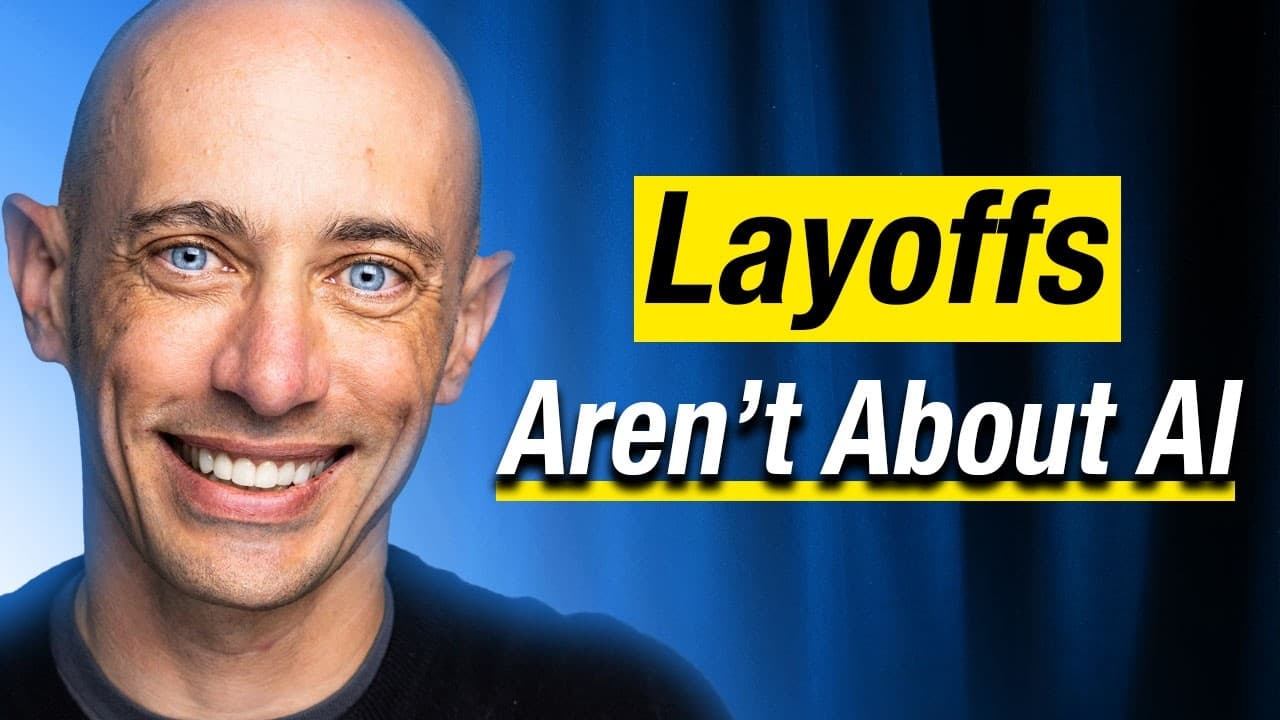
AI now generates over 50 percent of Shopify code, and the leadership approach centers on long term thinking rather than stock prices. The discussion covers balancing fear of losing with hunger to win, the value of builders who push for durable progress, and how executives navigate public company dynamics in the AI era.
Transcript
People who fear of losing and people who fear of winning are clearly going to look at things in much more short term. The world really needs to understand that the people who build companies are fundamentally crazy people. Now, I've known Toby Luka for years. He's the founder and CEO of Shopify, $ 160 billion public company. This podcast is a Toby ... Read More
Key Insights
- AI now generates over 50 percent of Shopify's code, illustrating a deep integration of AI in product development.
- Great leaders must be a heat source for the company, providing energy and direction for long term success.
- Builders are described as 'Eights' who pursue ambitious, long term goals and can be disruptive, yet valuable for innovation.
- The winnowing effect for leaders changes with AI, as different mindsets and skills become more or less valuable.
- Long term thinking is a deliberate choice that may require enduring short term pain for future benefits.
- Not-for-profit considerations are viewed skeptically within the context of business strategy and governance.
- Being the source of energy within a company helps align teams and accelerate execution.
- Stock price is not the primary focus for Shopify leadership, signaling prioritization of product and people over market timing.
Install to Summarize YouTube Videos and Get Transcripts
Explore YouTube Video Summarizer or Get YouTube Transcript Extractor
Questions & Answers
Q: A real search query question about the video (e.g. 'How to...', 'What is...', 'Why does...', 'When should...'). Question 1
Question 1: What does the interview say about why Shopify prioritizes long term thinking over short term stock performance, and how does this relate to AI integration in product development? The discussion frames long term thinking as essential to align engineering, product strategy, and organizational behavior, even as public market incentives push for immediate results. The host and Tobi Lutke suggest that enduring value comes from building durable capabilities, not from chasing quarterly metrics, and AI plays a key role in accelerating this alignment by enabling scalable, long horizon engineering and decision making.
Q: Question 2
Question 2: How does Tobi Lutke describe the motivation of founders and builders when contrasted with fear of losing versus hunger to win, and what implications does this have for leadership style and hiring? The interview presents a dichotomy between fear of losing and hunger to win as drivers of behavior, with Lutke emphasizing the importance of long term perspective and the need for leaders who can sustain momentum while guiding others. This impacts hiring by favoring profiles that can endure the stress of tough, multi year bets and still maintain focus on durable outcomes.
Q: Question 3
Question 3: What is the significance of the Enneagram eight profile in Shopify’s leadership landscape according to the talk, and how does it relate to decision making and company culture? The discussion identifies executives at Shopify as predominantly achievers with a tendency toward deep, high energy engagement. The eight profile is associated with resilience, blunt honesty, and a drive to push through obstacles, which Lutke argues can be both challenging and beneficial in steering the company through complex, long term challenges.
Q: Question 4
Question 4: Why does the interview discuss not being interested in being a CEO originally, and what changed to make leading Shopify a necessity for Lutke? Lutke explains that product leadership and company building require coupling the product with organizational leadership. He notes that to effectively run a product driven company, one must also manage the broader organization, implying that CEO duties became essential to realize the company’s long term product ambitions.
Q: Question 5
Question 5: What does the host note about the potential loneliness of high level work and how does it relate to leadership and therapy? The host references a quote about how being a top executive can be lonely, which the guest acknowledges as a natural aspect of the role. This underscores the emotional dimension of leadership, the need for self awareness, and the value of seeking support such as therapy to sustain performance over time.
Q: Question 6
Question 6: How does Lutke describe the role of AI in Shopify’s engineering and code creation, and what are the implications for engineers and job design? The talk states that AI generates over 50 percent of Shopify code, signaling a shift in how software is produced. This has implications for engineers in terms of collaboration with AI, upskilling, and redefining roles where creative problem solving and system design may take precedence over routine coding tasks.
Q: Question 7
Question 7: What are some of the societal and policy topics covered in the interview, such as government intervention and economic schooling, and how are they framed in relation to business strategy? The conversation touches on governance and macro factors like education and policy, suggesting that public policy can influence the environment in which tech companies operate. It emphasizes a critical view of certain economic traditions and the need for pragmatic, value driven policy that supports innovation without compromising competitive advantage.
Q: Question 8
Question 8: How does Shopify view the idea of not for profit and its relevance to corporate governance and strategy in the interview? The speaker argues that not for profit ideas should be examined carefully within business strategy, implying a preference for profit oriented, sustainable models that fund innovation. This reflects a pragmatic stance toward balancing mission and financial viability as part of corporate governance.
Q: Question 9
Question 9: How does Lutke describe the balance between not writing code as a senior engineer and the need for highly capable engineers in a code heavy environment powered by AI? The discussion suggests that senior engineers may not write code as much, possibly due to AI assisted development, while still requiring strong analytical and leadership skills to steer projects, architecture and team dynamics. It highlights a shift in roles where strategic oversight and design leadership become more important.
Summary & Key Takeaways
-
Shopify relies on long term thinking to align product and company goals, even when public market pressures tempt short term moves. This stance is described as essential for building durable value rather than chasing quarterly metrics.
-
The interview emphasizes the leadership style of founders and executives, including the idea that great leaders act as a heat source for their teams and prioritize meaningful, value-generating work over quick wins.
-
A significant portion of the discussion is dedicated to the impact of AI on engineering and code creation at Shopify, including the claim that over half of the code is now AI-generated and the implications for roles and skills in the company.
Read in Other Languages (beta)
Share This Summary 📚
Summarize YouTube Videos and Get Video Transcripts with 1-Click
Try YouTube Summary with ChatGPT & Claude or YouTube Transcript Generator
Explore More Summaries from 20VC with Harry Stebbings 📚




Summarize YouTube Videos and Get Video Transcripts with 1-Click
Try YouTube Summary with ChatGPT & Claude or YouTube Transcript Generator